

Why Dog Body Language Matters
Dogs communicate primarily through body language, and they do so continuously. From the angle of an ear to the curve of a tail, every posture carries meaning - but those signals are easy to misread without a framework for understanding them.
Misinterpreting stress signals as misbehavior, or mistaking fearful appeasement for friendliness, can lead owners to respond in ways that unintentionally worsen a dog's anxiety. Accurate reading isn't just a curiosity - it's a foundational care skill. Dogs that routinely experience unaddressed fear or stress may develop chronic behavioral challenges, some of which intersect with conditions like separation anxiety.
This reference guide breaks down the most reliable signals across emotional states: stress, fear, and contentment.
| Primary communication mode | Body language (posture, facial expression, movement) |
| Key stress indicator cluster | Yawning + lip licking + low tail + pinned ears (Veterinary behavioral consensus) |
| Fear-to-aggression escalation trigger | Continued pressure after appeasement signals are ignored |
| Reliable contentment sign | Loose body, soft eyes, broad tail wag (combined) |
| Common misread signal | Tail wagging - can indicate arousal, not just happiness |
| Baseline reference point | Each dog's individual normal behavior - not breed averages alone |
Signals of Stress
Stress signals in dogs are often subtle and easy to overlook, especially in everyday environments. Veterinary behaviorists group these under the term calming signals - behaviors dogs use to self-soothe or to signal discomfort to others.
Calming signals
A range of behaviors - such as yawning, lip licking, and slow blinking - that dogs use to communicate discomfort or to de-escalate tension. The concept was developed within applied animal behavior research.
Appeasement behavior
Actions a dog takes to signal non-threat to people or other animals, including crouching, averting gaze, or showing the belly. These are attempts to reduce conflict, not submissions to authority.
Whale eye
A visual stress indicator where the whites of a dog's eyes become visible because the dog turns its head while keeping its gaze fixed on something it finds threatening or unsettling.
Arousal
A state of heightened emotional activation - which can accompany excitement, fear, or aggression. High arousal is not inherently negative but can escalate quickly if mismanaged.
Soft mouth
Informal term for the relaxed, slightly open jaw position seen in a comfortable dog. It contrasts with the tight, closed-mouth expression associated with tension or guarding.
- Yawning outside of tiredness: A slow, exaggerated yawn during training, at the vet, or in a busy space often signals mild-to-moderate stress, not fatigue.
- Lip licking or nose licking: Quick tongue flicks not related to food are a classic stress indicator.
- Panting without heat or exercise: Panting in a cool, quiet environment frequently reflects emotional arousal or anxiety.
- Whale eye: When the whites of the eyes become visible (the dog turns their head but keeps eyes fixed), tension is elevated.
- Excessive shedding or dandruff: Stress hormones can trigger sudden coat changes, particularly noticeable on veterinary examination tables.
A cluster of signals - rather than a single behavior - is the most reliable indicator. One yawn means little; a yawn combined with lip licking, pinned ears, and low tail carriage means the dog is asking for space or reassurance.
Signals of Fear
Fear escalates along a predictable continuum. Early signs are often appeasement-based - the dog is trying to signal it poses no threat. If those signals are ignored, arousal rises toward defensiveness.
- Crouching or low body posture: The dog reduces its physical profile to appear non-threatening.
- Tail tucked under the abdomen: A tail pulled tight beneath the body is a strong fear indicator, distinct from a simply lowered tail.
- Ears flattened against the skull: Pinned ears differ from relaxed back-positioned ears; look for muscle tension around the base.
- Trembling or freezing: Both are fear responses. Freezing is particularly significant - it often precedes a snap or bite if pressure continues.
- Attempting to flee or hide: A dog that consistently retreats behind furniture or its owner is communicating genuine distress, not shyness to be pushed through.
How a dog was socialized during its early weeks directly shapes its fear thresholds as an adult - something explored in depth in our guide to socialisation windows. Dogs with narrow socialization histories are more likely to show fear responses to novel stimuli.
Signals of Contentment and Relaxed Engagement
Recognizing contentment is just as important as identifying distress - it helps owners confirm when training, play, or social interaction is going well.
- Loose, wiggly body: A relaxed dog moves fluidly, often with a whole-body wiggle rather than rigid posture.
- Soft eyes and blinking: Squinting or slow blinking indicates ease. Compare this to the hard, unblinking stare of an aroused or threatened dog.
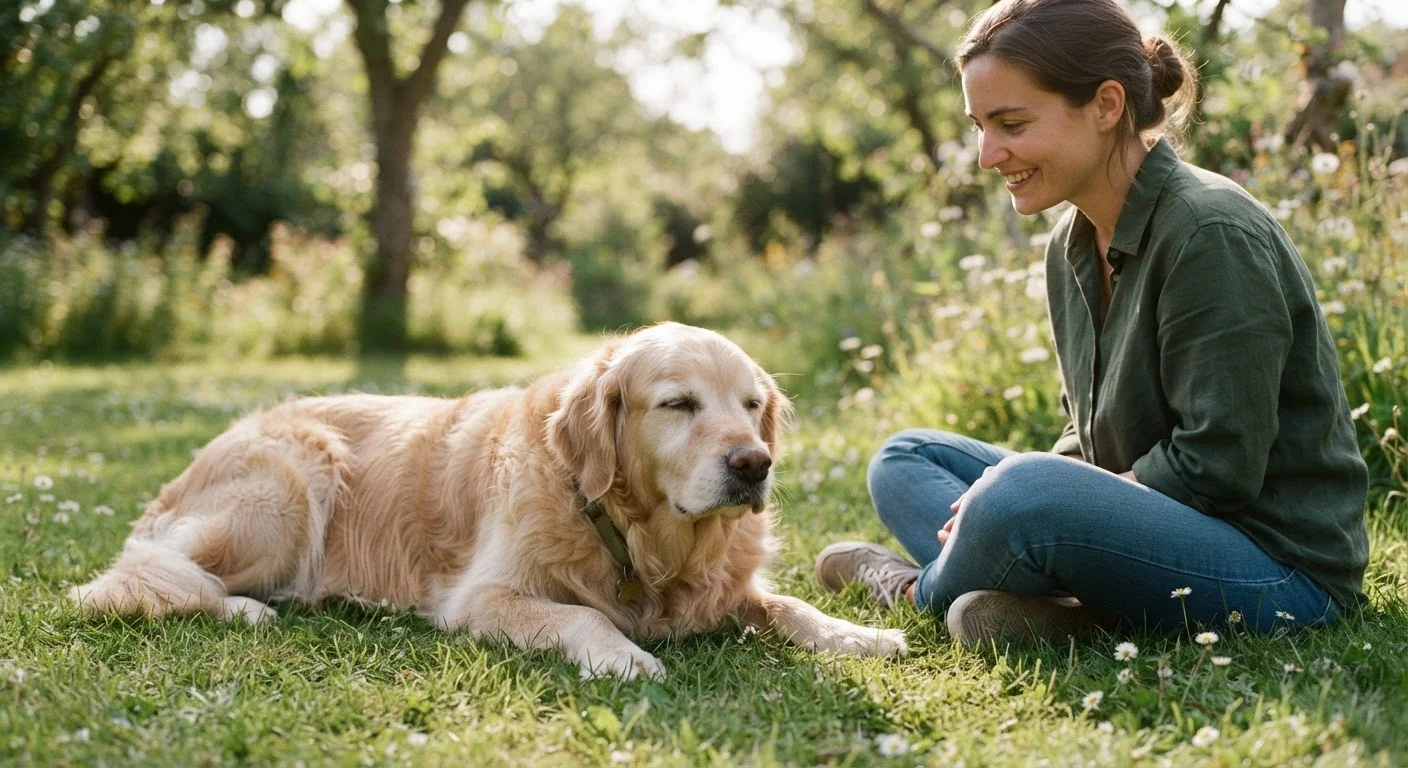
- Mouth slightly open, tongue relaxed: Often called a soft mouth, this contrasts with the tight-lipped expression of stress.
- Tail in neutral to elevated position, wagging broadly: Note that tail wagging alone is not a reliable happiness signal - high, stiff wagging can indicate arousal or tension. Broad, loose wagging paired with a relaxed body is the meaningful combination.
- Approaching and soliciting contact: A dog that chooses proximity and leans in is communicating comfort and trust.
Dogs vary significantly by breed and individual history, so baseline behavior matters. Knowing what your dog's normal relaxed state looks like is the starting point for detecting meaningful deviations. If you're comparing how different species signal wellbeing, our feline body language guide offers a useful parallel perspective.
This article provides general educational information about dog behavior and is not a substitute for professional veterinary or behavioral assessment. If your dog shows persistent or escalating fear, stress, or behavioral changes, consult a qualified veterinarian or certified applied animal behaviorist.
The content on this site is provided for informational purposes only and should not be considered a substitute for professional advice. While we strive to provide accurate and up-to-date information, we make no guarantees regarding its completeness or accuracy. Always consult a qualified professional for advice specific to your circumstances before making any decisions.