

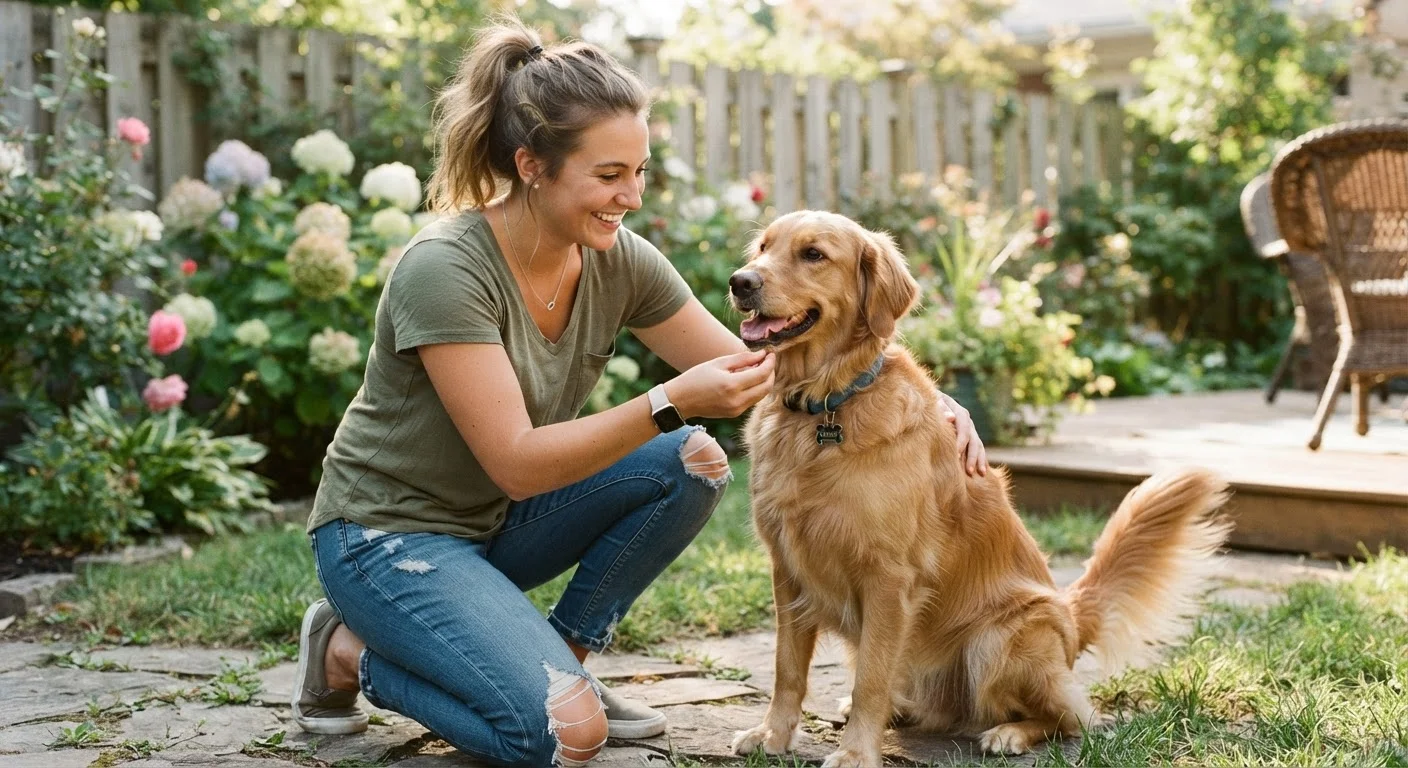
What Positive Reinforcement Actually Means
Positive reinforcement is a concept drawn from behavioural science. In plain terms, it means adding something pleasant immediately after a behaviour occurs, which makes that behaviour more likely to happen again. For dogs, this usually means food treats, praise, play, or access to something they enjoy.
The approach is distinct from simply being permissive or avoiding all correction. It is a systematic method with documented effectiveness, supported by organisations including the American Veterinary Society of Animal Behavior (AVSAB), which has published position statements recommending reward-based training as the foundation for behaviour modification in companion animals.
Understanding this distinction matters because it helps owners apply the method with precision rather than vaguely hoping a biscuit will fix every problem.
“The most important lesson in dog training is that behaviour is governed by its consequences. If you want a behaviour to continue, reinforce it. If you want it to stop, ensure it produces no rewarding outcome.”
— Karen Overall, Veterinary behaviourist and author of clinical behavioural medicine texts for small animals
The Core Principles That Make It Work
Deliver the reward within one to two seconds of the desired behaviour
Dogs associate consequences with the action that immediately preceded them. A delay of even three to four seconds means the dog may be rewarded for whatever it is doing at that moment - sitting, sniffing, or wandering - rather than the behaviour you intended to reinforce.
Use a marker signal to bridge the gap between behaviour and reward
A marker - typically a short verbal word like "yes" or a clicker - tells the dog precisely which action earned the reward, even when the treat takes a moment to deliver. This precision accelerates learning by removing ambiguity.
Keep training sessions short and end on a success
Dogs, especially puppies, have limited attention spans. Long sessions lead to fatigue, frustration, and degraded performance. Ending while the dog is still succeeding maintains motivation and positive associations with training.
Ensure all household members use the same cues and reward criteria
Inconsistency is one of the most common reasons training stalls. If one person rewards 'sit' when the dog is half-crouched and another holds out for a fully upright sit, the dog receives conflicting information and learning slows significantly.
Gradually fade food treats rather than eliminating them abruptly
Sudden removal of rewards after a behaviour is learned can cause extinction - the dog stops performing because reinforcement has disappeared entirely. A variable and gradually reduced schedule maintains the behaviour more durably.
Train in varied environments once a behaviour is learned
Dogs do not automatically generalise skills from one setting to another - a dog that sits perfectly in the kitchen may appear to 'forget' the cue entirely at a park. Practising in new locations, with increasing distractions, builds reliable behaviour across real-life contexts.
Why Punishment-Based Approaches Carry Real Risks
Aversive training methods - including physical corrections, shock collars, or intimidation - can suppress behaviour in the short term, but research in applied animal behaviour has consistently linked their use to elevated stress, fear responses, and increased aggression. A dog may stop a behaviour because it is afraid, not because it understands what you want instead.
This creates a fragile result: the behaviour often returns in new contexts, and the dog's trust in the owner can erode. The goal of training is not compliance under pressure - it is genuine learning that transfers across environments.
That said, redirecting an unwanted behaviour (for example, interrupting jumping with a verbal cue and then rewarding four paws on the floor) is a practical and humane tool that fits within a positive framework.
Redirect, Don't Just Suppress
When your dog does something unwanted, rather than punishing the behaviour, ask yourself what you'd like the dog to do instead - and immediately cue and reward that alternative. For example, if your dog jumps to greet you, cue 'sit,' wait for four paws on the floor, and then deliver enthusiastic praise. This teaches a replacement behaviour rather than simply suppressing the original one.
Putting It Into Practice at Home
Effective positive reinforcement requires more than good intentions. The following quick-start actions help owners move from concept to consistent results.
For owners setting up a home environment that supports training, how a dog's space is structured also plays a role. See our guide to crate training vs. free roaming for practical considerations about your dog's living arrangement.
For puppies, training overlaps significantly with the socialisation period. Understanding the socialisation window and its timing can help you prioritise which behaviours to introduce first and in what environments.
73%
Owners reporting fewer problem behaviours with reward-based training
A survey published in the journal Applied Animal Behaviour Science found a significantly higher rate of reported problem behaviour reduction among owners using positive methods compared to those using aversive techniques.
2-3 sec
Maximum effective delay for reward delivery
Behavioural science research on operant conditioning in dogs consistently identifies a window of approximately one to three seconds as critical for the dog to accurately associate a reward with the preceding behaviour.
The content on this site is provided for informational purposes only and should not be considered a substitute for professional advice. While we strive to provide accurate and up-to-date information, we make no guarantees regarding its completeness or accuracy. Always consult a qualified professional for advice specific to your circumstances before making any decisions.