

Our Verdict
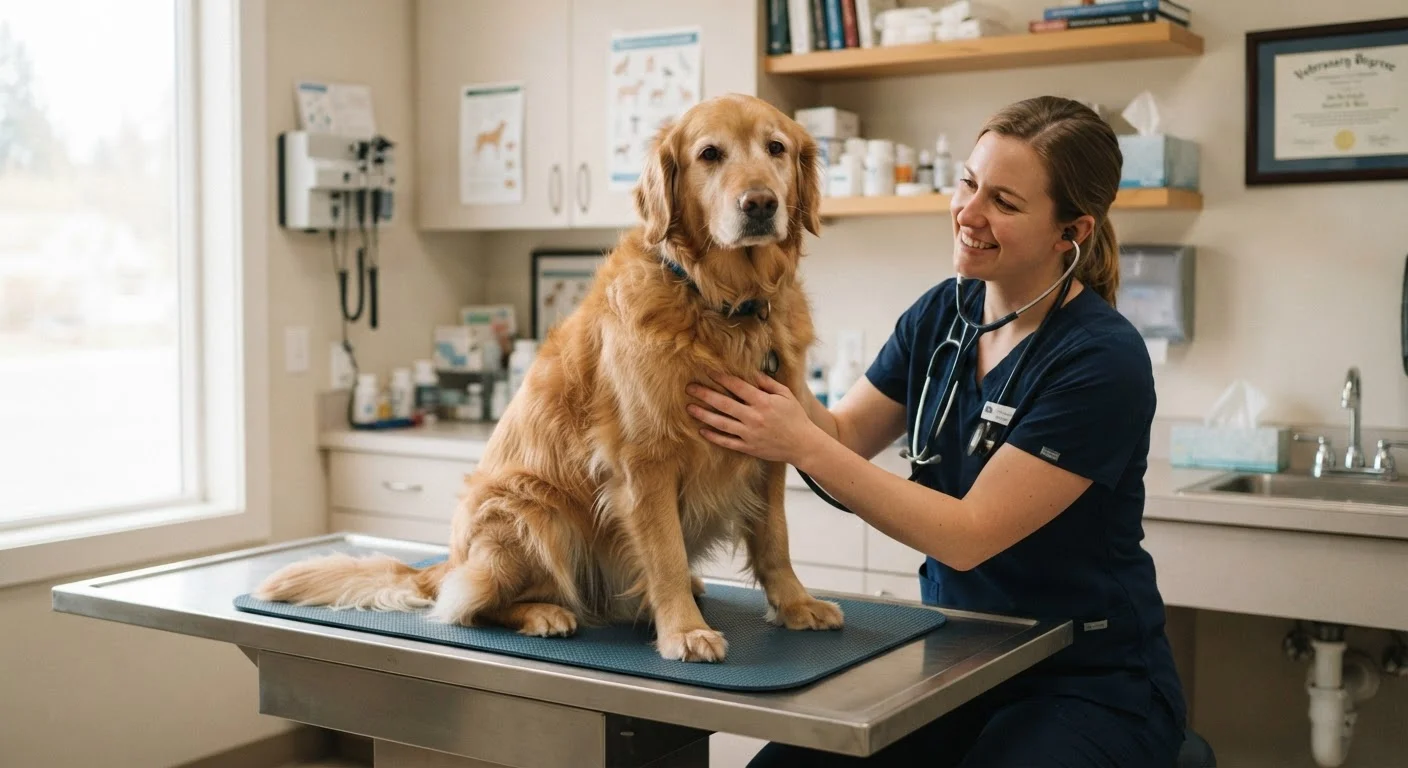
Neutering remains a reasonable choice for many dog owners, particularly those without plans to breed and concerned about overpopulation or reproductive health risks. However, the science has grown more nuanced - especially for large and giant breeds - and blanket early neutering is no longer the universal recommendation it once was. Owners should expect a substantive, individualized discussion with their vet rather than a default recommendation.
Dog owners who want a thorough, evidence-grounded understanding of what neutering involves before making a decision with their veterinarian.
What Neutering Actually Involves
Neutering - referred to as castration in males and spaying (ovariohysterectomy or ovariectomy) in females - is the surgical removal of the reproductive organs. In male dogs, both testes are removed under general anesthesia. In females, the procedure typically removes the ovaries and uterus, though ovary-sparing spay techniques are gaining traction in some veterinary practices.
The result is permanent infertility and the cessation of sex hormone production. It is the removal of those hormones - not the surgery itself - that drives most of the downstream health and behavioral effects, both positive and negative, that this article addresses.
Recovery for males is generally straightforward, taking around 10-14 days. Female spay surgery is more invasive and recovery can take two to three weeks. Both procedures carry the standard risks associated with any surgery under general anesthesia: infection, adverse anesthetic reactions, and post-operative complications - though serious complications are uncommon in otherwise healthy animals.
The Case For Neutering
Eliminates risk of testicular and ovarian cancers
Neutering removes the organs in which these cancers originate, making them effectively impossible in altered dogs. Pyometra - a life-threatening uterine infection affecting intact females - is also entirely prevented by spaying.
Reduces risk of mammary tumors in females
Spaying before the first or second heat cycle is associated with a significantly lower incidence of mammary gland tumors, which can be malignant. The protective effect diminishes with each subsequent heat cycle.
Prevents unwanted litters and supports population control
Unplanned breeding contributes to shelter overcrowding across the US. For owners not intending to breed, neutering removes all reproductive risk entirely and simplifies long-term management.
Reduces hormone-driven roaming and marking behaviors
Intact males are strongly motivated to roam in search of females in heat, increasing risk of injury, traffic accidents, and loss. Castration significantly reduces this drive in most dogs.
Eliminates the estrus cycle in females
Female dogs cycle approximately twice a year and require careful management during heat to prevent unwanted mating. Spaying ends this cycle and the associated behavioral and physical changes permanently.
Beyond individual health considerations, neutering is widely promoted as a population control tool. Millions of dogs enter US shelters each year, and unplanned litters contribute meaningfully to that burden. For owners who have no intention of breeding their dog, neutering removes any risk of accidental reproduction entirely.
Intact male dogs can also present management challenges - roaming in search of females in heat, urine-marking extensively, and in some cases displaying increased inter-male aggression. These behaviors are hormone-driven and often reduce, though not always disappear, after neutering. Similarly, female dogs in heat require careful management every six months or so, and spaying eliminates this cycle.
The Case Against - or at Least, the Cautions
Surgical and anesthetic risk is inherent
All surgeries under general anesthesia carry risk, including adverse reactions, post-operative infection, and complications. While serious events are uncommon in healthy dogs, risk is never zero.
Possible link to orthopedic problems in larger breeds
Research suggests early neutering may increase susceptibility to joint conditions such as cranial cruciate ligament rupture and hip dysplasia in certain large breeds, as sex hormones contribute to musculoskeletal development.
Associated with elevated risk of some cancers
Studies in specific breeds have found higher rates of osteosarcoma, hemangiosarcoma, and lymphoma in neutered dogs compared to intact ones. The relationship is complex and not uniform across all breeds or sexes.
Weight gain is a common post-neuter complication
Loss of sex hormones reduces metabolic rate and can increase appetite. Owners who do not adjust diet and exercise after neutering often see significant weight gain, which carries its own health consequences.
Hormonal changes may affect coat and urinary continence
Some spayed females develop urinary incontinence due to reduced estrogen, a condition known as hormone-responsive incontinence. Coat texture changes are also occasionally reported after neutering in both sexes.
Does not reliably resolve non-hormonal behavior problems
Owners who neuter expecting to fix anxiety, aggression rooted in fear, or resource guarding are likely to be disappointed. These behaviors require behavioral intervention, not surgery.
Research published over the past decade - including long-term studies from the University of California, Davis - has found associations between early neutering and elevated rates of orthopedic conditions such as hip dysplasia and cranial cruciate ligament rupture in certain breeds, particularly larger ones like Golden Retrievers, Labrador Retrievers, and German Shepherd Dogs. Sex hormones play a role in musculoskeletal development, and removing them before growth plates close may affect joint integrity.
There is also evidence that neutered dogs face a modestly higher risk of certain cancers - including osteosarcoma, hemangiosarcoma, and mast cell tumors - compared to intact dogs of the same breed. This does not mean neutering causes cancer outright; the picture is complex and breed-specific, and some cancers (like testicular cancer) are essentially eliminated by neutering.
Small Breeds vs. Large Breeds: Different Risk Profiles
Much of the emerging research cautioning against early neutering is drawn from studies of large and giant breed dogs. For dogs under approximately 20 pounds, the hormonal influence on joint development is less pronounced, and the traditional recommendation of neutering around six months remains more defensible. Owners of small-breed dogs should still have an individualized conversation with their vet, but the risk calculus differs meaningfully from larger breeds.
For small-breed dogs, the risk profile appears different. Many of the joint and cancer concerns associated with early neutering are less pronounced in dogs under 20 pounds, making the traditional early-neuter recommendation more defensible for smaller breeds.
Timing: Why It May Matter More Than the Decision Itself
The "when" of neutering has become as contested as the "whether." Traditional guidance in the US has long recommended neutering around six months of age. Many veterinary researchers and professional bodies - including the American Veterinary Medical Association - now acknowledge that timing should be individualized based on breed, size, and sex.
For large and giant breeds, some veterinarians now recommend waiting until 12-24 months, allowing growth plates to close before sex hormones are removed. For mixed-breed dogs, the calculus is less clear but still worth discussing. See our guide to dog care trade-offs for related context on evaluating competing evidence.
Behavioral Expectations: What Neutering Can and Cannot Fix
Owners sometimes expect neutering to resolve a broad range of behavioral problems - excessive barking, anxiety, reactivity, or resource guarding. These behaviors are shaped primarily by learning, environment, and temperament, not hormones. Neutering will not address them and is not a substitute for structured training or, where necessary, veterinary behavioral consultation.
Hormone-driven behaviors - roaming, mounting, urine-marking, and some forms of inter-male aggression - do often reduce after neutering, though the degree varies between individual dogs. Behaviors that are already well-established habits may persist regardless of neuter status. Our article on crate training vs free roaming touches on how environment shapes behavior alongside medical factors.
This article is for general informational purposes only and does not constitute veterinary medical advice. Always consult a licensed veterinarian before making health-related decisions for your pet.
The content on this site is provided for informational purposes only and should not be considered a substitute for professional advice. While we strive to provide accurate and up-to-date information, we make no guarantees regarding its completeness or accuracy. Always consult a qualified professional for advice specific to your circumstances before making any decisions.