

Our Verdict
Kibble remains the most accessible and nutritionally reliable baseline for most dogs, supported by decades of formulation research and regulatory oversight. Raw and home-cooked diets can work under the right conditions but require significantly more owner commitment, knowledge, and - in the case of raw feeding - careful management of health risks. There is no universally 'best' option; the right choice depends on an individual dog's needs, the owner's resources, and ongoing veterinary guidance.
| Best for | Recommended |
|---|---|
| Owners seeking convenience and proven nutritional completeness | Kibble |
| Owners willing to invest time and seek professional nutritional guidance | Home-cooked diet |
| Experienced owners committed to strict food-safety protocols | Raw diet |
| Dogs with specific dietary sensitivities or complex health conditions | Veterinarian-guided custom diet (any format) |
What Each Feeding Approach Actually Involves
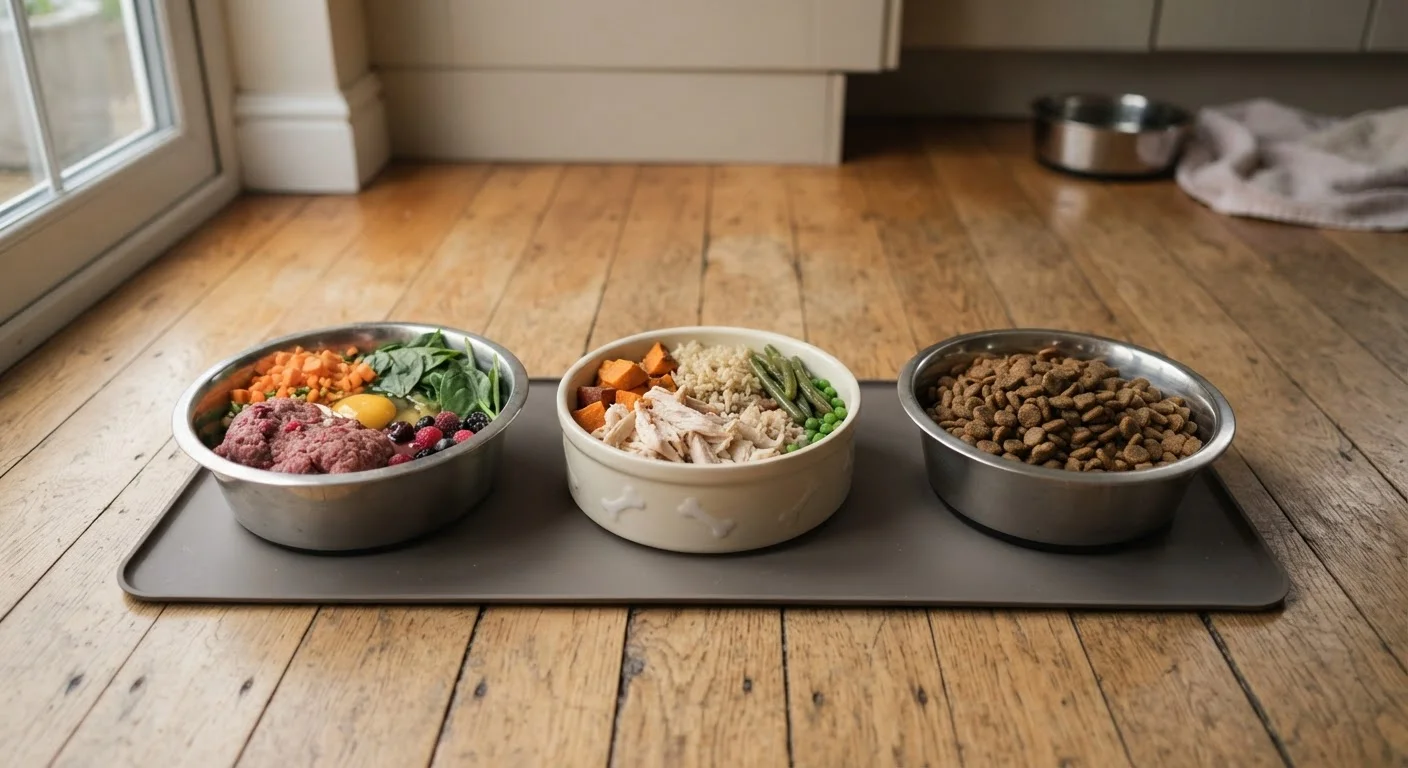
The three dominant dog feeding approaches differ in how food is prepared, processed, and sourced - and each carries a distinct nutritional and practical profile.
Kibble (dry extruded food) is heat-processed at high temperatures, which destroys pathogens and extends shelf life. Most commercial kibble formulas are designed to meet nutritional standards set by the Association of American Feed Control Officials (AAFCO), meaning they're formulated to supply complete and balanced nutrition across a dog's life stage.
Raw diets - often called BARF (Biologically Appropriate Raw Food) or prey-model diets - typically include uncooked muscle meat, organ meat, raw meaty bones, and sometimes vegetables or eggs. Proponents argue this mirrors ancestral canine eating patterns; critics, including many veterinary organizations, point to documented bacterial contamination risks and inconsistent nutritional profiles.
Home-cooked diets involve preparing meals from whole ingredients at temperatures that eliminate most pathogens. They offer ingredient transparency but are notoriously difficult to balance nutritionally without expert input. Studies have found that many home-cooked dog meal recipes - including those from veterinary textbooks - fall short on essential nutrients when analyzed rigorously.
Nutritional Completeness: Where Each Approach Stands
| Kibble | Raw Diet | Home-Cooked | |
|---|---|---|---|
| Nutritional completeness | High (AAFCO-formulated) | Variable - often incomplete | Variable - expert input required |
| Food safety risk | Low (heat-processed) | High (bacterial contamination risk) | Low to moderate (cooking reduces pathogens) |
| Daily preparation time | Minimal | Moderate (thawing, handling) | High (regular cooking required) |
| Ingredient transparency | Moderate (processed product) | High (whole ingredients) | High (owner-controlled) |
| Typical cost | Lower | Higher (especially commercial) | Variable by ingredients |
| Veterinary consensus | Generally supported | Cautioned against by AVMA | Supported with nutritionist guidance |
| Shelf life / storage | Long shelf life, room temp | Requires freezer space | Refrigerate or freeze in batches |
Kibble's main nutritional advantage is its formulation process: manufacturers are required to demonstrate that products meet AAFCO nutrient profiles or pass feeding trials. This doesn't guarantee optimal nutrition for every individual dog, but it provides a reliable baseline most owners can trust without specialist knowledge.
Raw diets present a more variable picture. Commercial raw products vary widely in quality and nutritional completeness. Homemade raw meals are particularly prone to imbalance - excess organ meat can cause vitamin A toxicity, while calcium-to-phosphorus ratios are difficult to achieve without precise planning. The American Veterinary Medical Association (AVMA) has published position statements cautioning against raw protein diets due to these and food safety concerns.
Home-cooked food sits in the middle. Cooking eliminates most pathogen risk, and owners control every ingredient - which can benefit dogs with confirmed allergies or intolerances. However, achieving a nutritionally complete recipe consistently requires guidance from a board-certified veterinary nutritionist, not just online recipe resources.
Work With a Veterinary Nutritionist
If you're committed to home-cooked or raw feeding, consider consulting a board-certified veterinary nutritionist (Diplomate ACVN) rather than relying solely on online recipes. They can design a nutritionally complete meal plan tailored to your dog's specific age, weight, and health history. Your general practice vet can usually provide a referral.
Food Safety Risks You Should Weigh Carefully
Food safety is one of the sharpest points of difference between these approaches - and one that veterinary authorities treat seriously.
Raw meat, whether beef, poultry, or fish, can harbor Salmonella, Listeria, Campylobacter, and other pathogens. These bacteria can cause illness in dogs, but the more commonly overlooked risk is human exposure: contamination can spread to food preparation surfaces, hands, and other household members - including children, elderly people, or immunocompromised individuals. The U.S. Food and Drug Administration (FDA) has flagged this issue in multiple public communications.
Kibble's high-heat processing largely eliminates live pathogens, though dry food is not entirely immune to recalls - contamination issues have occurred at the manufacturing level, and owners should register products and monitor recall databases.
Home-cooked meals, when prepared with normal kitchen hygiene practices and cooked to appropriate temperatures, present a much lower bacterial risk than raw feeding. The primary concern shifts to nutritional adequacy rather than pathogen exposure.
Raw Feeding and Vulnerable Household Members
If your household includes infants, elderly individuals, or anyone with a compromised immune system, the FDA and AVMA advise particular caution with raw meat diets for pets. Contaminated surfaces, bowls, and even a dog's saliva after eating raw food can be potential transmission routes. Discuss this risk openly with both your veterinarian and your healthcare provider before choosing a raw feeding approach.
Practical Considerations for Daily Life
Beyond nutrition and safety, the day-to-day realities of each approach matter significantly for sustainable feeding.
Cost: Kibble is generally the most affordable option per meal, especially for large or giant breeds. High-quality raw diets - particularly commercial varieties - can cost considerably more. Home-cooked diets vary widely depending on ingredients chosen.
Time: Kibble requires minimal preparation. Home-cooking demands regular meal prep, recipe consistency, and careful portioning. Raw feeding involves safe thawing, handling protocols, and sourcing from reliable suppliers.
Storage: Dry kibble stores conveniently at room temperature. Raw food requires freezer space and careful thaw management. Home-cooked meals can be batch-prepared and refrigerated or frozen in portions.
Life stage and health status: Puppies, pregnant dogs, seniors, and dogs with chronic health conditions have specialized nutritional needs that may make certain approaches more or less suitable. A dog's overall care plan - including appropriate exercise and routine veterinary checkups - should inform dietary decisions alongside food type.
If you're navigating other aspects of canine health, our overview of core dog vaccinations covers another foundational area of preventive care. Owners curious about how similar debates play out in cat nutrition may find value in our article on wet food vs. dry food for cats.
This article is for general informational purposes only and does not constitute veterinary or medical advice. Always consult a licensed veterinarian before making significant changes to your dog's diet, especially if your dog has existing health conditions.
The content on this site is provided for informational purposes only and should not be considered a substitute for professional advice. While we strive to provide accurate and up-to-date information, we make no guarantees regarding its completeness or accuracy. Always consult a qualified professional for advice specific to your circumstances before making any decisions.