

Summary
22 items · 20-40 minutes
Why Preparation Matters More Than Technique
Most at-home grooming sessions go sideways not because of poor technique, but because of poor preparation. A cat that bolts mid-brush, a clipper that can't be found, a towel out of reach - these small disruptions compound quickly into a stressful experience for both owner and pet.
Cats are highly attuned to environmental cues. An unfamiliar smell, an unexpected sound, or an awkward handling position can shift a cooperative cat into defensive mode within seconds. That's why experienced cat owners approach grooming the same way professional kitchens approach cooking: everything in its place before the session begins. Much like the approach outlined for home cooks in a mise en place checklist, having your setup ready in advance removes friction at the worst possible moments.
If you're newer to cat ownership, our first cat owner's guide offers a strong foundation before diving into grooming routines. Use the checklist below to audit your space and supplies room by room.
Cat-specific slicker brush or grooming mitt
Removes loose fur and distributes natural oils through the coat without irritating skin.
Pet nail clippers
Designed to cut cleanly through a cat's nail without crushing - essential for safe trimming.
Styptic powder
Stops minor bleeding quickly if the quick is accidentally nicked during nail trimming.
Veterinarian-approved ear cleaning solution
Formulated safe for feline ear canals to gently loosen debris during inspection and cleaning.
Cat-formulated shampoo
pH-balanced for feline skin, used only when bathing is necessary rather than routine.
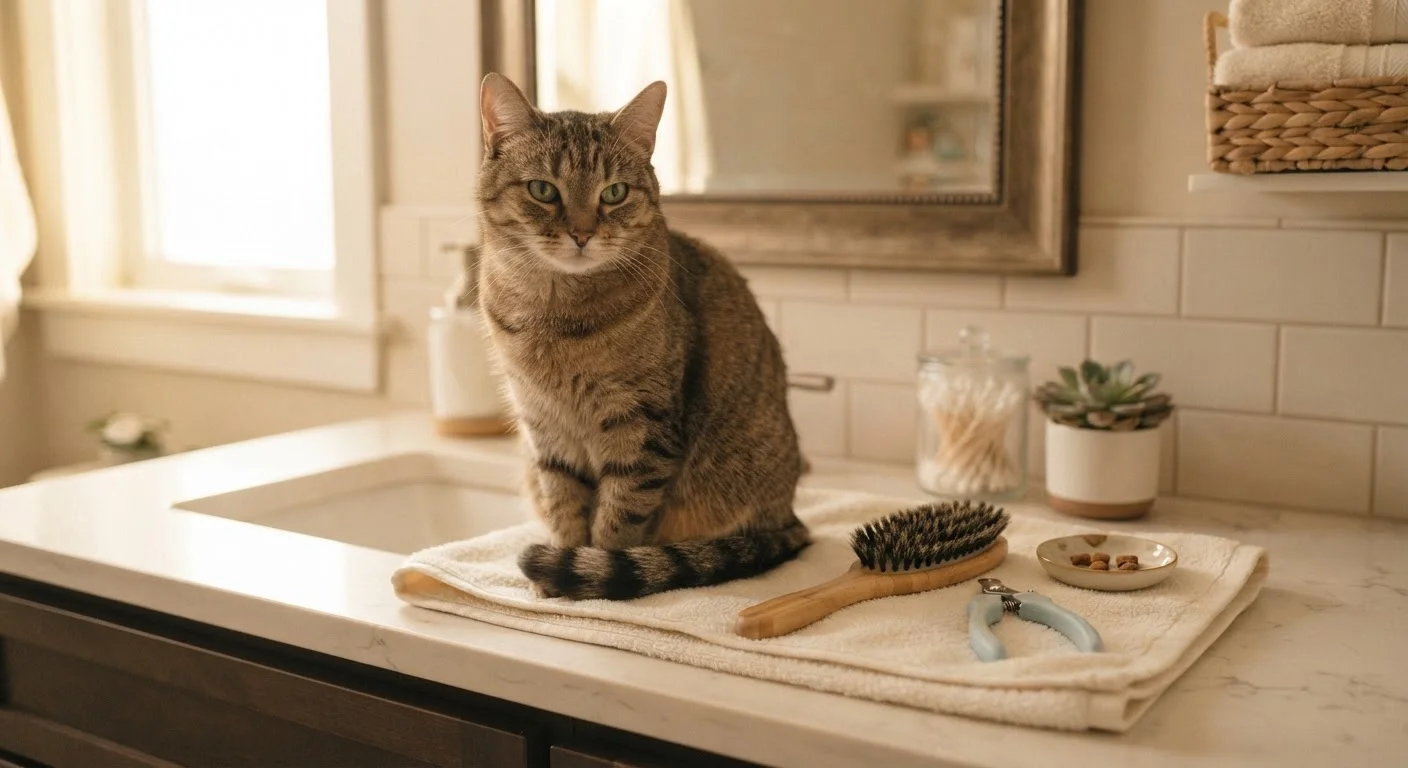
Non-slip mat or folded towel
Provides stable footing on slippery countertops or sink surfaces, reducing your cat's anxiety.
Fine-toothed comb
Works through tangles and mats on medium-to-long coats after initial brushing.
Room-by-Room Readiness Checklist
Work through each group below before your next grooming session. Mark off items as confirmed - not just owned, but staged and accessible in the space where you'll be working.
Bathroom or Grooming Area Setup
Brushing and Coat Care
Nail Trimming Station
Ear and Eye Inspection
Bathing Readiness (When Needed)
Know When to Stop - And When to See a Vet
Any signs of skin lesions, heavy scaling, persistent ear odor, or unusual nail discoloration are clinical signals, not grooming problems. Do not attempt to treat these at home. Contact your veterinarian before continuing any grooming routine if you notice these changes.
Common Mistakes to Avoid
Even well-prepared owners can undermine a grooming session with a few predictable errors. Forcing a cat to stay still for longer than it's comfortable with - especially during early grooming sessions - tends to create lasting negative associations with the process. Shorter, positive sessions build tolerance over time far more effectively than one exhaustive grooming marathon.
At-home cat grooming shares some pitfalls with dog grooming, though the animals respond quite differently to handling. Common at-home dog grooming mistakes often come down to over-bathing and mishandling nails - the same nail-trimming caution applies strongly to cats, whose quick (the blood vessel inside the nail) can be nicked easily on dark claws.
Never use human grooming tools on your cat - scissors designed for human hair or nail clippers not intended for pets can crush rather than cut, causing pain or injury. Finally, avoid grooming when your cat is already agitated, hungry, or just woken from sleep. Timing matters as much as technique.
This article is for general informational purposes only. If your cat shows signs of skin irritation, ear discharge, or abnormal nail growth, consult a licensed veterinarian before proceeding with at-home grooming.
The content on this site is provided for informational purposes only and should not be considered a substitute for professional advice. While we strive to provide accurate and up-to-date information, we make no guarantees regarding its completeness or accuracy. Always consult a qualified professional for advice specific to your circumstances before making any decisions.