

Why At-Home Grooming Goes Wrong
Grooming your dog at home is a practical, cost-effective part of responsible ownership - but it's also one of the areas where well-meaning owners most consistently make preventable mistakes. The errors aren't usually caused by carelessness. They stem from outdated advice, misapplied human-grooming logic, or simply not knowing what canine skin and coat actually need.
If you're new to dog ownership, our guide to what to expect in the early weeks at home covers grooming as part of the broader adjustment period. For those already grooming regularly, the mistakes below represent the most common gaps between intention and best practice - as consistently flagged by veterinarians and professional groomers.
Bathing too frequently and stripping the coat's natural oils.
Why it happens: Owners apply human bathing habits to dogs, assuming more frequent washing means a cleaner, healthier pet.
Cutting nails too short and hitting the quick - the blood vessel inside the nail.
Why it happens: Owners are often uncertain where the quick ends, particularly in dogs with dark nails, and trim too aggressively to avoid repeat sessions.
Over-cleaning the ears or inserting objects too deeply into the ear canal.
Why it happens: Owners assume regular ear cleaning is always beneficial, or attempt to remove visible debris using cotton swabs.
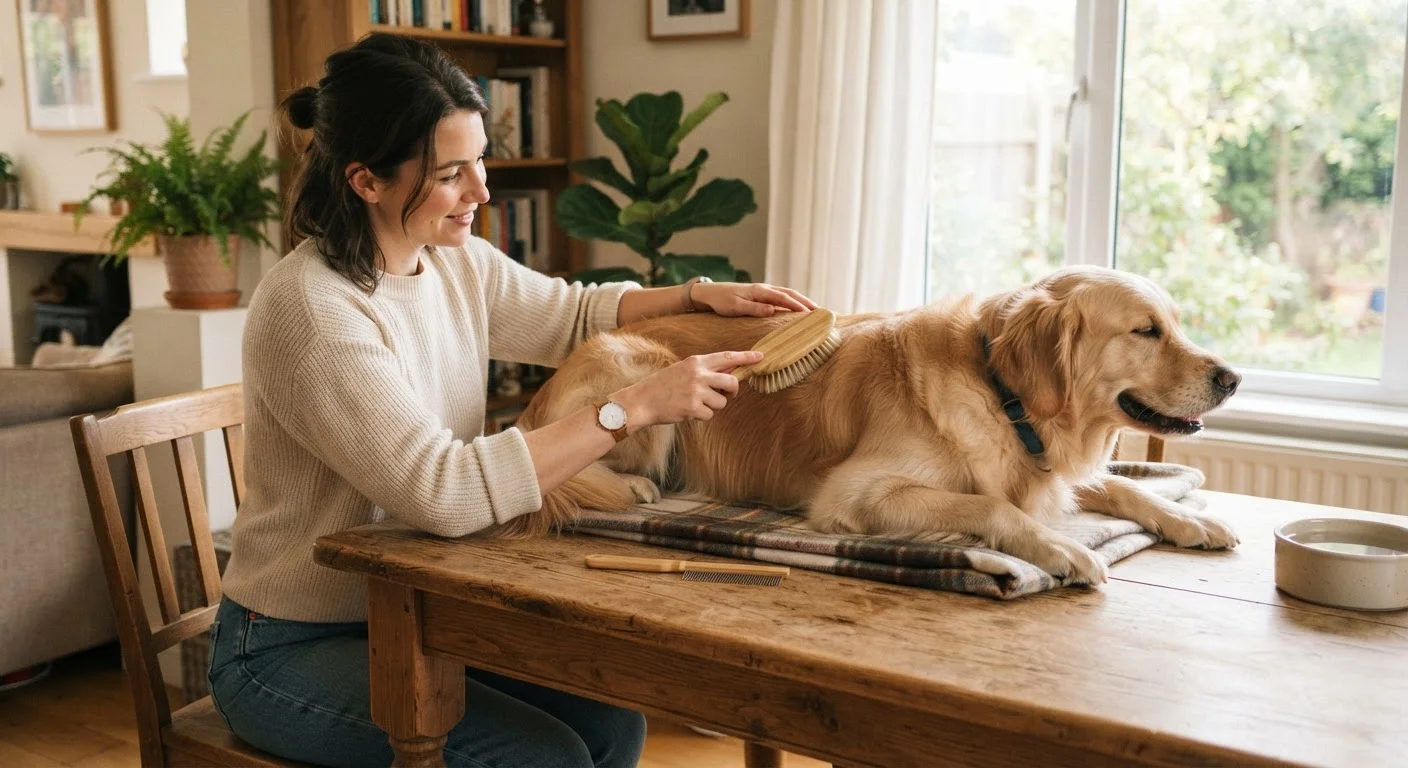
Using the wrong brush for the dog's coat type, causing breakage or matting.
Why it happens: Owners purchase a single general-purpose brush without accounting for coat length, texture, or density.
Forcing a dog through grooming sessions instead of building tolerance gradually.
Why it happens: Owners treat grooming as a task to complete efficiently, not recognizing that a dog's stress response during handling can escalate over time.
Ignoring mats until they become severe, then attempting to cut them out with scissors.
Why it happens: Mats often develop close to the skin and aren't spotted until they've tightened, and owners reach for scissors as a quick fix.
Getting the Foundations Right
Sound at-home grooming is less about technique and more about understanding your individual dog. Breed, coat type, age, and temperament all shape what a healthy routine looks like. A double-coated breed like a Siberian Husky has very different brushing and bathing needs than a short-coated Beagle or a curly-coated Poodle-mix - treating them identically is a common source of problems.
~65%
Dog owners who groom at home at least occasionally
Industry surveys suggest a majority of US dog owners perform some grooming tasks at home, from brushing to bathing, though professional grooming rates vary by breed.
4-6 weeks
Recommended bathing interval for most dogs
Veterinary dermatologists generally recommend bathing most dogs no more than once every four to six weeks to preserve the skin's natural barrier.
Equally important is the emotional environment of grooming. Dogs that experience handling as stressful are harder to groom safely, and rushing through sessions compounds that stress over time. Pairing grooming with calm, reward-based interactions makes a genuine difference. The principles covered in our article on positive reinforcement in dog training apply directly to grooming desensitization.
Watch for Signs of Skin or Ear Problems
Redness, persistent scratching, unusual odor, discharge, or hair loss noticed during grooming sessions are not normal and warrant a veterinary evaluation. Home grooming puts you in a position to notice changes early - don't dismiss these signs as minor irritation. Prompt veterinary attention for skin and ear issues typically leads to faster resolution and prevents secondary infections.
Finally, home grooming doesn't replace professional assessment. A groomer or veterinarian can spot skin conditions, lumps, ear infections, or early dental issues that owners often miss during routine sessions. Building grooming into your broader annual health review - see our annual dog health checklist - helps nothing slip through the cracks.
The content on this site is provided for informational purposes only and should not be considered a substitute for professional advice. While we strive to provide accurate and up-to-date information, we make no guarantees regarding its completeness or accuracy. Always consult a qualified professional for advice specific to your circumstances before making any decisions.