

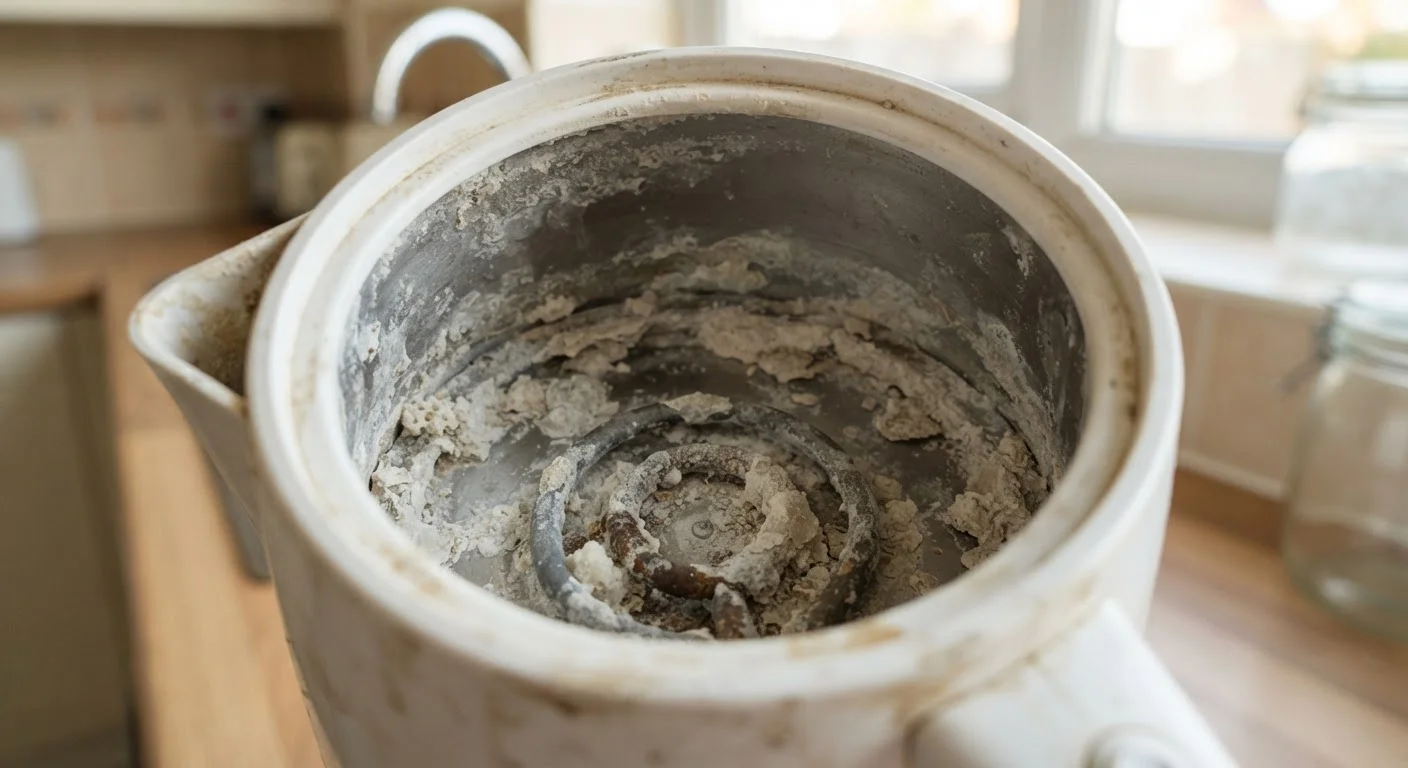
What Limescale Actually Does Inside Your Appliances
Hard water isn't immediately destructive - its damage is cumulative. Every time water is heated or left to evaporate, calcium and magnesium precipitate out of solution and bond to surfaces as limescale. In low concentrations, this is mostly cosmetic. Over time, however, even modest buildup creates measurable mechanical and thermal problems.
The most direct effect is on heating elements. Limescale is a poor conductor of heat, so a coated element must work longer and hotter to achieve the same water temperature. Studies by water treatment and appliance research bodies have found that just a few millimeters of limescale can increase a heating element's energy consumption noticeably. The element also runs hotter than designed, accelerating wear on both the element itself and surrounding components.
Beyond heating, mineral deposits clog small water passages, restrict pump flow, jam spray arms in dishwashers, and degrade rubber seals and gaskets. This kind of slow, invisible deterioration is one reason appliances in hard water regions often fail earlier than expected.
85%
US households affected by hard water
The U.S. Geological Survey estimates that approximately 85% of American homes receive hard or moderately hard water from their supply.
~7 GPG
Threshold for 'hard' water classification
Water measuring 7 grains per gallon or above is generally classified as hard; many US cities exceed this threshold significantly.
Up to 25%
Estimated efficiency loss from limescale on heating elements
Various appliance and water treatment industry sources cite efficiency reductions of up to 25% on scaled heating elements, though exact figures vary by buildup thickness and appliance type.
Which Appliances Are Most at Risk
Not all appliances are equally vulnerable. The biggest risk factors are frequent water contact, heating cycles, and small internal passages that minerals can obstruct.
- Electric kettles and coffee makers: These are the most visibly affected. The heating coil or plate accumulates scale rapidly, and you can often see white flakes in the water before other symptoms appear.
- Dishwashers: Spray arms with tiny holes are prone to clogging, and the internal heating element that dries dishes suffers the same efficiency loss as any other coil. Hard water also leaves spots and film on glassware. Whether you have a countertop or built-in model, the mechanism is the same - see what changes between dishwasher types for context on how each design handles water differently.
- Washing machines: Scale builds inside the drum, hoses, and heating element. It also reduces detergent effectiveness, since soap and hard water minerals interact unfavorably, sometimes leaving residue on fabric.
- Tank water heaters: Because they hold and continuously heat large volumes of water, sediment accumulates at the bottom of the tank, creating a layer that insulates the water from the burner or element and forces longer run times.
For a broader look at how neglected upkeep shortens appliance life across your home, these overlooked maintenance tasks are worth reviewing.
Practical Steps to Slow the Damage
Understanding the problem is useful; addressing it is better. Here are the most effective approaches for US households dealing with hard water.
Start With a Water Hardness Test
Before investing in any treatment system, find out exactly how hard your water is. Inexpensive test strips are widely available at hardware stores and online. Many local water utilities also publish hardness data in their annual Consumer Confidence Report, which is available on request or online. Knowing your hardness level in GPG helps you calibrate how frequently to descale and whether further intervention is worthwhile.
Descaling on a Regular Schedule
Acidic descaling agents - white vinegar and citric acid are both common household options - dissolve calcium carbonate deposits without damaging most appliance materials. Running a descaling cycle through a dishwasher or washing machine, or soaking a kettle element in diluted acid solution, removes existing buildup before it hardens into a more stubborn layer. Always follow the appliance manufacturer's guidance on descaling frequency and approved descaling agents, as some materials can be damaged by strong acids.
Using Rinse Aid and Salt in Dishwashers
Many European-style dishwashers sold in the US include a dedicated salt reservoir that feeds an internal water softening resin. Using dishwasher salt as the manufacturer recommends can substantially reduce scale inside the machine and improve wash results.
Knowing Your Local Water Hardness
Your local water utility publishes annual Consumer Confidence Reports listing hardness levels. This tells you how urgently you need to act - households in cities drawing water from limestone-heavy aquifers (parts of Texas, Arizona, and the Midwest are commonly cited examples) face faster accumulation than households in areas with naturally soft water, such as the Pacific Northwest.
Keeping appliances in good condition is part of a broader pattern of home upkeep. Much like refrigerator habits that quietly raise energy bills, hard water damage is invisible day to day but compounds into real costs over time.
Frequently Asked Questions
Common signs include white chalky residue around faucets and showerheads, spots on glassware after dishwashing, and soap that doesn't lather easily. You can confirm hardness levels with an inexpensive test kit or by contacting your local water utility, which is required to publish annual water quality reports.
Limescale buildup causes gradual wear rather than sudden failure, but over months and years it shortens appliance lifespan. Heating elements can burn out, pumps can clog, and seals can deteriorate faster. Catching buildup early and descaling regularly helps prevent permanent damage.
In moderately hard water areas, descaling a kettle or coffee maker every one to three months is a common recommendation. For dishwashers and washing machines, a monthly or quarterly maintenance cycle is often suggested. Frequency should increase if your water is classified as very hard.
Yes. Tank-style water heaters are particularly vulnerable because they continuously heat water, accelerating mineral precipitation. Sediment settles at the bottom of the tank, reducing efficiency and potentially causing overheating. Flushing the tank annually is a standard maintenance practice in hard water regions.
Hard water is generally safe to drink. The calcium and magnesium it contains are minerals the human body uses. This article focuses on appliance and household effects, not health outcomes. Consult your water utility or a healthcare professional if you have specific health concerns about your water supply.
Ion-exchange water softeners replace calcium and magnesium with sodium ions, which largely prevents limescale formation. However, softeners require ongoing salt replenishment and maintenance, and they are not effective for all types of minerals. Salt-free conditioning systems offer an alternative but work differently - research options carefully before investing.
The content on this site is provided for informational purposes only and should not be considered a substitute for professional advice. While we strive to provide accurate and up-to-date information, we make no guarantees regarding its completeness or accuracy. Always consult a qualified professional for advice specific to your circumstances before making any decisions.