

Why So Many Names?
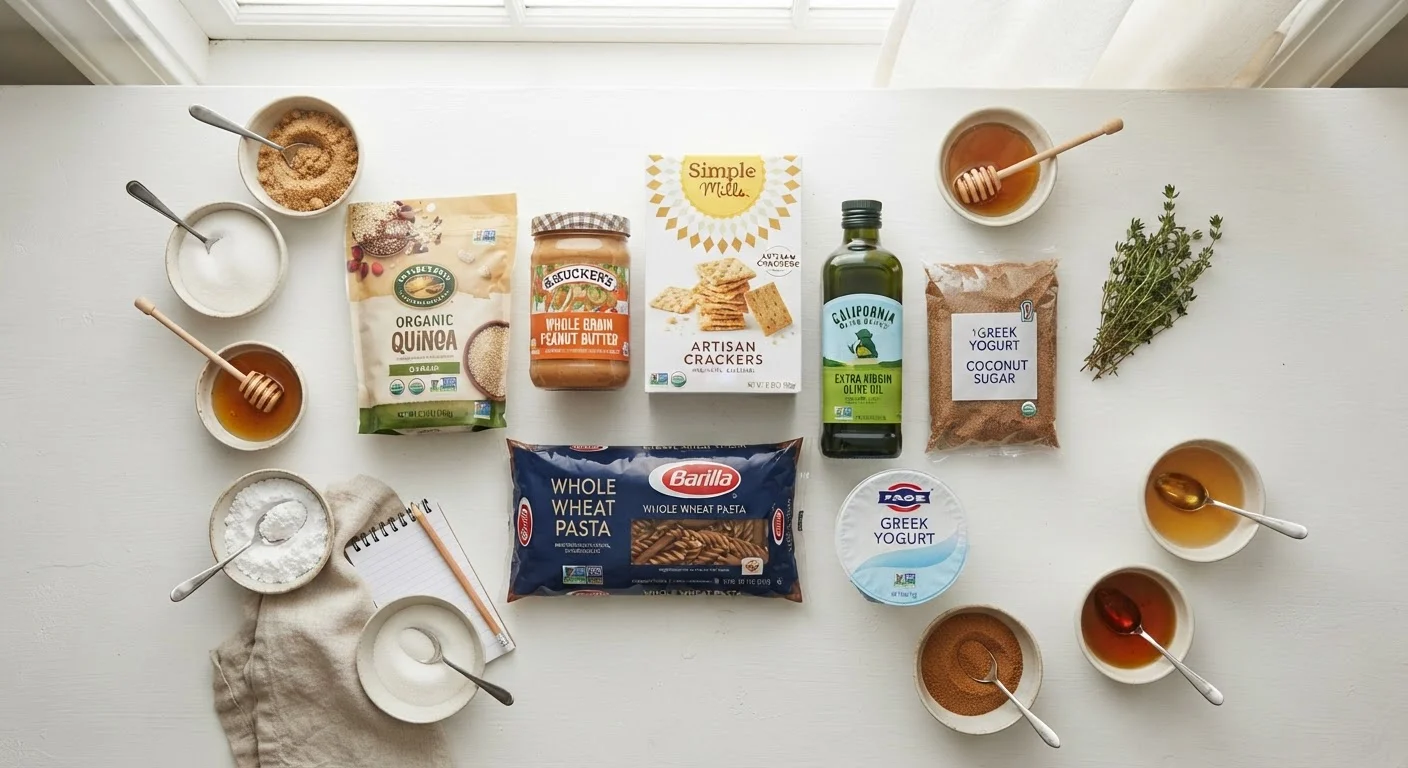
Food manufacturers are required by the FDA to list every ingredient in a product, but they are not required to group all sweeteners under a single label. As a result, added sugars can appear under more than 60 distinct names on an ingredient list. A product containing cane sugar, brown rice syrup, and dextrose technically lists three separate sweeteners - even though all three contribute added sugar to the product.
Understanding this pattern is useful context, not cause for alarm. The updated Nutrition Facts panel now includes a dedicated Added Sugars line with a percent Daily Value, which gives a clearer at-a-glance picture than ingredient scanning alone. Still, recognizing common synonyms helps you understand what kind of sweetener a product contains. For a full walkthrough of the Nutrition Facts panel, see Reading a Nutrition Facts Panel Without Getting Confused.
Added Sugars Are Now on the Label
Since the FDA updated the Nutrition Facts panel requirements, most packaged foods must list 'Added Sugars' as a separate line under Total Sugars, along with a percent Daily Value. This makes it easier to track intake at a glance without decoding every ingredient. However, ingredient lists remain important for understanding which sweeteners are actually in a product.
A Field Guide to Common Added Sugar Names
Added sugars fall into a few recognizable families. Learning the patterns makes ingredient lists far less opaque.
| Names for added sugar on labels | 60+ (FDA and nutrition research literature) |
| Daily Value for added sugars | 50 grams (about 12 tsp) (FDA Nutrition Facts label regulations) |
| U.S. dietary guideline recommendation | Less than 10% of daily calories from added sugars (Dietary Guidelines for Americans, 2020-2025) |
| Top source of added sugars in U.S. diet | Sugar-sweetened beverages (CDC Nutrition data) |
| Ingredient list order rule | Ingredients listed by weight, heaviest first (FDA labeling regulations) |
Sugars That End in "-ose"
Many individual sugar molecules carry the suffix -ose: sucrose (table sugar), fructose, glucose, dextrose, maltose, and lactose. When these appear in a processed food where they wouldn't naturally occur - dextrose in a cracker, for example - they are added sugars.
Syrups
The word "syrup" is a reliable signal: corn syrup, high-fructose corn syrup (HFCS), brown rice syrup, maple syrup, malt syrup, and tapioca syrup are all added sugar sources. Their caloric and metabolic contributions are broadly similar to other sugars, though the research continues to evolve.
"Natural" Sweeteners
Ingredients marketed as natural - honey, agave nectar, coconut sugar, date sugar, and evaporated cane juice - are still classified as added sugars by the FDA. Their micronutrient content is generally minimal in the amounts typically consumed.
Juice Concentrates
Apple juice concentrate, grape juice concentrate, and similar ingredients are commonly used as sweeteners. When added to a product rather than consumed as whole fruit, these are counted as added sugars.
Other Names to Know
Molasses, treacle, caramel, barley malt, carob syrup, muscovado, and turbinado sugar all fall into the added sugar category as well.
Added sugars
Sugars and syrups that are added to foods or beverages during processing or preparation, distinct from sugars that occur naturally in whole fruits, vegetables, or dairy.
Intrinsic sugars
Sugars that occur naturally within the cellular structure of whole foods, such as fructose in fruit or lactose in milk, and are not classified as added sugars.
High-fructose corn syrup
A liquid sweetener derived from corn starch in which some glucose has been converted to fructose. It appears in many processed foods and beverages and is classified as an added sugar.
Daily Value (DV)
A reference amount used on Nutrition Facts panels to indicate how much a nutrient in a serving contributes to a daily diet, based on a 2,000-calorie reference intake.
What the Evidence Says About Intake
The Dietary Guidelines for Americans recommend keeping added sugar intake below 10% of total daily calories. For a 2,000-calorie diet, that corresponds to about 50 grams, the same figure used for the Daily Value on Nutrition Facts panels. Average U.S. adult intake exceeds that guideline, with sugar-sweetened beverages being the leading contributor according to CDC nutrition data.
17 tsp
Average daily added sugar intake among U.S. adults
According to National Health and Nutrition Examination Survey (NHANES) data analyzed by the CDC.
60+
Distinct names for added sugars found on ingredient lists
Catalogued across FDA guidance, academic nutrition literature, and food labeling research.
10%
Maximum recommended share of daily calories from added sugars
Per the Dietary Guidelines for Americans, 2020-2025, issued jointly by HHS and USDA.
Research consistently links high added sugar intake to increased risk for dental caries and, in the context of excess calorie consumption overall, to weight gain and associated cardiometabolic concerns. The evidence is stronger for some outcomes than others, and individual context - total diet quality, activity level, and health status - matters significantly. This article provides general educational information only; consult a qualified healthcare or registered dietitian professional for personalized guidance.
Reading ingredient lists is one practical skill among several. Just as understanding a skincare ingredient list requires knowing how lists are structured, reading food labels gets easier once you recognize the patterns. The Added Sugars line on the Nutrition Facts panel remains the most direct tool - but knowing the names gives you a fuller picture of what's in your food.
This article is for general informational and educational purposes only and does not constitute medical or dietary advice. Speak with a registered dietitian or qualified healthcare professional for guidance tailored to your individual health needs.
The content on this site is provided for informational purposes only and should not be considered a substitute for professional advice. While we strive to provide accurate and up-to-date information, we make no guarantees regarding its completeness or accuracy. Always consult a qualified professional for advice specific to your circumstances before making any decisions.