

When Good Intentions Aren't Enough
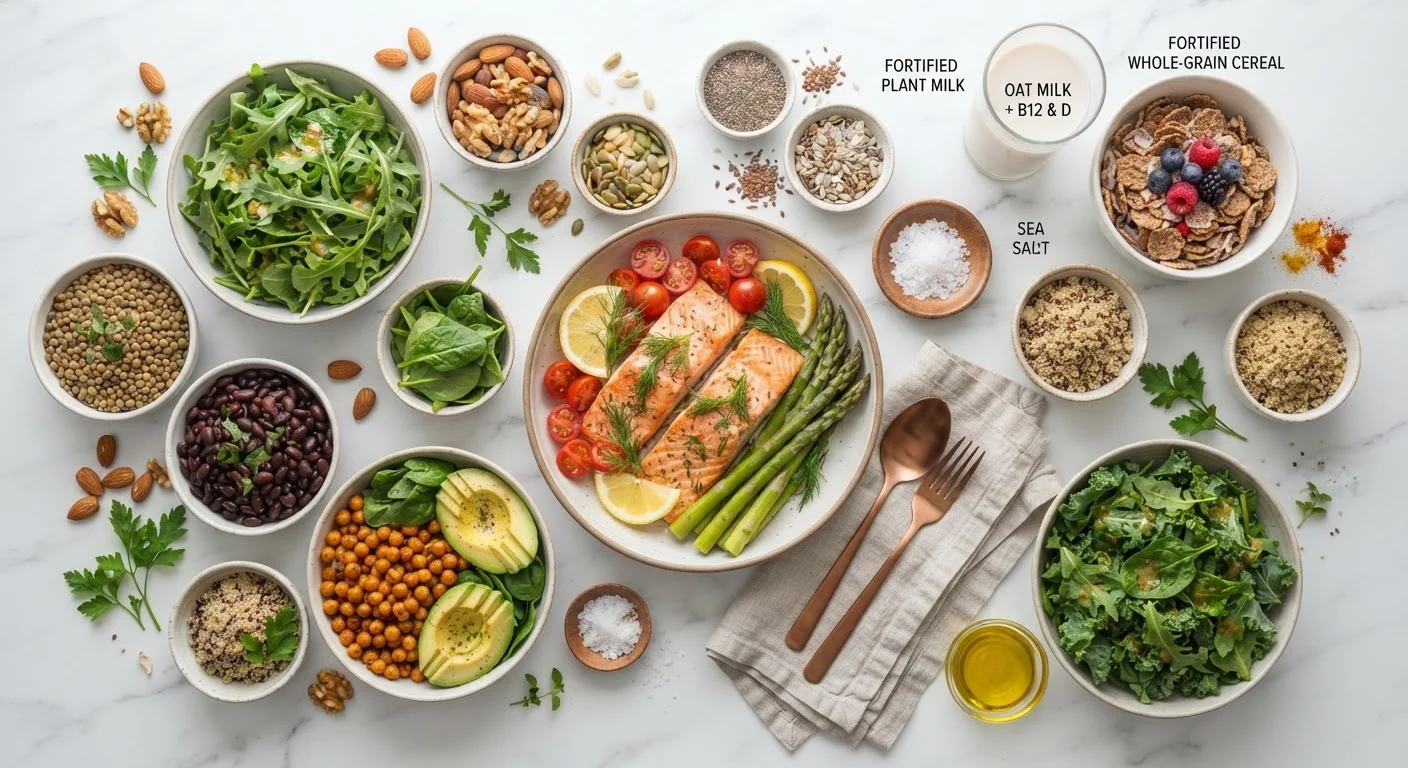
Many people eating what they consider a reasonably balanced diet are still falling short on key nutrients. This isn't a failure of effort - it reflects how modern food environments, lifestyle patterns, and even soil quality have shifted the nutritional landscape. Certain vitamins and minerals consistently appear at inadequate levels in population surveys, yet rarely cause dramatic symptoms in the early stages, making them easy to miss.
Understanding which gaps are most common - and which food sources can help close them - is a practical first step toward more informed eating. As with any health concern, personal nutritional needs vary considerably. If you suspect a deficiency, a qualified healthcare provider can help you assess your status through dietary review and appropriate lab testing.
The list below covers nutrients that national dietary surveys and nutrition researchers consistently flag as falling short in everyday American diets. See our deep dive on dietary fibre for a closer look at one of the most commonly overlooked nutrients of all.
Vitamin D
Vitamin D is synthesized in the skin through sun exposure, but factors including geographic latitude, indoor lifestyles, sunscreen use, and darker skin tones can significantly limit this natural production. Dietary sources are relatively few - fatty fish such as salmon and mackerel, egg yolks, and fortified foods like milk and some plant-based alternatives are among the most accessible. Research consistently places vitamin D among the most commonly insufficient nutrients in the US population, particularly in northern states during winter months.
Low vitamin D status has been associated with bone health concerns and immune function, though the full scope of its effects is still an active area of research. Testing is the only reliable way to know your level.
Vitamin D deficiency is common year-round, not just in winter, due to lifestyle and skin factors.
Magnesium
Magnesium is involved in hundreds of enzymatic reactions in the body, including energy metabolism, muscle function, and nerve signaling. Despite its importance, surveys suggest a substantial portion of American adults consume less than the estimated average requirement. Processed and refined foods - which dominate many diets - are notably low in magnesium compared to whole grains, legumes, nuts, seeds, and dark leafy greens.
Symptoms of low magnesium intake can be subtle, including muscle cramps, fatigue, and disrupted sleep, all of which are easy to attribute to other causes. Prioritizing magnesium-rich whole foods is generally a sound dietary strategy.
Highly processed diets are particularly likely to fall short on magnesium, a mineral essential to hundreds of body processes.
Iron
Iron deficiency is one of the most prevalent nutrient deficiencies globally, and in the US it disproportionately affects women of reproductive age, young children, and people following plant-based diets. There are two forms of dietary iron: heme iron (found in meat, poultry, and fish) and non-heme iron (found in legumes, fortified cereals, tofu, and leafy greens). Heme iron is absorbed more efficiently, while non-heme iron absorption can be enhanced by consuming vitamin C-rich foods alongside iron sources.
Iron deficiency can progress to anemia before noticeable fatigue or weakness appear. Because both low and excess iron carry health implications, testing before supplementing is strongly recommended.
Consuming vitamin C alongside plant-based iron sources meaningfully improves absorption for those avoiding meat.
Omega-3 Fatty Acids
Long-chain omega-3 fatty acids - specifically EPA and DHA - are found primarily in fatty fish and seafood. Most Americans eat well below the amounts associated with cardiovascular and cognitive health in observational research. While ALA (found in flaxseeds, chia seeds, and walnuts) is a plant-based omega-3, the body converts only a small fraction of it to EPA and DHA, making direct dietary sources important, particularly for those who rarely eat fish.
For people who do not regularly consume fatty fish, algae-based omega-3 supplements provide EPA and DHA directly without the concerns some associate with fish consumption. As always, consult a healthcare provider before starting any supplement regimen.
Algae-based omega-3 supplements offer a direct EPA and DHA source for people who rarely eat fatty fish.
Potassium
Potassium plays a central role in blood pressure regulation, fluid balance, and muscle function. National dietary data suggest the vast majority of Americans fall short of adequate intake, largely because potassium is concentrated in fruits, vegetables, legumes, and dairy - food groups that many people under-consume. Notably, the relationship between sodium and potassium matters: a diet high in sodium and low in potassium is particularly unfavorable for blood pressure health, according to established nutrition science.
Increasing vegetable and fruit variety is one of the most straightforward ways to improve potassium intake alongside a range of other beneficial nutrients.
Most Americans fall below adequate potassium intake, largely due to under-consumption of fruits, vegetables, and legumes.
Vitamin B12
Vitamin B12 is found almost exclusively in animal-derived foods - meat, fish, dairy, and eggs. People following vegan or strict vegetarian diets are at significant risk of deficiency if they do not use fortified foods or supplements. However, older adults are also at risk regardless of diet, because the stomach produces less acid with age, which impairs B12 absorption from food. Fortified nutritional yeast, plant-based milks, and B12 supplements are practical options for at-risk groups.
B12 deficiency can cause neurological symptoms and megaloblastic anemia. Because it develops slowly and symptoms can be nonspecific, blood testing is often the most reliable way to identify a shortfall. This is one area where consulting a professional is especially important, as discussed in our review of common nutrition misconceptions.
Older adults and vegans are both at meaningful risk of B12 deficiency, though for different physiological reasons.
Building a More Complete Nutritional Picture
Nutritional gaps rarely exist in isolation. Dietary patterns, cooking habits, gut health, and individual absorption differences all interact to determine how much of any given nutrient your body actually uses. This is why looking at nutrient density across your overall eating pattern - rather than fixating on a single food or supplement - tends to be more meaningful over time. Our article on eating patterns and daily food habits explores this broader lens in more detail.
Prioritize Food First, Then Evaluate
Whole food sources of nutrients come packaged with fiber, phytonutrients, and synergistic compounds that isolated supplements cannot fully replicate. Before reaching for a supplement, consider whether dietary changes could realistically close a gap. When supplements are appropriate - due to absorption issues, dietary restrictions, or confirmed deficiency - a healthcare provider can help you identify the right form and amount for your situation.
It's also worth being a careful reader of nutrition research. Headlines about individual nutrients can overstate certainty in either direction. For a grounded perspective on how to interpret nutrition studies, see our guide on reading nutrition research critically. Nutritional needs also shift across life stages - what's adequate in your 30s may not be sufficient in your 60s, as explored in our overview of nutrition across the life stages.
This article is for general informational and educational purposes only and does not constitute medical advice. Consult a qualified healthcare professional before making changes to your diet, starting supplements, or if you have concerns about your nutritional status.
The content on this site is provided for informational purposes only and should not be considered a substitute for professional advice. While we strive to provide accurate and up-to-date information, we make no guarantees regarding its completeness or accuracy. Always consult a qualified professional for advice specific to your circumstances before making any decisions.