

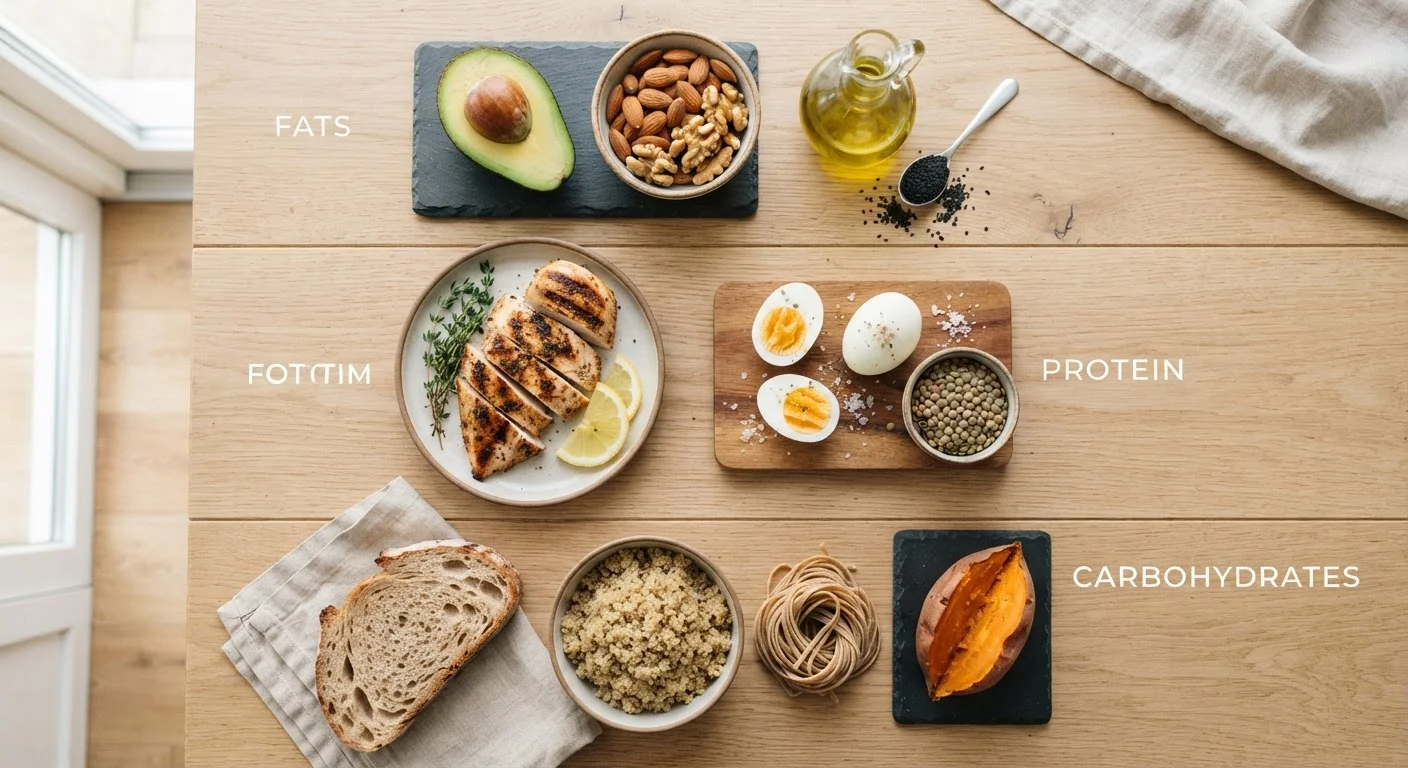
Carbohydrates: Your Body's Preferred Fuel
Carbohydrates are the body's first choice for energy, particularly for the brain and during physical activity. When you eat carbs - whether from bread, fruit, legumes, or vegetables - your digestive system breaks them down into glucose, which cells use to produce energy.
Not all carbohydrates behave identically. Simple carbohydrates, like those in sugar or refined grains, are digested quickly and cause a faster rise in blood glucose. Complex carbohydrates, found in whole grains, beans, and starchy vegetables, digest more slowly and provide a steadier energy release. Dietary fibre, technically a carbohydrate, resists digestion entirely and plays a distinct role in gut health.
Carbohydrates have attracted criticism in popular diet culture, but research consistently shows they are not inherently problematic. The source and overall dietary pattern matter more than the nutrient category itself. For a closer look at persistent misconceptions, see popular nutrition myths the evidence has addressed.
45-65%
Recommended share of daily calories from carbohydrates
According to the Dietary Guidelines for Americans, carbohydrates should make up nearly half to two-thirds of total daily calorie intake for most adults.
10-35%
Recommended daily calorie range from protein
The Dietary Reference Intakes established by the National Academies set this broad range to account for varying individual needs and activity levels.
20-35%
Recommended daily calorie range from total fat
Current U.S. dietary guidelines place fat intake within this range, emphasizing the importance of fat type over fat quantity alone.
Protein: The Body's Builder and Maintainer
Protein is essential for growth, repair, and the maintenance of nearly every structure in the body - from muscle and skin to enzymes and immune proteins. It is made up of smaller units called amino acids, nine of which are considered essential because the body cannot produce them on its own and must obtain them through food.
Animal-based foods such as meat, fish, poultry, eggs, and dairy are complete protein sources, meaning they contain all nine essential amino acids. Most plant-based proteins - with exceptions like soy and quinoa - are incomplete individually but can collectively provide all essential amino acids when a variety of plant foods are eaten across the day.
Protein also contributes to satiety, the feeling of fullness after eating, making it a practically relevant macronutrient in appetite regulation. Older adults in particular may benefit from adequate protein intake to help counter the gradual muscle loss associated with aging, though specific needs should always be discussed with a healthcare professional.
Combining Plant Proteins Across the Day
If you primarily eat plant-based foods, you don't need to engineer perfect amino acid combinations at every single meal. Eating a varied diet of legumes, whole grains, nuts, seeds, and vegetables across the day generally supplies all essential amino acids. Aiming for variety rather than perfect pairing at each sitting is a practical, sustainable approach.
Fats: Far More Than an Energy Reserve
Dietary fat serves several functions that go well beyond energy storage. Fat is required for absorbing fat-soluble vitamins - A, D, E, and K - meaning a diet severely low in fat can impair vitamin status even when those vitamins are consumed in adequate amounts. Fat also provides essential fatty acids, including omega-3 and omega-6 fatty acids, which the body cannot synthesize and must get from food.
The type of fat matters. Unsaturated fats - found in foods like olive oil, avocados, nuts, and fatty fish - are broadly associated with favorable health outcomes in nutritional research. Saturated fats, predominant in many animal products and tropical oils, are more complex in their effects, and dietary guidance on them continues to evolve. Industrially produced trans fats have been largely phased out in the U.S. food supply following regulatory action.
Fat also plays a structural role in every cell membrane in the body and is involved in hormone synthesis, making it indispensable rather than optional. When reading ingredient and nutrition information, understanding how fat is categorized can help - the next step is learning to interpret those labels: reading a nutrition label without getting confused covers exactly that.
Putting It All Together
Macronutrients do not work in isolation. A meal or snack typically delivers a combination of all three, and they interact with each other in digestion and metabolism. A potato eaten plain raises blood glucose differently than when eaten with protein and fat alongside it - illustrating how food combinations influence physiological responses.
Rather than fixating on eliminating one macronutrient, most evidence-informed approaches emphasize food quality within each category: choosing whole grains over refined ones, lean and plant-based proteins over highly processed meats, and unsaturated fats over those with a less favorable profile. Micronutrients - vitamins and minerals are the other essential layer of nutrition that works alongside macronutrients to support overall health.
This article is for general informational and educational purposes only and is not a substitute for professional medical or nutritional advice. Consult a qualified healthcare provider or registered dietitian for guidance tailored to your individual health needs.
Frequently Asked Questions
Tracking macros is one tool some people find useful, but it's not required for a healthy diet. Focusing on whole, minimally processed foods across all three macronutrient categories is a practical starting point for most people. If you have specific health goals or conditions, a registered dietitian can offer personalized guidance.
Neither approach is definitively superior for everyone. Research generally shows that total calorie intake and dietary adherence matter more than which macronutrient is reduced. Both low-carb and low-fat diets can support weight management when followed consistently and paired with overall food quality.
General dietary guidelines suggest roughly 0.8 grams of protein per kilogram of body weight per day for most healthy adults, though needs can be higher for older adults, athletes, or people recovering from illness. Speak with a healthcare provider for recommendations tailored to your situation.
No - dietary fats range widely in their effects. Unsaturated fats found in foods like olive oil, nuts, and fish are associated with positive health outcomes in research. Trans fats, largely eliminated from the food supply due to regulations, and excess saturated fat warrant more caution according to current evidence.
Many whole foods contain a mix of macronutrients. For example, legumes like lentils and chickpeas provide carbohydrates and protein with a small amount of fat. Eggs and dairy foods also deliver a combination of protein and fat, while whole grains contribute carbohydrates alongside modest protein.
The content on this site is provided for informational purposes only and should not be considered a substitute for professional advice. While we strive to provide accurate and up-to-date information, we make no guarantees regarding its completeness or accuracy. Always consult a qualified professional for advice specific to your circumstances before making any decisions.