

Why Nutrition Myths Are So Hard to Shake
Nutrition advice seems to change constantly, leaving many people unsure what to believe. Part of the problem is that real nutrition science is genuinely complex - but another major part is that oversimplified headlines travel far faster than careful research. Understanding why myths persist can help you evaluate new claims with a more critical eye.
Many popular beliefs about food trace back to small, preliminary studies that were reported as definitive conclusions, or to marketing language that gradually entered everyday conversation. As our guide to reading nutrition research explains, observational studies, randomized trials, and meta-analyses each tell very different stories - and conflating them is a reliable source of confusion.
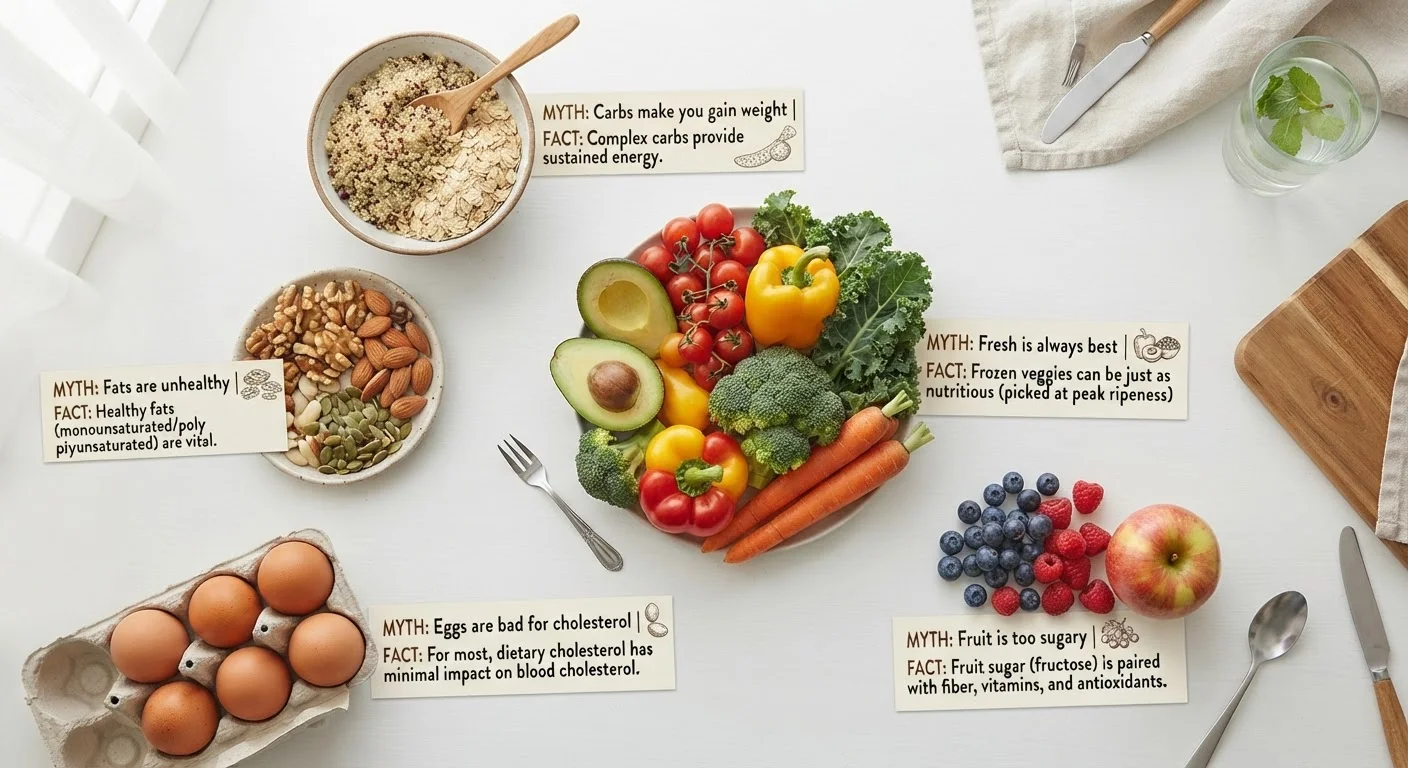
The myths below represent some of the most persistent misconceptions. The evidence doesn't support them, though nuance remains important in every case.
Myth
Eating fat makes you fat. Cutting dietary fat is the most reliable way to lose weight.
Fact
Dietary fat does not directly convert to body fat. Weight change is primarily driven by overall energy balance, not fat intake alone.
This myth gained traction during the low-fat diet movement of the 1980s and 1990s, when dietary guidelines broadly encouraged reducing fat consumption. Unfortunately, many reduced-fat foods compensated for flavor by adding sugar and refined carbohydrates - leading to outcomes that complicated the simple narrative.
Research since then has consistently shown that healthy unsaturated fats - found in foods like avocados, olive oil, and nuts - support cardiovascular health and satiety. What drives fat storage is a sustained calorie surplus, not the macronutrient itself. Fat is also essential for absorbing fat-soluble vitamins (A, D, E, and K) and supporting cell membrane function.
Myth
Detox cleanses and juice fasts flush toxins from the body and reset your system.
Fact
There is no credible scientific evidence that commercial cleanses remove toxins. Your liver and kidneys perform this function continuously.
The term "toxin" is used loosely in wellness marketing and rarely refers to a specific, measurable substance. The human body already runs a sophisticated detoxification system: the liver processes and neutralizes compounds for excretion, while the kidneys filter blood and remove waste products through urine.
Clinical research has not identified a mechanism by which juice fasts or proprietary cleanse products meaningfully accelerate or enhance this process. Some products may cause short-term calorie restriction - which can produce a feeling of lightness - but this is not evidence of toxin removal. Anyone concerned about liver or kidney function should speak with a healthcare provider, not reach for a cleanse product.
Myth
Carbohydrates are bad for you and should be minimized or eliminated for good health.
Fact
Carbohydrates are the body's primary energy source. Quality and type matter far more than simply avoiding them.
Lumping all carbohydrates together ignores important distinctions. Refined carbohydrates - white bread, sugary beverages, pastries - are digested rapidly and may contribute to blood sugar spikes when eaten in excess. Whole-food carbohydrates - legumes, whole grains, vegetables, fruit - are digested more slowly and come packaged with fiber, vitamins, and phytonutrients.
Population studies of groups with high longevity consistently show diets rich in whole-food carbohydrates. Very low-carbohydrate diets can be appropriate for some individuals under professional guidance, but they are not universally superior. The overall dietary pattern - not carbohydrate presence - appears to be what most influences long-term health outcomes.
Myth
Eating late at night causes weight gain because your metabolism slows down while you sleep.
Fact
Timing alone does not determine whether a meal leads to weight gain. Total daily calorie intake and diet quality remain the dominant factors.
The idea that the body stores calories differently at night is not well supported. Metabolism does decrease slightly during sleep, but this is a modest shift - and your body continues to use energy for essential functions throughout the night.
Where late-night eating can become problematic is behaviorally: evening snacking often involves calorie-dense, low-nutrient foods eaten out of habit or boredom, which adds to total intake. Research on chrono-nutrition - the study of meal timing - does suggest some interesting patterns worth following, but current evidence does not support the blanket conclusion that eating after a certain hour independently causes weight gain in the context of an otherwise balanced diet.
Myth
Organic food is significantly more nutritious than conventionally grown produce.
Fact
Most large-scale reviews have found minimal meaningful nutritional differences between organic and conventionally grown foods.
Organic farming practices differ from conventional ones in terms of pesticide use and some soil management approaches - but these differences do not reliably translate into substantially higher nutrient content in the final food. A widely cited systematic review published in the Annals of Internal Medicine found that nutrient differences were small and unlikely to be clinically significant for most people.
Reasons to consider organic food may include concerns about pesticide residues or environmental farming practices - both of which are legitimate areas of ongoing research and debate. But the claim that organic automatically means more nutritious is not strongly supported. See our related article on organic and natural food labels for more on what these terms actually mean in practice.
What the Evidence Actually Supports
Cutting through nutrition noise doesn't mean swinging to the opposite extreme. Most credible dietary guidance converges on a few durable principles: prioritize whole foods, include a variety of vegetables and legumes, get enough dietary fibre, and pay attention to overall eating patterns rather than fixating on single nutrients or meal timing.
~70%
Adults exposed to conflicting nutrition advice
A survey by the International Food Information Council Foundation found roughly 7 in 10 US adults reported feeling confused by contradictory nutrition information.
5%
Typical difference in key nutrients, organic vs. conventional
A systematic review in the Annals of Internal Medicine found nutrient differences between organic and conventional produce were generally small and not clinically meaningful.
For a clearer picture of what each macronutrient actually contributes to your health, see our breakdown of carbs, proteins, and fats. It's also worth thinking about eating patterns and timing, which emerging research suggests may matter as much as individual food choices.
Nutrition Advice Is Not One-Size-Fits-All
Individual health conditions, medications, life stage, and genetics all influence how your body responds to food. What works well in population-level research may not apply to your specific situation. Always consult a registered dietitian or qualified healthcare provider before making significant changes to your diet, especially if you have a chronic condition or are pregnant.
This article is for general informational and educational purposes only and does not constitute medical or dietary advice. For personal guidance on nutrition, please consult a qualified healthcare professional or registered dietitian.
The content on this site is provided for informational purposes only and should not be considered a substitute for professional advice. While we strive to provide accurate and up-to-date information, we make no guarantees regarding its completeness or accuracy. Always consult a qualified professional for advice specific to your circumstances before making any decisions.