

Why Movement Patterns Matter
Most well-designed exercise programs aren't built around isolated muscle groups - they're built around movement patterns: the fundamental ways the human body moves through space. Training these patterns consistently helps develop balanced strength, supports everyday function, and reduces the risk of developing muscular imbalances over time.
Whether you're just getting started or refining an existing routine, understanding these categories gives you a reliable framework. See our beginner's guide to structuring a workout for more context on how these patterns fit into a broader plan.
| Number of foundational patterns | Seven |
| Primary training goal | Functional, balanced movement capacity |
| Equipment required | None - bodyweight variations exist for all seven |
| Suitable for | All fitness levels, with appropriate progressions |
| Key benefit | Reduces muscular imbalances and supports everyday function |
The Seven Foundational Movement Patterns
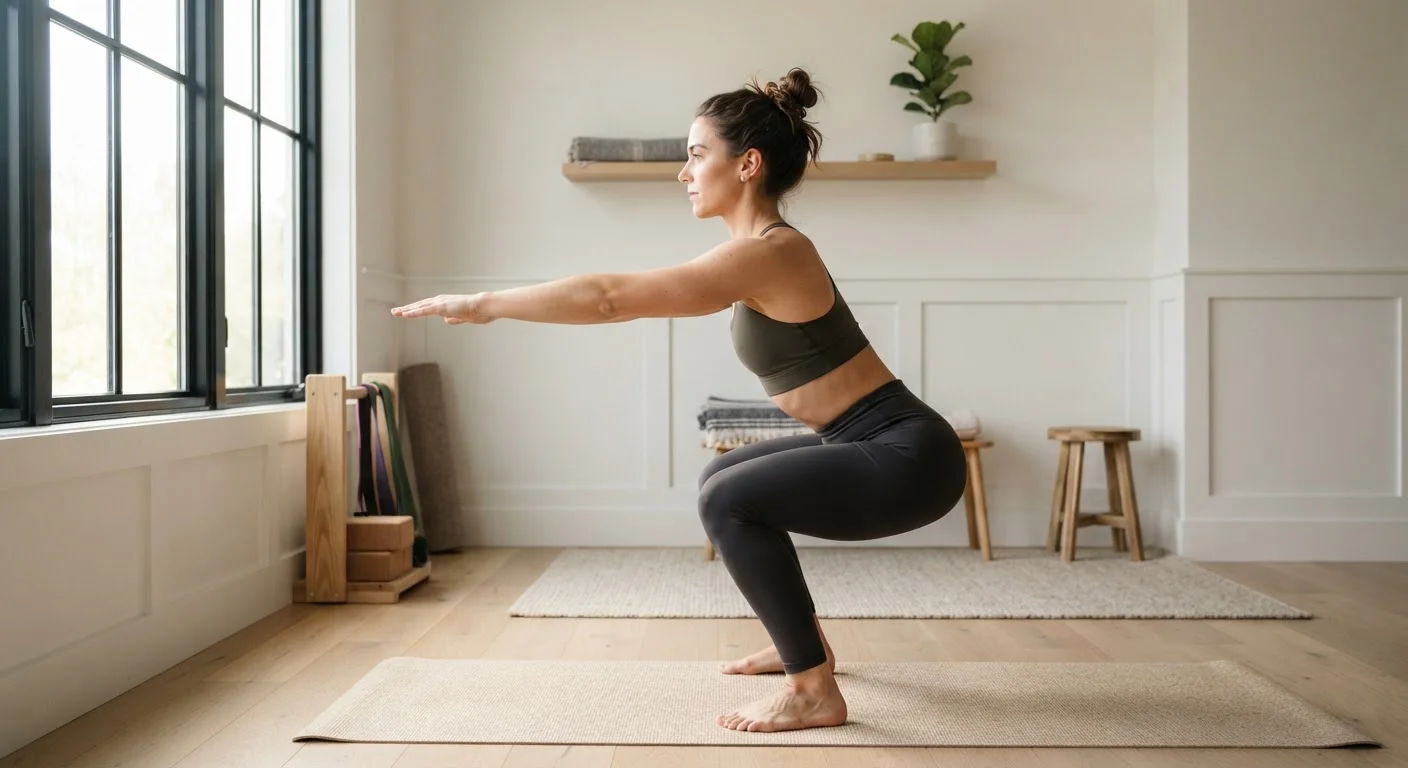
1. Squat
The squat pattern involves bending at the hips and knees while keeping the torso upright - essentially a sit-to-stand motion. It develops lower-body strength and is central to daily activities like sitting, standing, and climbing stairs. Bodyweight squats, goblet squats, and split squats are common variations.
2. Hinge
A hip hinge loads the posterior chain - the glutes, hamstrings, and lower back - by driving the hips backward while maintaining a neutral spine. Deadlifts and Romanian deadlifts are classic examples. Picking something up off the floor is a real-world hinge.
3. Push (Horizontal)
Horizontal pushing moves resistance away from the body in a forward plane. Push-ups and bench press variations train the chest, shoulders, and triceps in a way that mirrors pushing open a heavy door.
4. Push (Vertical)
Vertical pushing drives resistance overhead, emphasizing the shoulders and upper arms. Overhead press variations belong here. This pattern supports reaching and lifting objects above shoulder height safely.
5. Pull (Horizontal)
Rowing movements - pulling resistance toward the torso - work the upper and mid-back muscles. Rows in any form counter the forward posture many people develop from prolonged sitting, making this pattern particularly valuable.
6. Pull (Vertical)
Vertical pulling moves the body upward or pulls resistance down from overhead. Pull-ups and lat pulldowns are primary examples, developing the lats and biceps while reinforcing shoulder stability.
7. Carry
Often overlooked, loaded carries involve simply moving while holding weight - farmer's carries being the most common form. They build grip strength, core stability, and real-world conditioning simultaneously. Carrying groceries or luggage uses this pattern constantly.
A Note on Individual Differences
Movement patterns are a general framework, not a one-size-fits-all prescription. Injuries, mobility limitations, or chronic conditions may affect which variations are appropriate for you. Consult a qualified fitness professional or physical therapist before starting a new program if you have existing health concerns.
For a slightly different take on how these categories are grouped, the six-pattern framework consolidates horizontal and vertical pushing and pulling into single categories, which can also be a useful lens.
Building a Balanced Program Around These Patterns
A well-rounded routine touches each pattern across the week rather than overloading some while neglecting others. A common approach is pairing complementary patterns - such as a squat with a hinge, or a horizontal push with a horizontal pull - to distribute workload and recovery time evenly.
You don't need a gym to train all seven. Bodyweight variations cover every category: squats, glute bridges (hinge), push-ups, inverted rows, and weighted bag carries can all be done at home or outdoors. The guide to building a movement routine without a gym offers a practical framework for doing exactly that.
If you're ready to plan out your full week, designing a balanced weekly exercise plan walks through how to sequence sessions, manage intensity, and build in recovery. And if you're newer to resistance training, strength training for beginners explains how your body adapts over the first weeks of consistent effort.
This article is for general informational purposes only and does not constitute medical or fitness advice. Consult a qualified healthcare or fitness professional before beginning any new exercise program.
The content on this site is provided for informational purposes only and should not be considered a substitute for professional advice. While we strive to provide accurate and up-to-date information, we make no guarantees regarding its completeness or accuracy. Always consult a qualified professional for advice specific to your circumstances before making any decisions.