

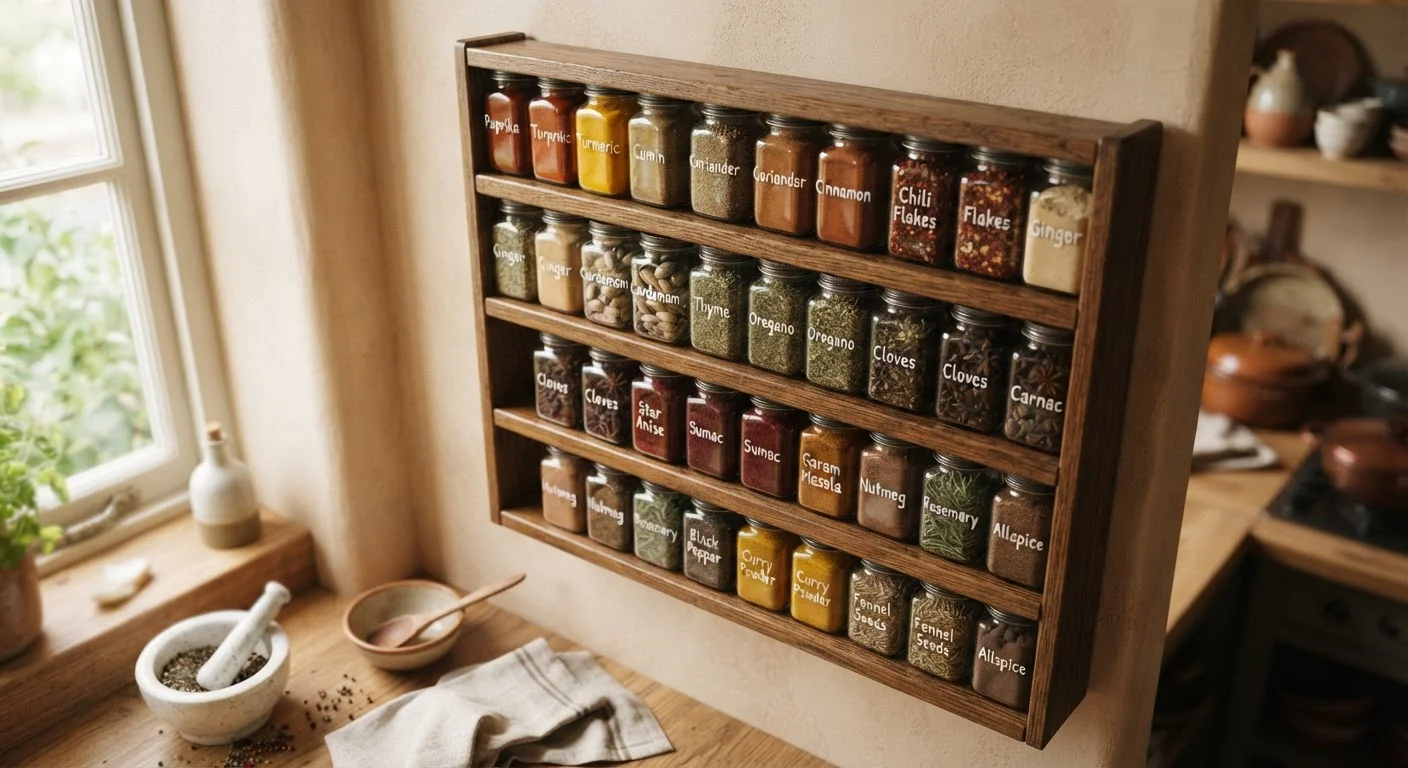
Why Spice Myths Are Costing You Flavor
For most home cooks, the spice rack is background furniture - occasionally restocked, rarely questioned. But a handful of widely accepted beliefs about how spices work, how long they last, and how to use them are quietly flattening the flavor of otherwise well-made dishes. These aren't obscure culinary edge cases; they're everyday habits that compound meal after meal.
Understanding the science behind spice quality doesn't require a culinary degree. It just requires letting go of a few assumptions. Much like the persistent misconceptions explored in common cooking myths around searing meat, spice myths often feel intuitive - which is exactly why they're so stubborn.
Myth
Spices last indefinitely - if they're not visibly moldy, they're still good.
Fact
Spices don't become unsafe to eat, but their volatile aromatic compounds degrade significantly over time, often rendering them nearly flavorless.
The common assumption that a sealed jar of paprika from three years ago is still contributing flavor is one of the most damaging spice myths in home cooking. Spices contain volatile oils responsible for their aroma and taste. These compounds dissipate through exposure to air, light, heat, and time - regardless of whether the jar looks fine. Ground spices typically retain meaningful potency for six months to a year; whole spices last somewhat longer, often two to four years. Using a flat, flavorless spice is essentially adding colored dust to your food.
Myth
The stove or oven hood is a convenient and harmless place to store spices.
Fact
Heat and steam generated during cooking accelerate the breakdown of aromatic compounds in spices, making stovetop storage one of the worst locations in the kitchen.
A spice rack mounted near the stove looks tidy and keeps seasonings within reach, but every time you boil water or sauté vegetables, the surrounding heat and moisture work against spice quality. The ideal storage environment is cool, dry, and away from direct light - a closed cabinet away from the stove, or even a drawer, is far more protective. If you cook frequently, the cumulative heat exposure of stovetop storage can noticeably shorten a spice's effective life.
Myth
Adding more spice always means more flavor.
Fact
Exceeding a recipe's intended spice quantity often creates harsh, bitter, or unbalanced results rather than deeper, more complex flavor.
More is not always more with spices. Many ground spices - particularly those high in tannins like cloves or those with bitter alkaloids like turmeric - become astringent or medicinal when overdone. Flavor in cooking is about balance: the interplay of fat, acid, salt, heat, and aromatics. Doubling the cumin in a dish doesn't double the flavor; it often just makes cumin the only flavor. Restraint, and tasting as you go, is a more reliable path to a well-seasoned dish than volume alone.
Myth
You can add spices at any point during cooking with equal results.
Fact
When you add spices - at the beginning in fat, mid-cook in liquid, or as a finish - dramatically changes what flavor compounds are released and how they integrate into the dish.
Timing is one of the most underappreciated variables in spice use. Fat-soluble aromatic compounds in spices are best extracted by blooming them in oil or butter early in the cooking process - this is why so many South Asian and Middle Eastern recipes begin with spices hitting warm ghee or oil before any other ingredient. Water-soluble compounds, by contrast, release more readily into liquid mid-cook. Some herbs and delicate spices, like fresh cilantro or finishing chili flakes, are better added at the end to preserve brightness. Adding everything at one arbitrary point treats all spices as equivalent, which they aren't.
Myth
Pre-ground spices are just as potent as freshly ground whole spices.
Fact
Grinding exposes aromatic oils to oxygen, so pre-ground spices begin losing potency immediately - whole spices retain their volatile compounds far longer.
The surface area increase from grinding whole spices dramatically accelerates oxidation. A whole cumin seed keeps its essential oils locked inside until mechanically broken; pre-ground cumin starts losing those aromatics from the moment it's processed. For spices you use frequently - cumin, coriander, cardamom, black pepper - grinding in small batches from whole form produces a noticeably more fragrant and flavorful result. A basic spice grinder or mortar and pestle is the most impactful low-cost tool for improving spice quality at home.
Getting the Most from Your Spices: Practical Takeaways
Once you understand how spice degradation and activation actually work, adjusting your habits is straightforward. Store whole spices - cumin seeds, coriander, cardamom pods - and grind them as needed using a small grinder or mortar and pestle. The difference in aroma compared to pre-ground versions is immediate and significant.
When you do use ground spices, give them a moment in a dry pan over medium heat, stirring constantly, before adding any liquid or fat. Alternatively, add them directly to warm oil at the start of cooking. Both methods - dry toasting and blooming in fat - help volatilize the aromatic compounds that make spices worth using in the first place.
~6-12 months
Effective potency window for ground spices
Food science sources generally agree that most ground spices deliver meaningful flavor for roughly six to twelve months after grinding or opening.
2-4 years
Typical shelf life for whole spices
Whole, unground spices retain their aromatic compounds significantly longer than pre-ground versions when stored in cool, dry, dark conditions.
Check your spice rack with a simple smell test: open the jar, give it a rub between your fingers, and inhale. If the aroma is faint or flat, the spice isn't contributing meaningfully to your food. This matters especially for spices in high-rotation dishes. If you're already thinking critically about what earns a permanent spot in your pantry, a guide to pantry staples that actually pull their weight is worth a read alongside this one.
The goal isn't a perfectly curated collection - it's a functional one. Fewer, fresher, well-stored spices will do more for your cooking than a crowded rack of depleted jars. Small adjustments in storage, timing, and technique add up to noticeably better food.
The content on this site is provided for informational purposes only and should not be considered a substitute for professional advice. While we strive to provide accurate and up-to-date information, we make no guarantees regarding its completeness or accuracy. Always consult a qualified professional for advice specific to your circumstances before making any decisions.