

The Numbers That Actually Mean Something
Two figures on a craft beer label are genuinely informative: ABV (alcohol by volume) and, to a lesser extent, IBU (International Bitterness Units).
ABV is federally required on most beer packaging in the U.S. and must fall within a regulated tolerance of the stated figure. It's the clearest single data point on the label - a 4% session ale and a 10% imperial stout will affect you very differently per glass, so this number is worth a second look before pouring.
IBU measures the concentration of bittering compounds from hops. A light lager might register around 10 IBU; an aggressively hopped double IPA can exceed 100. Here's the catch: IBU is a technical measurement, not a direct predictor of how bitter a beer will taste. Residual malt sweetness, alcohol warmth, and carbonation level all modulate perceived bitterness. Two beers with the same IBU can taste dramatically different. Think of IBU as directional, not definitive.
~9,000
Licensed craft breweries operating in the U.S.
The Brewers Association reported approximately 9,000 operating craft breweries in the U.S. as of its most recent annual count, reflecting significant market diversity.
100+
IBU ceiling for most commercial beer styles
While human bitterness perception generally plateaus around 100 IBU, some experimental beers are brewed beyond this threshold, though sensory difference above that level is debated among brewing scientists.
Style Names, Hop Callouts, and What They're Really Promising
Terms like IPA, Stout, Saison, and Gose are style classifications based on industry convention - not legal definitions. The Brewers Association and the Beer Judge Certification Program (BJCP) publish detailed style guidelines that many brewers follow voluntarily, but the federal regulator (the TTB) does not mandate compliance with those guidelines. A beer labeled 'New England IPA' is making a stylistic promise backed by reputation and peer expectation, not law.
Hop variety names - Mosaic, Citra, Simcoe, Galaxy - have become popular marketing signals on craft labels. These names do carry real flavor associations grounded in agricultural and brewing science: Citra hops are genuinely associated with citrus and tropical fruit aromatics. But the way hops are used in brewing (dry-hopped, bittering additions, whirlpool additions) dramatically shapes the outcome. A hop name tells you what the brewer worked with, not precisely what you'll taste in the glass.
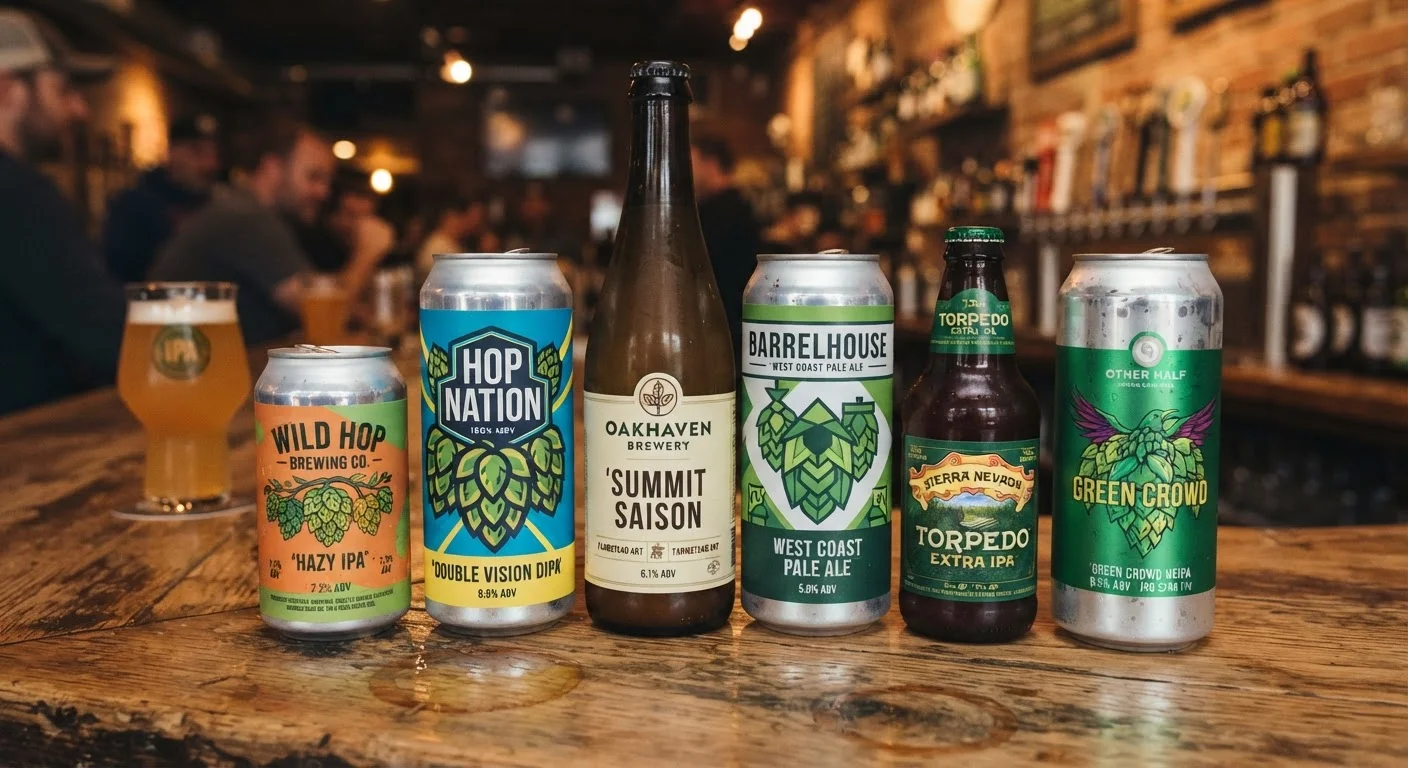
A can labeled '"Hazy IPA" brewed with Citra and Mosaic hops, 6.8% ABV, 45 IBU' sits next to a 'West Coast IPA' at 6.8% ABV and 65 IBU.
A shopper picks up an Imperial Stout with no canned-on or best-by date on the label.
A label prominently features the word 'craft' alongside imagery of a small barn and handwritten-style typography, with no indication of the parent company.
What the Label Is Quietly Not Telling You
Several meaningful pieces of information are absent from most craft beer labels by design or by omission.
Freshness dating is voluntary in the U.S., and practices vary widely. Hop-forward beers - particularly IPAs - are highly time-sensitive; the aromatic compounds that define them degrade within weeks to months after packaging. Some breweries print a 'canned on' or 'best by' date prominently; others omit it entirely. If a date isn't visible, it's reasonable to ask at a bottle shop or check the brewery's website.
Ingredient lists are not required on beer labels the way they are on food products. Water, malt, hops, and yeast are the traditional four-ingredient base, but breweries may use adjuncts, flavor additions, fining agents, or other processing aids without disclosure. This matters for consumers with allergies or dietary restrictions - if you need to know, contact the brewery directly.
'Craft' itself has no federal legal meaning. The Brewers Association defines it for industry purposes (independent ownership, traditional ingredients, production under a set annual threshold), but no government body enforces the term on packaging. A large, industrial-scale producer can technically call a product 'craft-inspired' without meeting any external standard.
Just as reading a nutrition facts panel requires knowing which numbers are standardized and which are marketing-adjacent, decoding a beer label benefits from the same skeptical framework.
Look for a 'Canned On' Date When Buying IPAs
Hop-forward beers like IPAs and Pale Ales are best consumed fresh - ideally within 60 to 90 days of packaging for peak aroma and flavor. Flip the can or check the bottom for a canned-on or packaged-on date rather than relying on a vague 'best by' window. If no date appears anywhere on the packaging, that's worth factoring into your decision.
Using Labels as a Starting Point, Not the Final Word
A craft beer label is best understood as a combination of regulated disclosure and voluntary storytelling. The ABV is reliable. The style name and hop callouts are useful signals worth learning to read. The 'craft' label is a marketing claim. And the absence of a freshness date or ingredient list is itself informative - it tells you the brewer chose not to surface that information.
Cross-referencing a label with a brewery's website, a reputable beer rating platform, or staff recommendations at a knowledgeable retailer gives you a much fuller picture than the can or bottle alone. The same critical reading skills apply broadly: understanding what a standard nutrition label means and parsing a craft beer label both reward a bit of background knowledge about what's required versus what's optional.
Approach the label as a starting point for curiosity - not a complete specification sheet - and you'll spend less time confused and more time finding beers you actually enjoy.
Frequently Asked Questions
ABV stands for alcohol by volume - the percentage of the total liquid that is ethanol. In the U.S., this figure is federally required on most beer labels and must be accurate within a small tolerance. A 7% ABV beer delivers noticeably more alcohol per serving than a 4.5% one, so it's a practical number worth checking.
IBU stands for International Bitterness Units, a technical measure of iso-alpha acids from hops in a beer. A higher IBU does indicate more measured bitterness, but how bitter a beer actually tastes depends heavily on its residual sweetness, alcohol level, and malt profile. Two beers with identical IBUs can taste very different.
No. Style names like IPA, Stout, or Saison are industry conventions popularized by organizations like the Beer Judge Certification Program (BJCP) and the Brewers Association, not legal definitions. A brewery can call a beer an IPA without meeting any government-mandated criteria for that style.
Partially. Hop varieties do carry characteristic flavor and aroma profiles - Citra is associated with citrus and tropical notes, for example - but the final character of the beer depends on how and when those hops are used during brewing. A hop name on the label is a useful clue, not a taste guarantee.
No. The term 'craft beer' has no federal legal definition in the U.S. The Brewers Association maintains its own definition for industry purposes - independent ownership, traditional ingredients, and annual production under a threshold - but the TTB does not regulate use of the word 'craft' on packaging.
Federal requirements include the producer's name and address, the net contents (volume), a class or type designation, and the mandatory government alcohol health warning. ABV disclosure requirements vary by state and container type. Much of what appears on craft labels beyond these basics is voluntary.
The content on this site is provided for informational purposes only and should not be considered a substitute for professional advice. While we strive to provide accurate and up-to-date information, we make no guarantees regarding its completeness or accuracy. Always consult a qualified professional for advice specific to your circumstances before making any decisions.