

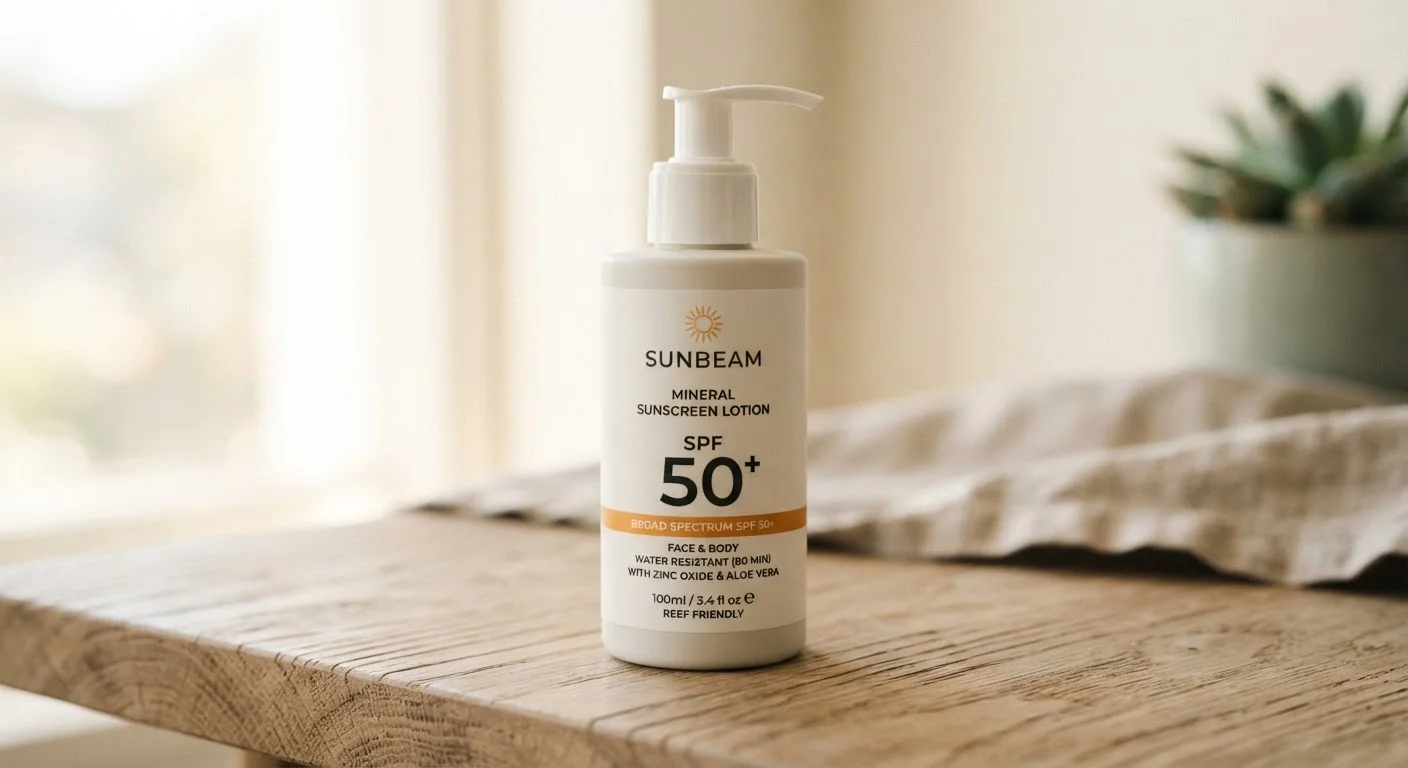
What the SPF Number Actually Measures
The SPF number on a sunscreen label tells you one specific thing: how much UVB radiation exposure it takes to cause measurable skin reddening (called a minimal erythemal dose) compared to unprotected skin. An SPF 30 product, under lab conditions, allows only 1/30th of the UVB rays that would otherwise reach the skin.
Translated into percentages, SPF 15 blocks approximately 93% of UVB rays, SPF 30 blocks about 97%, and SPF 50 blocks roughly 98%. These numbers reveal something important - the scale is not linear. The jump from SPF 15 to SPF 30 is more significant than the jump from SPF 30 to SPF 100.
What SPF does not directly measure is UVA protection. UVA rays are longer-wavelength, penetrate more deeply into skin, and are associated with photoaging and a contribution to skin cancer risk. For UVA protection, the relevant label to look for is broad-spectrum, which indicates the product has passed a standardized UVA protection test.
97%
UVB rays blocked by SPF 30
According to FDA consumer information, SPF 30 filters approximately 97% of UVB radiation under standardized test conditions.
20-50%
Typical real-world sunscreen application rate
Research published in dermatology literature consistently shows consumers apply roughly 20-50% of the tested product quantity, reducing effective SPF protection considerably.
80%
UVB rays that penetrate cloud cover
The Skin Cancer Foundation notes that up to 80% of UV rays can pass through clouds, making sun protection relevant even on overcast days.
The Gap Between Lab Results and Real-World Use
SPF ratings are established under controlled laboratory conditions using an application amount of 2 milligrams per square centimeter of skin - roughly equivalent to a shot glass worth of product for the full body. Research consistently shows that most people apply somewhere between 20% and 50% of that amount in practice, which can substantially reduce effective protection.
This doesn't mean SPF numbers are meaningless - it means understanding them in context matters. Applying an SPF 50 thinly may deliver protection closer to SPF 15 or 20 in real-world conditions. The practical implication: applying generously and reapplying regularly carries more weight than chasing a higher number.
Apply More Than You Think You Need
Most people significantly under-apply sunscreen, which reduces the effective protection well below what the SPF label indicates. For the face alone, a nickel-sized amount is a commonly cited starting point, though proper full-body coverage requires considerably more. When in doubt, apply generously - no sunscreen delivers its labeled protection at half the recommended amount.
It's also worth noting that water resistance claims have their own standardized meaning. Products labeled "water resistant (40 minutes)" or "water resistant (80 minutes)" have been tested to retain SPF protection for those specific time periods during water activity - after which reapplication is necessary.
Broad-Spectrum: Why This Label Matters More Than You Might Think
Because SPF only directly quantifies UVB protection, a product with a high SPF but no broad-spectrum designation leaves UVA radiation largely unaddressed. The FDA requires sunscreens claiming broad-spectrum status to pass a critical wavelength test demonstrating meaningful coverage across the UVA spectrum.
For anyone concerned about skin aging or comprehensive sun safety, broad-spectrum labeling is arguably more important than the specific SPF number - provided the SPF is at least 30. To understand more about the types of sunscreen ingredients delivering this protection, see our guide to physical vs. chemical sunscreens.
UVA vs. UVB: A Quick Distinction
UVB rays are shorter-wavelength and primarily cause sunburn and contribute to skin cancer. UVA rays are longer-wavelength, penetrate more deeply, and are the main driver of photoaging (wrinkles, dark spots) while also contributing to cancer risk. SPF only quantifies UVB protection - broad-spectrum labeling addresses both. Both types are present year-round and can penetrate glass, making daily protection a relevant habit regardless of season.
SPF numbers are one label among many worth understanding on a skincare product. If you find ingredient lists confusing in general, our article on reading a skincare ingredient list offers a structured approach to decoding them.
Applying SPF Thoughtfully Across Different Skin Types
Sun protection applies to all skin tones and types. Melanin does provide some natural protection - darker skin tones have an estimated natural SPF equivalent of roughly 13 - but this does not make sunscreen unnecessary. Skin cancer and UV-related skin damage affect people across the full range of skin tones, and photoaging is relevant regardless of complexion.
For skin that is oily or acne-prone, formulation matters: some individuals find certain sunscreens comedogenic (pore-clogging), though this varies by person and formulation. For dry skin, sunscreens with added moisturizing ingredients may serve a dual function. Those with sensitive skin may respond better to mineral (physical) UV filters. Our overview of skin types and what they mean for your routine can help frame those decisions more specifically.
This article is for general informational and educational purposes only and does not constitute medical or dermatological advice. Consult a qualified healthcare professional or dermatologist for personalized guidance about your skin health.
Frequently Asked Questions
Not exactly. SPF 25 blocks about 96% of UVB rays, while SPF 50 blocks about 98%. The jump is meaningful but not double. Higher SPF values offer diminishing incremental returns, though they can still matter for extended sun exposure.
SPF in cosmetics does provide some protection, but most people apply far less product than the tested amount, which lowers real-world efficacy significantly. For meaningful sun protection, a dedicated sunscreen applied before makeup is generally more reliable.
Broad-spectrum means the product has passed an FDA-regulated test showing it also protects against UVA radiation, not just UVB. UVA rays penetrate deeper into skin and contribute to aging and cancer risk, so this label matters.
General guidance from dermatology organizations recommends reapplying every two hours during sun exposure, and immediately after swimming or heavy sweating. No sunscreen remains fully effective all day without reapplication.
Clouds block some but not all UV radiation. Up to 80% of UVB rays can penetrate cloud cover, meaning skin protection is still relevant on overcast days, particularly during outdoor activities.
Higher SPF offers marginally greater UVB protection but can create a false sense of security if it leads to skipping reapplication or reducing the amount applied. Consistent, adequate application of SPF 30 or higher is generally considered sufficient for everyday use by most dermatology guidelines.
The content on this site is provided for informational purposes only and should not be considered a substitute for professional advice. While we strive to provide accurate and up-to-date information, we make no guarantees regarding its completeness or accuracy. Always consult a qualified professional for advice specific to your circumstances before making any decisions.