

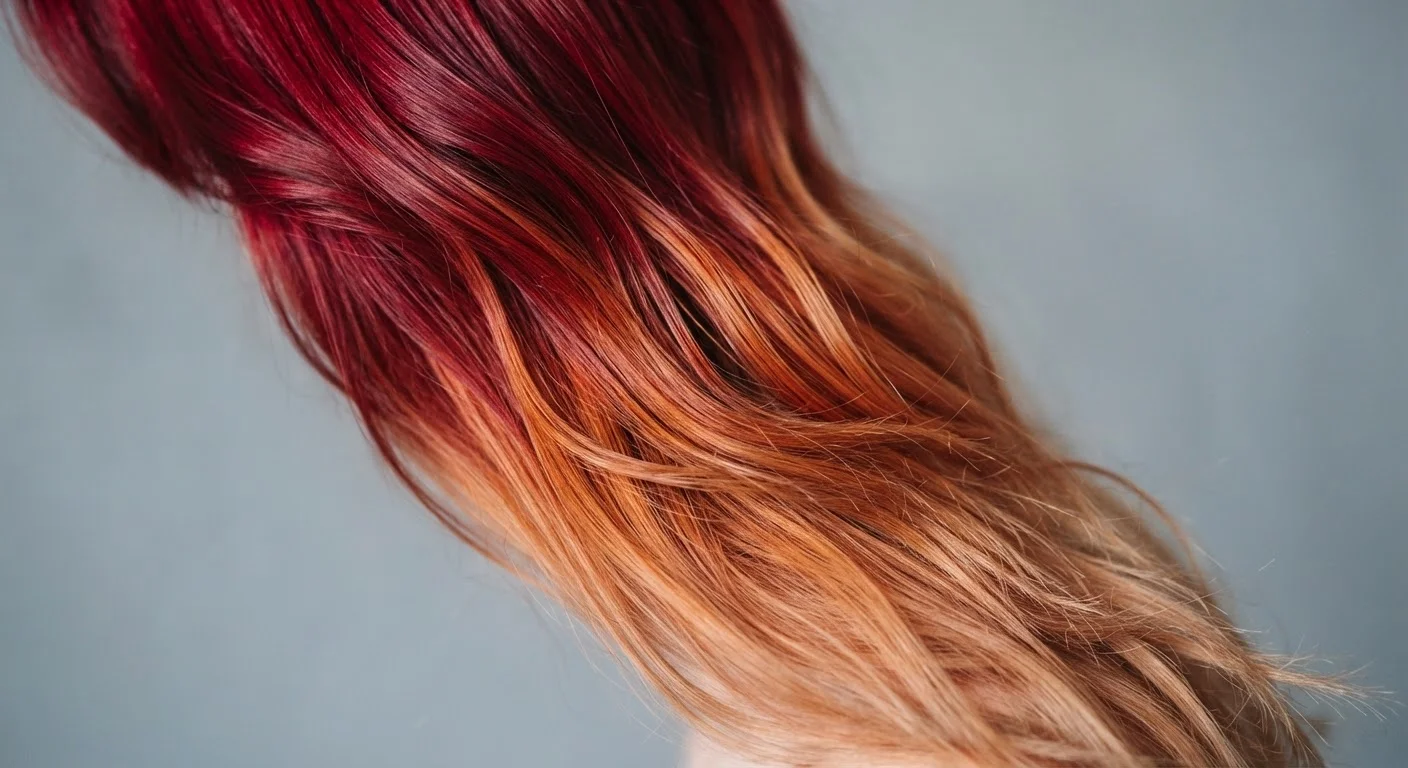
The Real Reason Colour Fades Faster Than Expected
Colour-treated hair that fades too quickly is rarely a sign of a poor dye job alone. In the vast majority of cases, fade is driven by everyday habits that compromise the hair's cuticle - the outermost layer that holds pigment in place. Once that protective barrier is repeatedly disrupted, colour molecules escape faster than they should, leaving hair looking dull and washed-out within weeks rather than months.
Understanding the mechanics helps. During colouring, the cuticle is opened to allow pigment to enter the cortex (the hair's inner layer). Once the process is complete, the cuticle needs to close and stay closed for colour to last. Anything that repeatedly forces it open - heat, harsh cleansers, or mineral-rich water - accelerates how quickly colour leaves the hair. If your colour seems to fade unusually fast, it's worth checking your routine against the most common culprits before assuming the problem is the formula itself.
If your routine shows wider signs of strain, our guide to spotting when your hair routine needs a reset can help you identify the broader pattern.
Common Mistakes That Accelerate Colour Fade
Most premature fade comes down to a handful of recurring errors. The good news is that the majority of them are easily corrected once identified.
Washing hair with hot water immediately after colouring - or as a regular habit.
Why it happens: Hot showers feel relaxing and thorough, and most people don't connect water temperature to colour retention.
Using shampoos that contain sulfates (sodium lauryl sulfate or sodium laureth sulfate).
Why it happens: Sulfate-based shampoos lather richly, which many people associate with effective cleansing. Ingredient labels are rarely read at the point of purchase.
Skipping UV protection for hair during prolonged sun exposure.
Why it happens: Sun protection is almost universally associated with skin, not hair. The concept of UV damage to hair colour isn't widely understood by consumers.
Applying heat styling tools frequently without a thermal protectant.
Why it happens: Heat protectants are often seen as optional or cosmetic. Many people underestimate how much cumulative heat compromises the hair's structural integrity and colour retention.
Skipping a post-colour conditioning or bond treatment immediately after dyeing.
Why it happens: The colouring process itself is often seen as the complete treatment. Post-colour conditioning steps are sometimes skipped to save time or money.
Washing colour-treated hair too frequently.
Why it happens: Daily washing habits carried over from pre-colour routines don't account for the increased vulnerability of chemically treated hair.
Hard Water Can Shift Your Colour Tone
High mineral content in tap water - particularly calcium and magnesium - doesn't just dull colour. It can create a yellowish or brassy cast on lighter shades and mute vibrancy on deeper tones. A chelating or clarifying shampoo used periodically (formulated for colour-treated hair) can help remove mineral buildup without stripping pigment excessively. Check whether your area has hard water before ruling out this factor.
For hair that has already experienced damage alongside colour loss, the decision between treatments and trims isn't always straightforward. Our guide to trimming versus treatments breaks down how to read what your hair actually needs.
Building a Routine That Preserves Colour Longer
Once you've identified which mistakes are affecting your colour, the path forward is largely about consistent, small adjustments rather than a complete overhaul. Switching to cooler rinse water, selecting the right shampoo formulation, and adding UV protection to outdoor days are all low-effort changes that compound meaningfully over weeks.
Colour-Safe Doesn't Mean Damage-Free
A product labelled "colour-safe" is not a guarantee of cuticle health or pigment retention. Always cross-check the ingredient list for sulfates, alcohol-based preservatives, and chelating agents that can lift colour regardless of front-of-bottle claims. If your colour is consistently fading fast, your product formulation is one of the first places to investigate.
~40%
Colour loss linked to washing habits
Hair care researchers estimate that a significant proportion of early colour fade - often cited around 40% - is attributable to washing frequency and water temperature rather than the dye formula itself.
2-4 weeks
Typical fade window without protective measures
Without sulphate-free products and UV protection, many semi-permanent and some permanent colour treatments begin showing visible fade within two to four weeks of application, according to general industry guidance.
Protective styling can also play a supporting role - reducing the mechanical friction and heat exposure that colour-treated hair is particularly vulnerable to. For a principled approach to this, see our guide to protective styling done well.
The overall goal is maintaining a sealed, healthy cuticle between colour appointments. With the right habits in place, most people find that their colour stays visibly vibrant significantly longer - without needing to re-colour more frequently or invest in expensive treatments every few weeks.
This article provides general hair care information for educational purposes only. It is not a substitute for personalised advice from a qualified hair care professional.
The content on this site is provided for informational purposes only and should not be considered a substitute for professional advice. While we strive to provide accurate and up-to-date information, we make no guarantees regarding its completeness or accuracy. Always consult a qualified professional for advice specific to your circumstances before making any decisions.