

Our Verdict
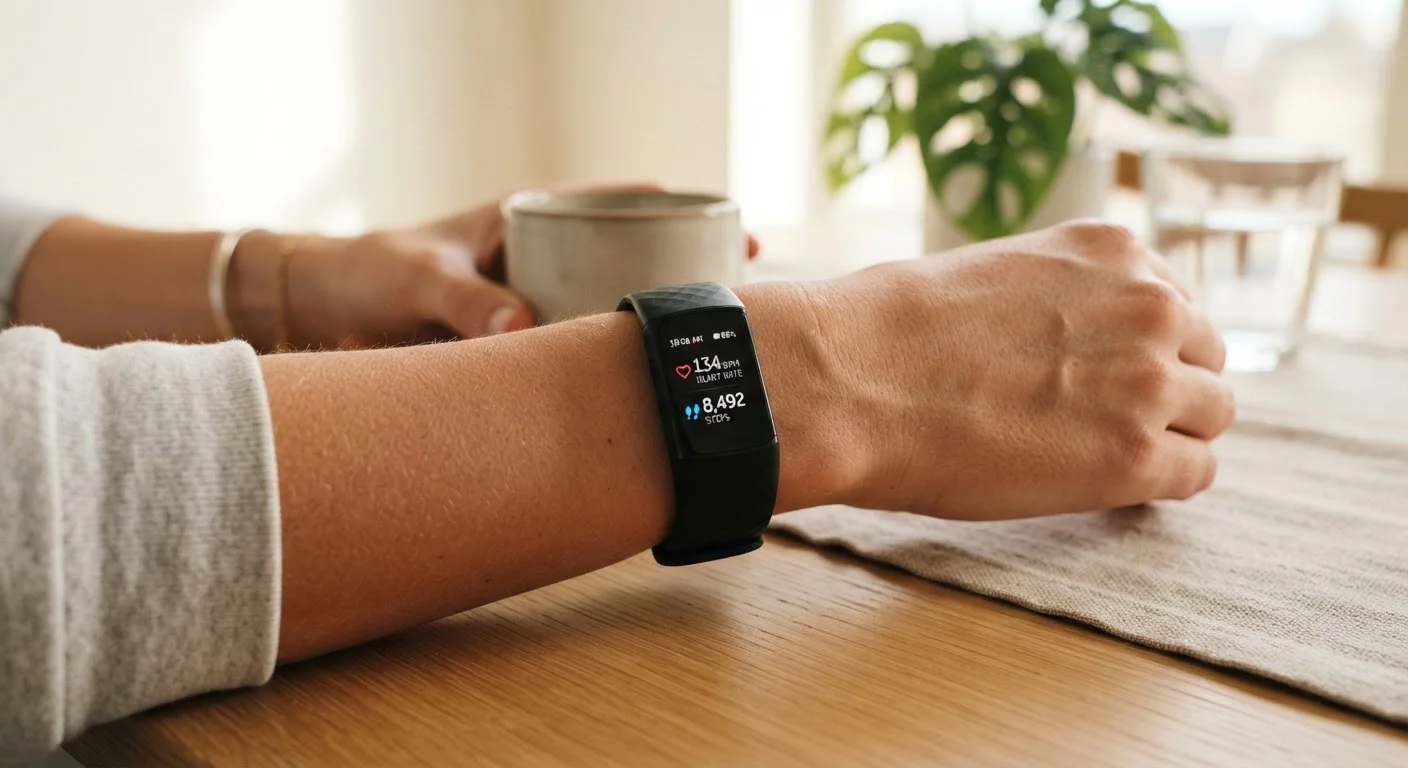
Fitness trackers are genuinely useful tools for building awareness and sustaining movement habits - but they work best when treated as motivational guides rather than medical instruments. Their step counts and heart rate trends are reasonably dependable; their calorie estimates and sleep staging are not. Understanding where the data holds up and where it doesn't lets you extract real value without being misled by false precision.
Ideal for people who want a low-barrier way to track activity trends, stay accountable, and build sustainable fitness habits without overanalyzing every number.
What Fitness Trackers Actually Measure
Most consumer fitness wearables don't measure things directly - they estimate them. A tracker on your wrist captures raw signals, primarily movement via an accelerometer and blood flow patterns via an optical heart rate sensor, then applies algorithms to translate those signals into readable metrics like steps, calories, and sleep stages.
That distinction matters. Steps are counted by detecting repetitive wrist motion, which works well for walking but can misfire during cycling, weightlifting, or even vigorous hand gestures. Heart rate is read by shining light into the skin and measuring how blood absorbs it - a method called photoplethysmography (PPG). It's reasonably accurate at rest but can drift during high-intensity or erratic movement.
For a deeper breakdown of specific metrics and what they're actually estimating, see the plain-language guide to fitness tracking metrics covering everything from resting heart rate to VO2 max.
Builds daily movement awareness and accountability
Seeing a running step count or activity reminder nudges many users toward more consistent movement throughout the day, which research broadly supports as beneficial for health.
Step counting is reasonably reliable for walking
For standard ambulatory activity, accelerometer-based step counts are generally within an acceptable margin of error, making them a dependable proxy for daily movement volume.
Heart rate trends are useful for exertion monitoring
Resting heart rate tracked over weeks can reveal meaningful patterns, such as the gradual decline often associated with improving cardiovascular fitness.
Motivates habit formation through visual feedback
Goal rings, streaks, and progress summaries leverage behavioral reinforcement loops that can help users establish and maintain exercise routines over time.
Detects irregular heart rhythms in some devices
Certain clinically validated wearables can flag potential atrial fibrillation (AFib) episodes, a genuinely useful screening signal - though any concern should be followed up with a physician.
The Limits You Should Know About
Calorie burn is among the least reliable figures a tracker produces. Multiple published studies have found that wrist-worn devices can over- or underestimate energy expenditure by 20-40% depending on activity type and individual physiology. The algorithms behind these estimates are trained on population averages, which means they may not reflect your metabolism accurately.
Sleep tracking is another area where consumer devices frequently overstate their precision. Trackers infer sleep stages - light, deep, REM - from movement and heart rate patterns. Clinical sleep staging requires polysomnography, a full laboratory study. Wearable sleep data can still be useful as a rough pattern indicator, but it shouldn't be used to self-diagnose sleep disorders or replace a conversation with a physician.
Advanced metrics like blood oxygen saturation (SpO2) and stress scores carry similar caveats. They're directionally interesting but not diagnostically reliable from a wrist sensor alone.
Calorie burn estimates are often significantly inaccurate
Published research has found wrist-worn trackers can misestimate energy expenditure by 20-40% or more, making calorie data unreliable for precise dietary or training decisions.
Sleep staging lacks clinical validity
Trackers infer sleep stages from movement and heart rate, not brain activity. The data may be directionally useful but should not be used to self-diagnose or manage sleep conditions.
Step counts drift during non-walking activities
Cycling, weight training, and repetitive hand motions can all generate false step counts, inflating totals for users whose activity mix goes beyond simple walking.
Can encourage obsessive or anxious data monitoring
For some users, constant metric visibility contributes to health anxiety or an unhealthy preoccupation with numbers - the opposite of the motivational effect intended.
Advanced metrics vary widely in reliability across devices
SpO2, stress scores, and estimated VO2 max vary substantially in methodology between manufacturers, and many have limited independent validation for consumer-grade wrist sensors.
How to Use the Data Well
The most practical way to use a fitness tracker is to focus on trends rather than absolute numbers. If your daily step average rises from 5,000 to 8,000 over a month, that shift is meaningful regardless of whether the individual day counts are perfectly precise. Consistency of use matters more than accuracy of any single data point.
Setting personal benchmarks rather than comparing your numbers to device defaults is also worthwhile. Many trackers come pre-loaded with a 10,000-steps-per-day goal, but the research behind that specific threshold is thinner than widely assumed. Walking is a genuinely effective form of exercise - and what matters most is consistent progress relative to your own baseline.
Tracker Data Is a Starting Point, Not a Diagnosis
No consumer wearable is a medical device in the clinical sense unless it has received specific regulatory clearance for a particular function. Metrics like SpO2, stress, and sleep stages are wellness estimates, not clinical assessments. If a tracker reading concerns you - an unusually high resting heart rate, for example - treat it as a prompt to speak with a healthcare provider, not a conclusion in itself.
Pairing tracker insights with other health inputs - how you feel, your energy levels, a nutrition label read with care (see how to read a nutrition label) - gives a fuller picture than any single data stream. The tracker is one signal among many, not a complete health dashboard.
This article is for general informational purposes only and does not constitute medical advice. If you have health concerns or are managing a medical condition, consult a qualified healthcare professional before making changes to your fitness routine.
The content on this site is provided for informational purposes only and should not be considered a substitute for professional advice. While we strive to provide accurate and up-to-date information, we make no guarantees regarding its completeness or accuracy. Always consult a qualified professional for advice specific to your circumstances before making any decisions.