

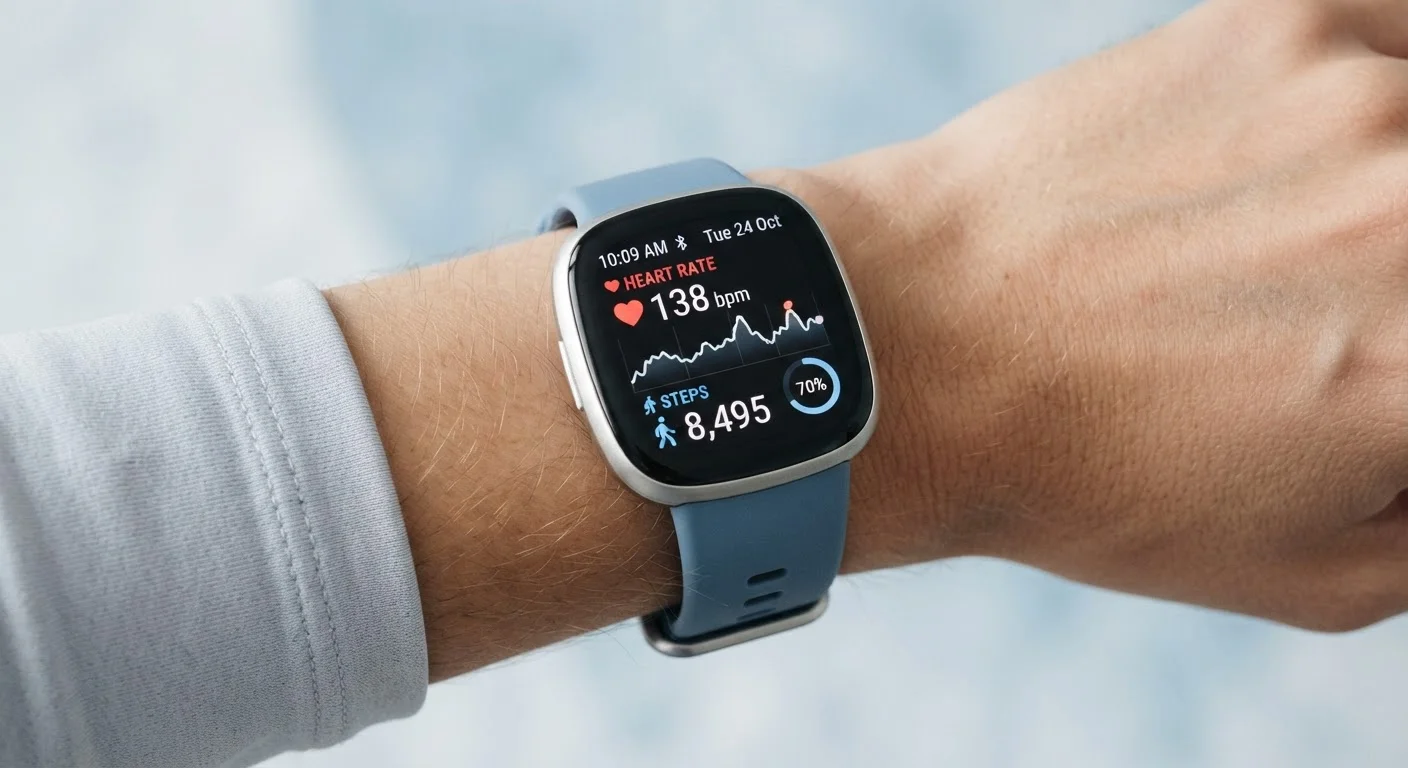
Why Fitness Metrics Can Feel Confusing
Today's fitness trackers surface a steady stream of numbers - steps, zones, scores, and acronyms - that can feel more like a medical dashboard than a tool for everyday movement. The good news: most of these metrics track a fairly small set of underlying concepts. Once you understand what each number is actually capturing (and how it's estimated), you're better positioned to use the data without over-relying on it.
This guide decodes the most common fitness tracking metrics in plain language. For a broader look at what wearables do and don't do well, see what your fitness tracker is - and isn't - telling you.
Heart Rate Metrics: Resting, Max, and Zones
Resting Heart Rate (RHR) is the number of times your heart beats per minute when you're completely at rest, typically measured first thing in the morning. A lower RHR generally reflects more efficient cardiac function, though what's "normal" varies considerably between individuals. Wearables estimate RHR using optical sensors on your wrist, so readings can drift based on fit, skin tone, and movement artifacts.
Maximum Heart Rate (MHR) is the highest rate your heart can sustain during all-out effort. Most trackers estimate it using age-based formulas (the classic being 220 minus your age), which are population averages with significant individual variation - not precise personal measurements.
Heart Rate Zones divide the range between your resting and maximum heart rate into bands (often five) representing different exercise intensities. These zones inform how hard you're working aerobically, and are useful for structuring workouts - though their accuracy depends entirely on how accurate your estimated MHR is. For context on how cardio intensity affects your body differently from strength work, see our cardio vs. strength training guide.
VO2 Max
The maximum volume of oxygen your body can use per minute during intense exercise, expressed in milliliters per kilogram of body weight per minute (mL/kg/min). It's widely used as a marker of aerobic fitness capacity.
Heart Rate Variability (HRV)
The variation in time intervals between successive heartbeats. Higher HRV typically indicates good recovery and a well-functioning autonomic nervous system, though individual baselines vary widely.
Resting Heart Rate (RHR)
The number of heartbeats per minute when the body is fully at rest. It's commonly used as a baseline indicator of cardiovascular efficiency and overall recovery status.
Heart Rate Zones
Bands of exercise intensity defined as percentages of maximum heart rate. Training in different zones targets different physiological adaptations, from fat metabolism to peak aerobic capacity.
Maximum Heart Rate (MHR)
The highest heart rate an individual can achieve during maximal exercise effort. Most wearables estimate this using age-based formulas rather than direct testing.
Recovery Score
A composite metric - calculated differently by each wearable platform - that attempts to summarize how prepared your body is for physical activity, typically using HRV, RHR, and sleep data.
VO2 Max, HRV, and Recovery Scores
VO2 Max is a measure of the maximum rate at which your body can consume oxygen during intense exercise - considered one of the stronger markers of cardiovascular fitness. Lab-based VO2 max tests involve controlled exertion and precise gas analysis. Wearables estimate it using heart rate response during movement, which is a reasonable proxy but carries meaningful error margins, particularly at the individual level.
Heart Rate Variability (HRV) measures the variation in time between consecutive heartbeats. Counter-intuitively, more variability (not less) is generally associated with better recovery and parasympathetic nervous system activity. HRV readings from consumer devices vary significantly based on measurement method (wrist optical vs. chest strap), time of day, and individual baseline differences. Use trends over time rather than single readings.
Recovery and Readiness Scores are composite indices - each brand calculates them differently, typically combining HRV, RHR, sleep data, and recent training load. They're useful as general signals, not precise prescriptions. If your score is low but you feel great, trust your body. If you feel fatigued despite a high score, the same logic applies.
This article is for general informational purposes only and does not constitute medical advice. Consult a qualified healthcare professional before making changes to your exercise routine, particularly if you have an existing health condition.
The content on this site is provided for informational purposes only and should not be considered a substitute for professional advice. While we strive to provide accurate and up-to-date information, we make no guarantees regarding its completeness or accuracy. Always consult a qualified professional for advice specific to your circumstances before making any decisions.