

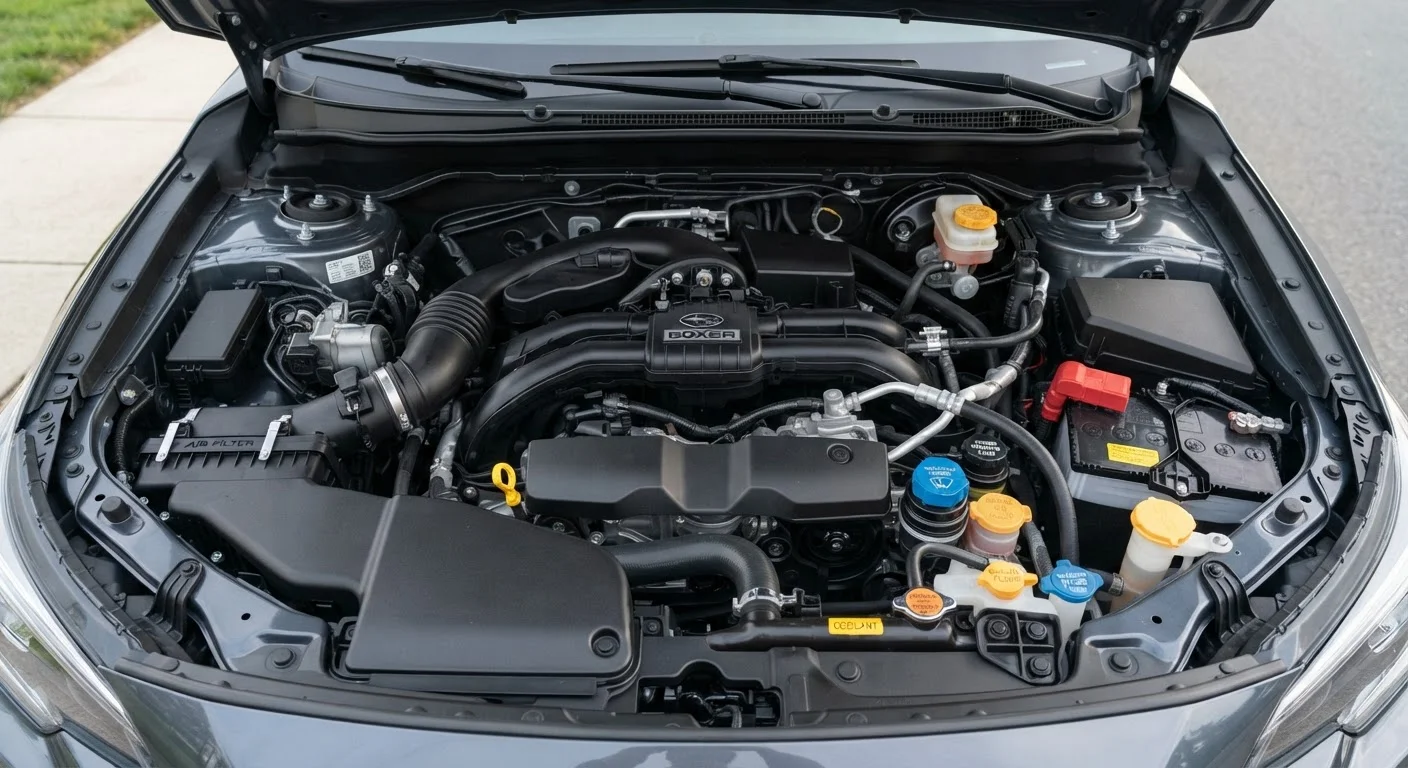
Engine Oil: The Lifeblood of Your Drivetrain
Engine oil performs three jobs simultaneously: it lubricates metal surfaces to reduce friction, carries heat away from internal components, and suspends contaminants so they can be trapped by the filter. The reservoir - typically a translucent plastic tank or checked via a metal dipstick - should sit between the minimum and maximum marks when the engine is cold and on level ground.
Oil level drops gradually through normal consumption and can fall sharply with a developing leak. Checking it every few weeks takes under a minute and can prevent catastrophic engine damage. For guidance on choosing the right oil weight, see our engine oil grades explainer.
Check Oil on a Level Surface with a Cold Engine
Pull the dipstick out, wipe it clean with a lint-free cloth, reinsert it fully, then pull it out again for an accurate reading. Checking oil immediately after driving can give a falsely low reading as oil clings to hot engine surfaces. Always check on a flat surface to avoid an angle-skewed result.
Coolant, Brake Fluid, and Transmission Fluid
Coolant (antifreeze): This fluid circulates between the engine and radiator, absorbing combustion heat and releasing it through the radiator fins. It also prevents freezing in winter and corrosion year-round. The overflow reservoir is usually a colored translucent bottle near the radiator. Never open a hot radiator cap - pressurized coolant can cause serious burns.
Brake fluid: Housed in a small reservoir on top of the brake master cylinder, brake fluid transmits the force from your brake pedal through hydraulic lines to the calipers at each wheel. Because brake fluid is hygroscopic - meaning it absorbs moisture from the air over time - it gradually loses effectiveness and should be replaced according to your manufacturer's schedule, typically every two to three years.
Transmission fluid: In automatic transmissions, this fluid lubricates gears, acts as hydraulic fluid for gear changes, and cools the transmission. Many modern vehicles use a sealed transmission with no dipstick; service must be performed by a qualified technician. Manual gearboxes use a separate gear oil checked via a fill plug on the gearbox casing.
~40%
Engine failures linked to lubrication issues
Industry maintenance data consistently identifies oil starvation and contamination as a leading contributor to premature engine failure in passenger vehicles.
2-3 years
Typical brake fluid replacement interval
Many vehicle manufacturers recommend replacing brake fluid every two to three years regardless of mileage, due to moisture absorption degrading its boiling point over time.
Power Steering, Windshield Washer, and What to Watch For
Power steering fluid: Vehicles with hydraulic power steering use a dedicated pump and reservoir, usually located near the drive belt. The fluid transmits pressure from the pump to the steering rack, reducing the effort needed to turn the wheel. A whining noise when turning is often an early sign of low fluid or a struggling pump. Note that many newer vehicles use electric power steering and have no fluid reservoir at all.
Windshield washer fluid: While not mechanical in the traditional sense, an empty washer reservoir is a real safety issue - especially in winter when road grime, salt spray, and slush can obscure vision within seconds. Use a product rated for your region's temperatures to prevent the nozzles from freezing.
Keeping all fluids at the right level and in good condition is one of the simplest ways to extend the life of your vehicle. For a broader seasonal perspective, our seasonal car maintenance checklist covers fluids alongside tires, brakes, and more. For a deeper look at overall maintenance planning, see The Full Picture on Car Maintenance.
When in Doubt, Consult a Qualified Mechanic
Persistent fluid loss - even slow drops in level between checks - is not normal and usually indicates a leak or internal wear that should be diagnosed professionally. Topping off a reservoir masks the symptom without addressing the underlying cause. If you notice colored puddles under your vehicle, unusual smells, or dashboard warning lights, have the vehicle inspected promptly.
Frequently Asked Questions
A quick visual check of key fluids - engine oil, coolant, brake fluid, and washer fluid - once a month is a reasonable habit for most drivers. Your owner's manual will specify service intervals for full changes. If you notice a warning light or spot a puddle under your car, check fluids promptly.
Mixing incompatible coolant formulations can trigger a chemical reaction that forms a gel-like sludge, blocking coolant passages and reducing heat transfer. Always use the coolant type specified in your owner's manual, and flush the system before switching formulations.
Yes. Running a hydraulic power steering pump with insufficient fluid generates excess heat and can cause the pump to wear out prematurely. On vehicles with electric power steering, there is no fluid reservoir, so steering feel changes indicate an electronic issue instead.
You can safely add brake fluid to the reservoir as a temporary measure if the level drops slightly, but a persistently low level usually signals a leak or worn brake pads - both require professional inspection. Use only the fluid grade stamped on the reservoir cap.
Oil darkens as it accumulates combustion byproducts and microscopic metal particles during normal use. Dark color alone doesn't necessarily mean the oil needs an immediate change, but a milky or foamy appearance can indicate coolant contamination - a condition that warrants prompt attention from a mechanic.
The content on this site is provided for informational purposes only and should not be considered a substitute for professional advice. While we strive to provide accurate and up-to-date information, we make no guarantees regarding its completeness or accuracy. Always consult a qualified professional for advice specific to your circumstances before making any decisions.