

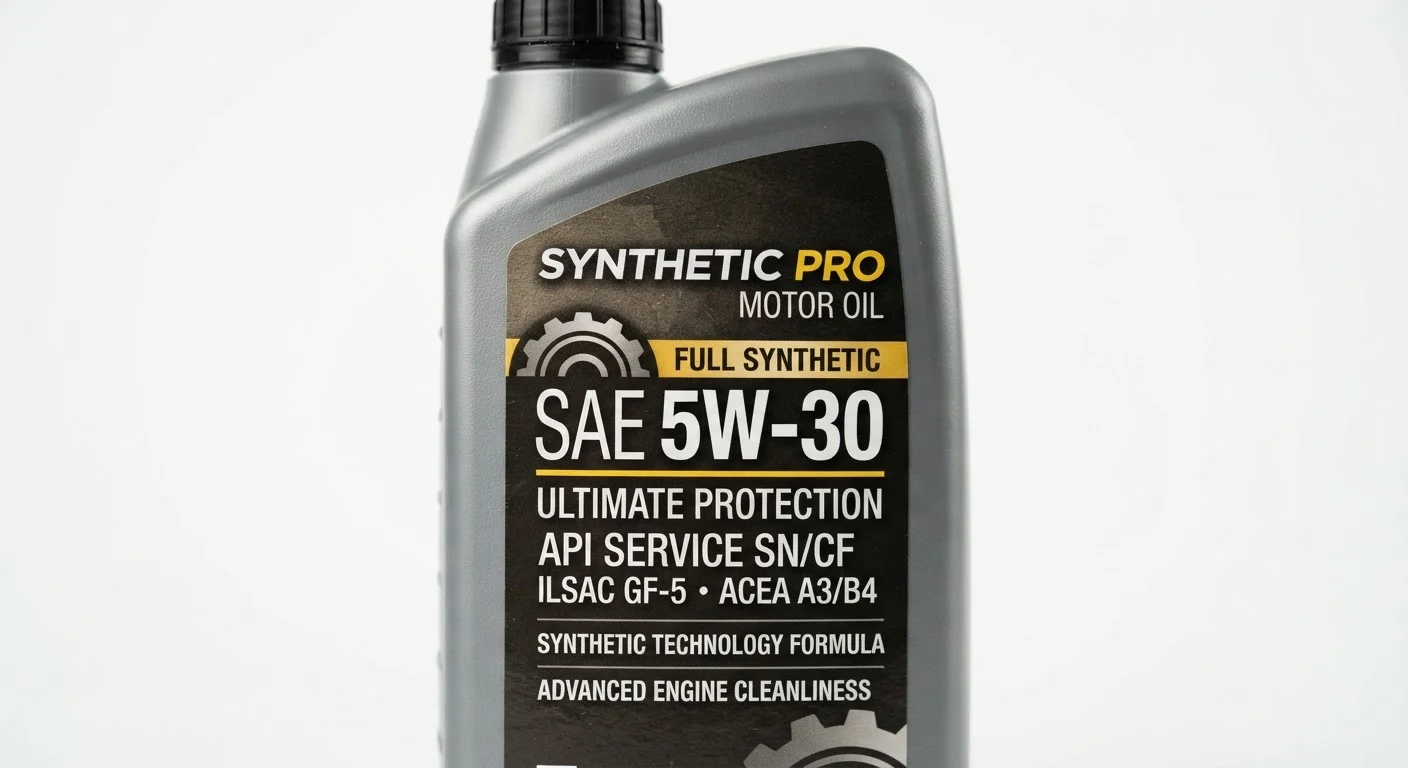
Decoding the Label: What Those Numbers Mean
Pick up almost any bottle of motor oil and you'll see a code like 5W-30, 10W-40, or 0W-20. These aren't random - they're standardized viscosity ratings defined by the Society of Automotive Engineers (SAE) that tell you precisely how an oil behaves under different temperature conditions.
The format is always the same: a number, the letter W, a hyphen, and another number. The W stands for Winter - not weight, a common misconception. The number before the W describes how the oil flows at low temperatures (think a cold engine on a winter morning). The number after the hyphen describes the oil's viscosity at normal operating temperature, typically around 212°F (100°C).
So a 5W-30 oil flows like a thin '5-grade' oil in the cold, but maintains the consistency of a '30-grade' oil once the engine warms up. This is what engineers call a multi-grade oil - it adapts to temperature, unlike older single-grade oils that were either too thick in winter or too thin in summer.
~30%
Engine wear that occurs at cold startup
Industry estimates suggest a significant proportion of engine wear happens in the first moments after a cold start, before oil reaches full pressure - underscoring why cold-flow ratings matter.
SAE J300
Standard governing oil viscosity grades
The Society of Automotive Engineers' J300 specification establishes the testing criteria and grade boundaries for all passenger and commercial vehicle engine oils sold in the US.
0W-60
Full range of SAE viscosity grades available
Modern multi-grade oils span from ultra-thin 0W grades for fuel-efficient engines to heavy 60-weight grades for performance or high-load applications.
Why the Cold-Start Number Matters More Than You Might Think
The low-temperature rating - the number before the W - directly affects how quickly oil reaches critical engine components at startup. During the first few seconds after you turn the key, the engine is running without full oil pressure. A lower first number means the oil flows more readily in the cold, shortening that vulnerable window.
For drivers in colder climates, this is especially important. An oil rated 0W or 5W will pump more easily at sub-freezing temperatures than a 10W or 15W oil. That difference in flow speed during cold starts can meaningfully affect long-term engine wear over thousands of cycles.
Always Check Your Owner's Manual First
Before reaching for any bottle of oil, locate the viscosity recommendation in your vehicle's owner's manual - it's usually in the maintenance or lubrication section. Some modern engines, particularly those with turbochargers or variable valve timing, are sensitive enough that using even one grade outside the specified range can affect performance or component longevity. When in doubt, ask a qualified mechanic rather than guessing at the counter.
Conversely, the second number matters at sustained operating temperatures - highway driving, towing, or running in summer heat. A higher second number (like 40 or 50) indicates the oil stays thicker under heat stress, which can benefit older or higher-mileage engines that have developed wider internal clearances.
Single-Grade vs. Multi-Grade: A Brief History
Before modern oil chemistry, single-grade oils were the standard. An SAE 30 oil worked fine in summer but turned syrupy in winter; an SAE 10 flowed well in cold weather but thinned out dangerously at high temperatures. Drivers often changed their oil grade with the seasons.
The introduction of viscosity index improvers - polymer additives that reduce how much oil thins as it heats up - made multi-grade oils possible. Today, virtually all passenger vehicle oils are multi-grade, designed to perform reliably across the full range of temperatures a typical engine encounters.
For a deeper look at how oil formulation affects engine protection, see our guide to synthetic vs. conventional motor oil.
How to Know Which Grade Your Engine Actually Needs
The answer is always in your owner's manual. Vehicle manufacturers specify the exact viscosity grade (or acceptable range) based on the engine's design tolerances, lubrication passages, and intended operating environment. This isn't a suggestion - it's an engineering requirement.
Using a grade that is too thin may not maintain adequate film strength between moving metal parts. Using one that is too thick may restrict flow through narrow oil passages, particularly in engines with variable valve timing (VVT) systems that rely on precise oil pressure. Either scenario can accelerate wear or cause component damage over time.
If your vehicle is high-mileage or burning oil, a qualified mechanic may recommend a slightly higher second number - but this should be a professional conversation, not a DIY assumption. The grade on the shelf isn't the place to improvise.
A driver in Minnesota uses 0W-20 oil as specified in their compact sedan's manual through a harsh winter.
A pickup truck owner who regularly tows a trailer uses an oil with a higher second number, such as 10W-40, as recommended in the severe-duty section of their owner's manual.
A mechanic discovers a vehicle brought in for an oil change has been running a grade not specified by the manufacturer.
Frequently Asked Questions
The 'W' stands for 'Winter,' not 'weight' as many drivers assume. It signals that the first number describes how the oil behaves at low temperatures - specifically how easily it flows during a cold engine start. A lower number before the W means better performance in cold weather.
Not without checking your owner's manual first. Using a grade other than what the manufacturer specifies can affect engine protection, fuel economy, and in some cases void your warranty. If you're unsure, consult a qualified mechanic before switching grades.
No - thicker oil is not inherently better. Modern engines are engineered to tight tolerances that require oil of a specific viscosity to flow properly through small passages. Using oil that is too thick can actually starve certain components of lubrication, especially during cold starts.
Full synthetic oil is made from chemically engineered base stocks rather than refined crude oil. It generally offers more consistent molecular structure, better performance at temperature extremes, and longer service intervals. However, the grade number (e.g., 5W-30) still matters regardless of whether the oil is synthetic or conventional.
Check your oil level monthly using the dipstick - it takes under a minute and can alert you to leaks or consumption issues. For changes, follow the interval in your owner's manual; modern vehicles with synthetic oil often go 7,500 to 10,000 miles between changes, but this varies by engine and driving conditions.
The content on this site is provided for informational purposes only and should not be considered a substitute for professional advice. While we strive to provide accurate and up-to-date information, we make no guarantees regarding its completeness or accuracy. Always consult a qualified professional for advice specific to your circumstances before making any decisions.