

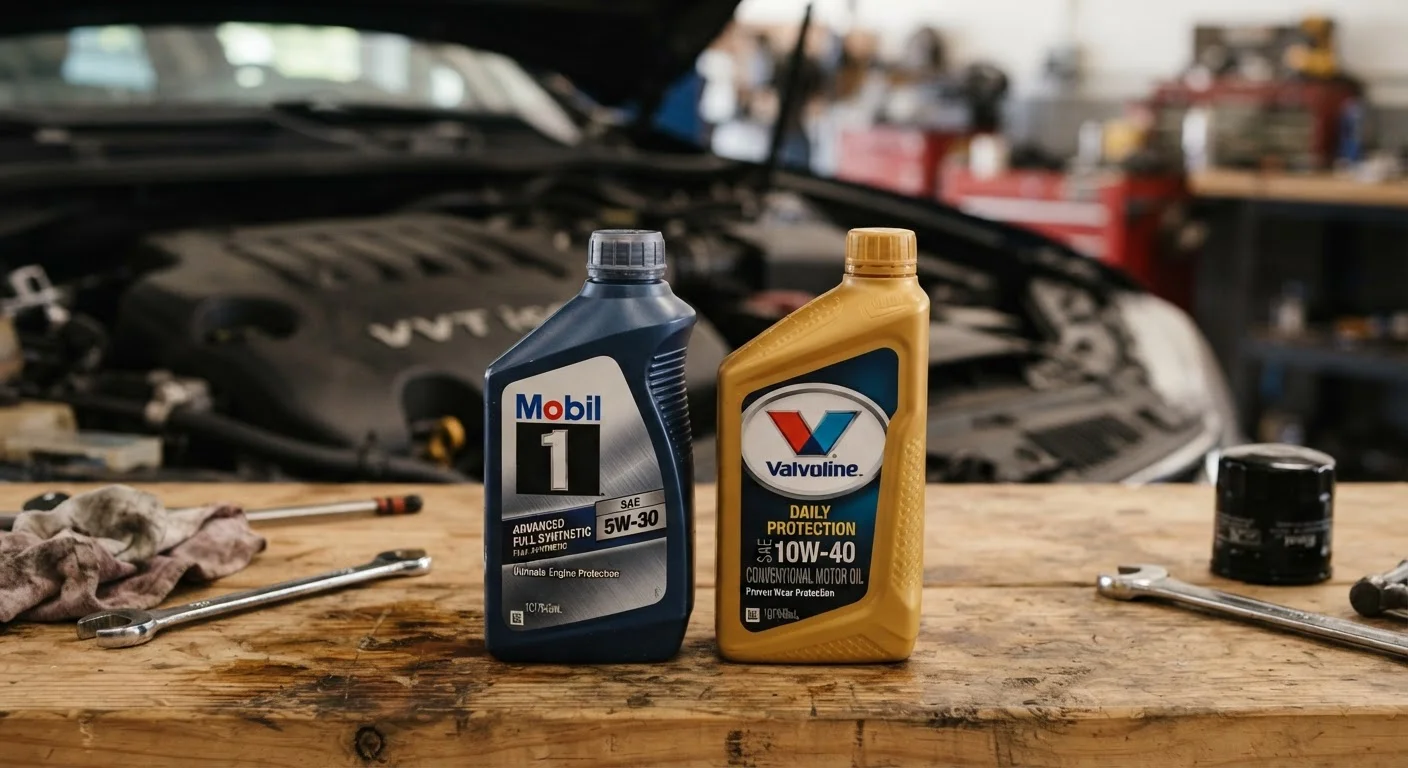
Option A
Synthetic Motor Oil
The engineered, high-performance lubricant.
Best for: Drivers with modern, high-performance, or turbocharged engines who want maximum protection across temperature extremes.
Option B
Conventional Motor Oil
The time-tested, petroleum-based standard.
Best for: Owners of older vehicles with simpler engines and modest driving demands who follow regular oil-change intervals.
How Each Oil Is Made - and Why It Matters
Conventional motor oil starts as crude petroleum, which is extracted, refined, and blended with additive packages to improve its lubricating performance. The refining process removes many impurities, but crude oil's natural molecular structure is inherently inconsistent - a mix of hydrocarbon chain lengths that behave differently under varying temperatures and pressures.
Synthetic motor oil, by contrast, is either built from scratch through chemical synthesis or produced by further processing conventional base stocks to create a far more uniform molecular structure. That consistency is the key engineering advantage: synthetic molecules are designed to perform predictably across a much wider range of operating conditions.
This difference in origin shapes nearly every practical characteristic - flow at cold starts, resistance to oxidation, behavior under sustained heat, and how quickly the oil degrades. For a deeper look at how viscosity grades interact with oil type, see our guide to engine oil grades.
| Criterion | Synthetic Motor Oil | Conventional Motor Oil |
|---|---|---|
| Base material | Chemically engineered molecules | Refined crude petroleum |
| Cold-start performance | Flows readily in low temperatures | Thickens more at cold temperatures |
| Heat resistance | Higher thermal stability | More prone to oxidation under heat |
| Typical drain interval | Often 7,500-10,000+ miles (per manufacturer) | Often 3,000-5,000 miles (per manufacturer) |
| Cost per oil change | Generally higher upfront cost | Generally lower upfront cost |
| Sludge resistance | Strong resistance to deposit buildup | More susceptible over time |
| Engine compatibility | Required by many modern engines | Suitable for many older engines |
Real-World Performance Differences
One of the clearest advantages of synthetic oil shows up at cold starts. When a conventional oil sits overnight in winter temperatures, it thickens significantly, meaning the engine runs for a brief period with reduced lubrication until the oil warms and flows freely. Synthetic oil's engineered molecules resist this thickening, circulating more quickly to critical engine components from the first moment of ignition.
Under sustained heat - common in turbocharged engines, towing situations, or stop-and-go city driving - conventional oil is more prone to oxidation and the formation of sludge deposits. Synthetic oil's more stable molecular structure holds up better under thermal stress, helping keep engine passages cleaner over time.
~75°F
Temperature range where oil viscosity differences are most critical
Engineering studies on lubricant behavior consistently show the largest performance gap between synthetic and conventional oils occurs between extreme cold and sustained operating heat.
2x-3x
Approximate drain interval advantage of synthetic over conventional
Many vehicle manufacturers approve synthetic oil drain intervals roughly two to three times longer than traditional conventional oil schedules, though exact intervals vary by make and model.
Drain intervals also differ. Many vehicles using synthetic oil are approved by their manufacturer for intervals of 7,500 to 10,000 miles or more, compared to the historically common 3,000-to-5,000-mile conventional oil schedule. However, these intervals are vehicle-specific - the figure in your owner's manual supersedes any general rule. Treating the 3,000-mile guideline as universal is one of the car maintenance myths that can actually cost you.
When the Choice Is Already Made for You
For a significant number of drivers, the synthetic-versus-conventional decision isn't really a choice at all - it's spelled out in the owner's manual. Many manufacturers of turbocharged, direct-injection, and high-output engines specify synthetic oil as a requirement, not a preference. Using conventional oil in these engines may void warranty coverage and can contribute to real mechanical problems over time.
High-mileage vehicles present a different consideration. Engines with over 75,000 miles may have developed minor seal wear, and some mechanics note that the detergent packages in full synthetic oil can, in rare cases, disturb accumulated deposits that were acting as informal seals. This doesn't mean synthetic is off-limits for older vehicles, but it does mean a conversation with a qualified mechanic is worthwhile before switching if your engine has significant miles on it.
If you're evaluating a used vehicle and want to understand how prior maintenance choices - including oil type - affect long-term reliability, our overview of new, used, and certified pre-owned vehicles covers what service history really tells you.
This article is for general informational and educational purposes only. Always consult your vehicle's owner's manual and a qualified mechanic before making changes to your maintenance routine.
The content on this site is provided for informational purposes only and should not be considered a substitute for professional advice. While we strive to provide accurate and up-to-date information, we make no guarantees regarding its completeness or accuracy. Always consult a qualified professional for advice specific to your circumstances before making any decisions.