

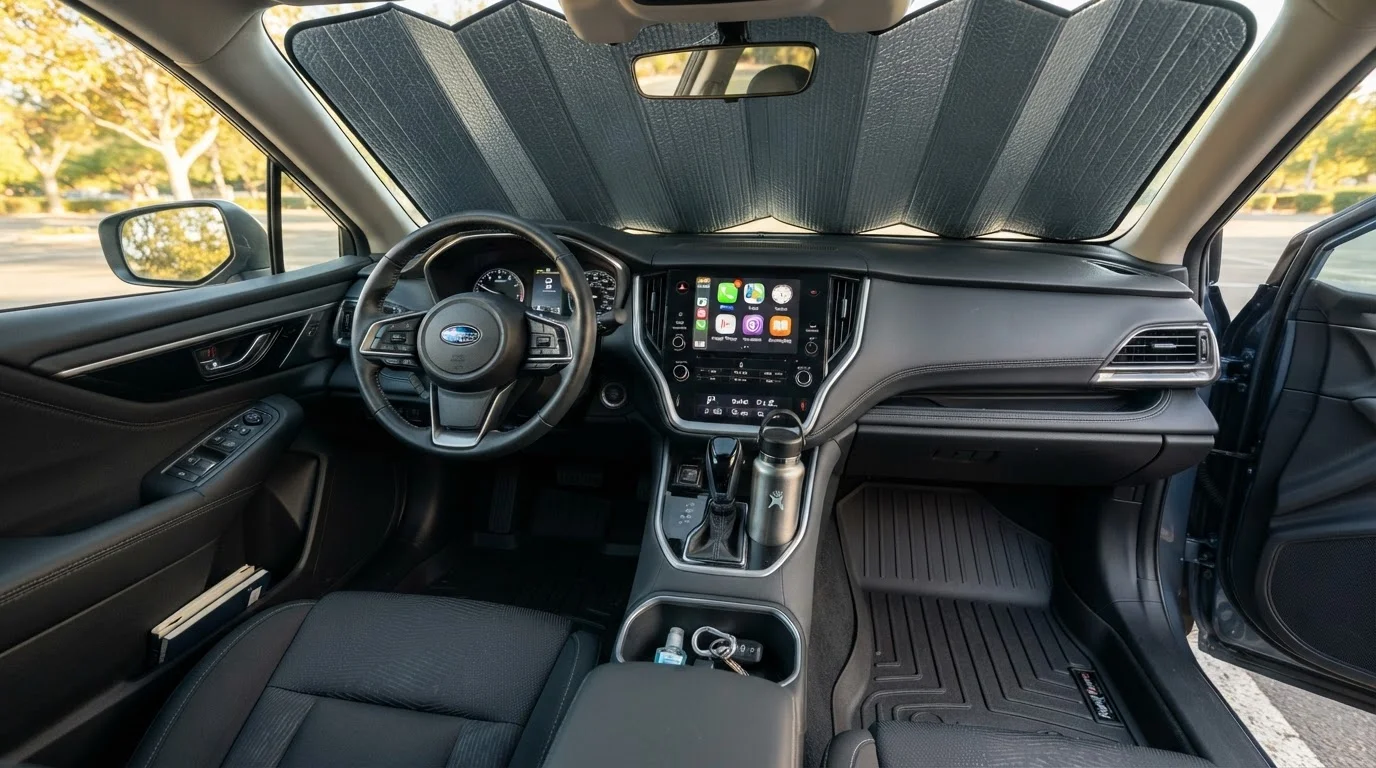
Why Interior Accessories Deserve Year-Round Thinking
Most drivers shop for car accessories reactively - grabbing a sun shade during a heat wave or a set of floor mats after a muddy hike. A more useful approach is evaluating each accessory by its year-round utility rather than its seasonal appeal. The items that earn permanent real estate in your cabin are those that solve recurring problems regardless of the weather outside.
This list focuses on interior additions that hold up across seasons and vehicle types. None of these require professional installation, and each addresses a genuine, everyday need. For a broader framework on distinguishing genuinely useful add-ons from marketing-driven novelties, see our guide on what counts as a real upgrade.
All-Weather Floor Liners
Custom-fit all-weather floor liners are arguably the single most practical interior accessory available. Unlike standard carpet mats, thermoplastic or rubberized liners form a raised lip around the perimeter that contains water, mud, salt, sand, and debris - whatever gets tracked in from outside. In winter, that means road salt and slush don't reach the factory carpet; in summer, it's beach sand and grass clippings.
When selecting liners, vehicle-specific fit matters more than universal sizing. A liner cut to your exact floorplan stays in place and provides edge-to-edge coverage. Look for liners rated for temperature extremes, as cheap rubber can stiffen and crack in cold weather or curl at the edges in high heat.
Vehicle-specific floor liners contain seasonal debris that universal mats simply can't contain.
Windshield Sun Shade
A reflective windshield sun shade does double duty across the calendar. In summer, it blocks direct solar radiation from superheating your dashboard and steering wheel - interior temperatures in parked vehicles can climb dramatically, and the shade meaningfully reduces that buildup. In winter, the same shade placed against the inside of your windshield slows frost and ice formation overnight, cutting your morning warm-up time.
Accordion-fold shades store compactly in a door pocket or under a seat. Fit your shade to your actual windshield dimensions rather than buying a generic size - gaps at the edges significantly reduce effectiveness in either direction.
One sun shade earns its cost in both summer heat protection and winter frost reduction.
Portable Tire Inflator
Tire pressure fluctuates with ambient temperature - roughly 1 PSI for every 10°F change. That means tires inflated correctly in summer will read noticeably low once winter arrives, and vice versa. A compact 12V tire inflator stored in your trunk lets you correct pressure on the spot rather than making a detour to a gas station air pump.
Modern portable inflators are small enough to fit alongside your spare tire equipment. Look for models with an automatic shutoff feature that stops inflation at a preset PSI - this prevents accidental overinflation, which is just as problematic as running low. Keeping your tires at the manufacturer-recommended pressure (found on the driver's door jamb sticker, not the tire sidewall) improves fuel efficiency and handling year-round.
Correcting tire pressure seasonally is straightforward when a portable inflator lives in your trunk.
Seat-Back Organizer
A seat-back organizer attached to the back of the front seats keeps frequently used items - water bottles, charging cables, tablets, snacks - accessible without ending up loose on the floor or seat. For families and regular road-trippers, this kind of structured storage reduces clutter and limits distracting reach-arounds while driving.
These organizers are useful in every season: in summer they hold sunscreen and water; in winter, gloves and an ice scraper. Choose one made from durable fabric or neoprene rather than thin polyester, which tends to sag under weight. Our guide to car organizer types covers how different formats suit different vehicle layouts.
Structured seat-back storage reduces cabin clutter and keeps essentials within easy reach.
Emergency Roadside Kit
A compact emergency kit stored under a seat or in the trunk addresses scenarios that happen in any season: dead battery, flat tire, minor collision, or being stranded in poor weather. A well-stocked kit typically includes jumper cables or a jump starter, a basic first-aid kit, reflective triangles or road flares, a flashlight, and basic tools. Some drivers add a mylar emergency blanket for cold-weather situations.
The kit's value is in its presence - most of the time you won't use it, but its absence during a roadside emergency is a significant problem. Review its contents once or twice a year to replace expired items and verify the jump starter (if included) holds a charge. For more on keeping your vehicle ready across seasons, car maintenance fundamentals provide a useful starting point.
An emergency kit you never use is the best possible outcome - but its absence during a crisis is costly.
Steering Wheel Cover
A quality steering wheel cover solves two different seasonal problems. In summer, an uncovered steering wheel - especially one with dark leather or plastic - can become uncomfortably hot to grip after sitting in sunlight. In winter, it insulates the wheel surface so cold temperatures don't transfer through your hands during early-morning drives before the cabin warms up.
Look for covers that fit your wheel diameter precisely; loose covers bunch and shift, which can be distracting. Materials like genuine leather, suede-style microfiber, and breathable mesh each handle heat and cold differently - consider your primary climate when choosing. A proper fit also preserves access to any mounted controls on the wheel itself.
A properly fitted wheel cover addresses both summer heat and winter cold in one accessory.
Making the Most of What You Add
Accessories work best when they fit your actual driving patterns rather than an idealized version of them. A cargo organizer is only useful if it matches your trunk dimensions; a portable inflator only helps if you can locate it quickly in a stressful roadside moment. Before adding anything to your cabin, consider fit, quality of materials, and whether it will genuinely be used.
Check Fit Before You Buy
Many interior accessories - particularly floor liners and sun shades - perform significantly better when sized to your specific vehicle rather than purchased as universal fits. Most manufacturers list compatible makes, models, and trim years in their product specifications. Taking two minutes to verify compatibility before purchasing can save the frustration of returns and gaps in coverage.
For drivers who want to go deeper on keeping their vehicle in good shape throughout the year, the seasonal car maintenance checklist pairs well with this list - covering the mechanical side of year-round readiness. And if you're still building out your vehicle's interior setup, car organizer types decoded offers a detailed look at storage solutions by vehicle layout.
The content on this site is provided for informational purposes only and should not be considered a substitute for professional advice. While we strive to provide accurate and up-to-date information, we make no guarantees regarding its completeness or accuracy. Always consult a qualified professional for advice specific to your circumstances before making any decisions.