

Summary
22 items · 45-90 minutes on-site
Why the Physical Inspection Matters More Than the Listing
A well-written car ad can make any vehicle sound reliable. Phrases like "runs great" or "well maintained" cost nothing to type. The physical inspection is where you cut through the sales pitch and evaluate the car on its own terms. It's one of the most consequential steps in the entire buying process - see our complete car-buying walkthrough for how it fits alongside budgeting, financing, and paperwork.
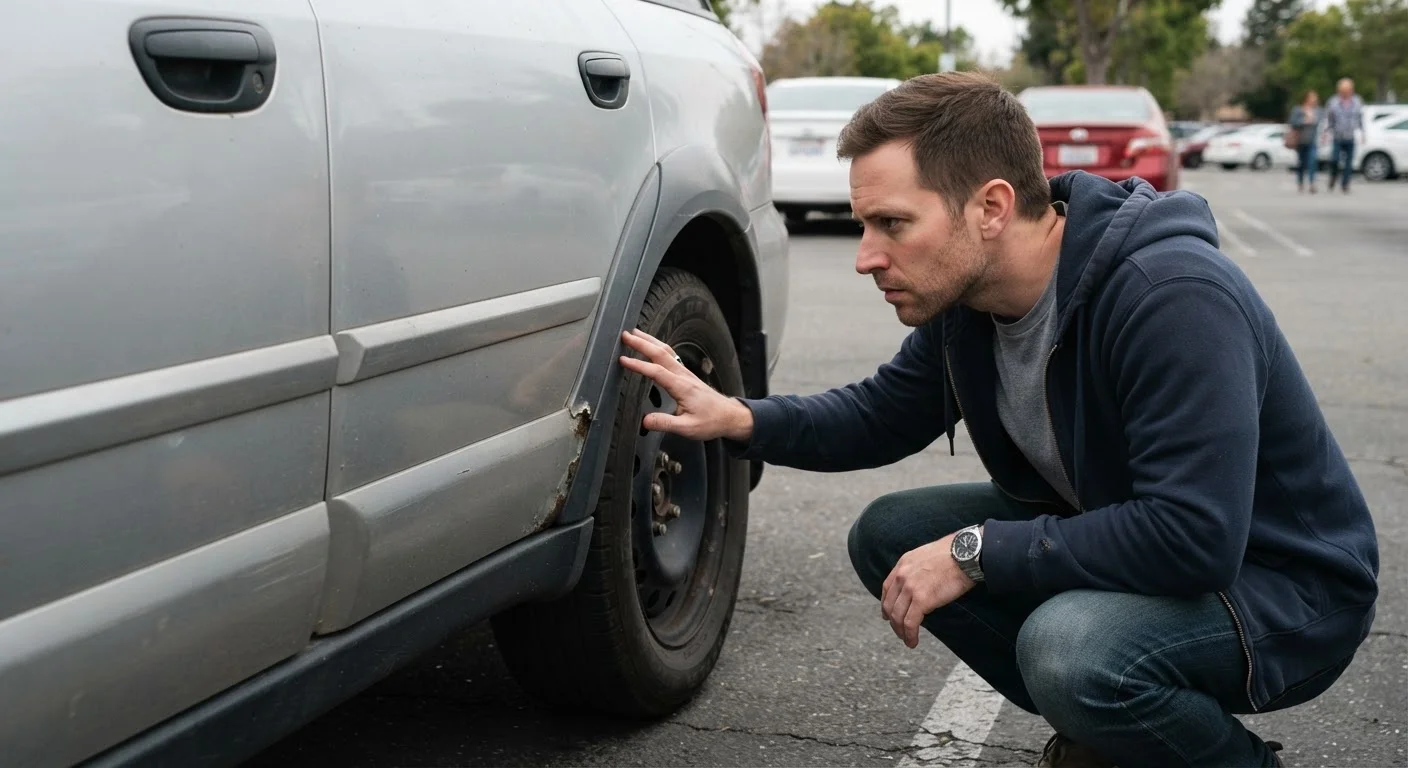
Plan to spend at least 45 minutes on-site, in good daylight. Bring a flashlight, a towel or knee pad for crouching, and a notepad. If a seller resists giving you time or access to inspect the vehicle properly, treat that resistance as informative.
Always Inspect in Daylight - Not Under Artificial Lighting
Paint defects, rust, and body panel mismatches are far easier to spot in natural daylight. Artificial lighting in parking garages or showrooms can mask color mismatches and obscure surface irregularities. If a seller will only show the car at night or in a poorly lit space, ask to reschedule or walk away.
This checklist covers a DIY walk-around inspection. It is not a substitute for a professional pre-purchase inspection (PPI) by an independent, qualified mechanic. A PPI can surface mechanical and structural issues that no visual check alone will catch. Budget for one before committing to any purchase.
Your Complete Used Car Inspection Checklist
Work through each category systematically. Rushing any section increases the chance of missing something that costs you later. If you spot a pattern of deferred maintenance or multiple issues in one area, treat it as a signal about how the car was cared for overall.
Exterior Body & Paint
Undercarriage & Frame
Engine Bay
Tires & Wheels
Interior Condition
Documents & History
Once the physical inspection is complete, a test drive is your next evaluation layer - but it requires its own focused attention. Our guide on what to actually evaluate during a test drive explains the warning signs most buyers tune out.
What to Do With What You Find
No used car is flawless. The goal of an inspection isn't to find a perfect vehicle - it's to understand what you're buying so you can negotiate accurately or walk away confidently. Minor cosmetic wear is expected. Rust penetrating body panels, signs of flood damage, frame repairs, or evidence of significant accidents are in a different category entirely.
Cross-reference your findings with the vehicle history report (services like those available through NMVTIS-approved providers can surface title issues, reported accidents, and odometer discrepancies). Then decide whether the issues you found are reflected in the asking price. If you're unsure how to interpret what you saw, that's exactly the moment to call in a mechanic. Our article on knowing the boundary between DIY checks and professional inspection clarifies when an expert opinion is genuinely necessary.
Before you sign anything, revisit the key questions worth asking sellers and dealers. The inspection gives you the leverage to ask them meaningfully.
Get a Professional Pre-Purchase Inspection
A DIY walk-around has real limits. Compression issues, failing transmissions, hidden structural damage, and emissions system problems often leave no visible clues. A qualified independent mechanic performing a pre-purchase inspection (PPI) on a lift can assess the vehicle in ways no checklist substitutes for. Factor this cost into your evaluation - it is routinely money well spent.
The content on this site is provided for informational purposes only and should not be considered a substitute for professional advice. While we strive to provide accurate and up-to-date information, we make no guarantees regarding its completeness or accuracy. Always consult a qualified professional for advice specific to your circumstances before making any decisions.