

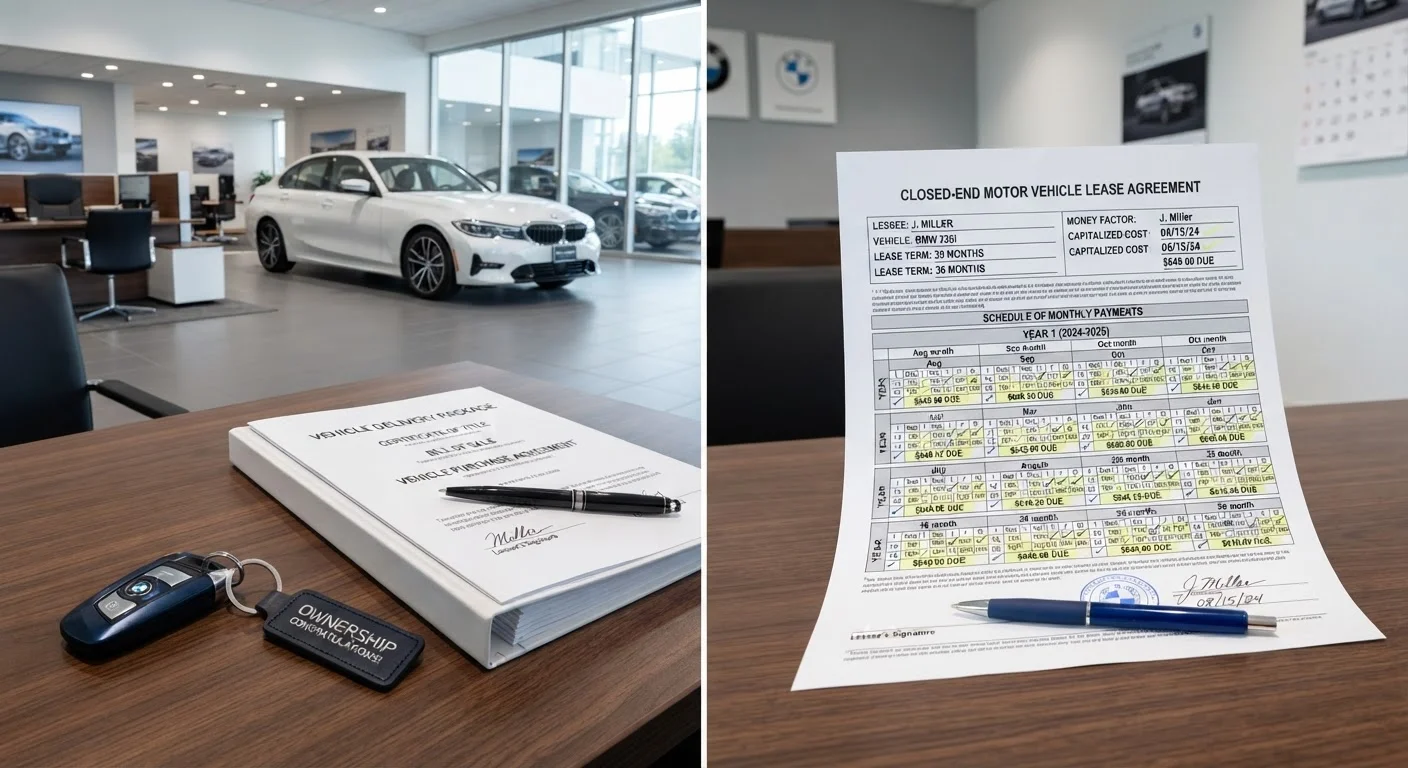
Option A
Buying a Car
The path to full ownership and long-term equity.
Best for: Drivers who log high annual mileage, plan to keep a vehicle for many years, or want the freedom to modify or sell on their own terms.
Option B
Leasing a Car
Lower monthly payments with a built-in vehicle refresh cycle.
Best for: Drivers who prefer lower upfront costs, want a new vehicle every two to three years, and keep annual mileage within predictable limits.
What Each Option Actually Means
When you buy a vehicle - whether with cash or through an auto loan - you're acquiring ownership. You hold the title (or the lender does until the loan is repaid), and once your payments are complete, the car is unambiguously yours. You can sell it, modify it, or drive it into the ground without answering to anyone. For a plain-language breakdown of how auto financing works, see Auto Loan Basics: How Vehicle Financing Actually Works.
When you lease, you're entering a contract to use a vehicle for a set term - typically 24 to 36 months - in exchange for monthly payments. At the end of that term, you return the car to the lessor. Some leases include a buyout option at a predetermined price, but the default outcome is handing back the keys. You never own the vehicle unless you exercise that buyout.
Neither arrangement is inherently superior. The right choice depends almost entirely on your financial situation, driving habits, and how much flexibility or stability you need.
| Criterion | Buying | Leasing |
|---|---|---|
| Ownership | Full ownership at loan payoff | No ownership; return at term end |
| Monthly payment | Higher (full vehicle value) | Lower (depreciation only) |
| Mileage limits | None | Typically 10,000-15,000 miles/year |
| Long-term cost | Lower after loan is paid off | Ongoing payments indefinitely |
| Customization | Unrestricted | Generally prohibited |
| Early exit | Sell or trade anytime | Early termination fees apply |
| Depreciation risk | Fully absorbed by owner | Shared with lessor via residual value |
| Vehicle refresh | Requires selling or trading | Built into the lease cycle |
The Cost Picture: Short-Term vs. Long-Term
Leasing tends to look attractive on a monthly basis. Because payments are calculated on the vehicle's depreciation during the lease period - not its full purchase price - they're typically lower than loan payments for the same model. This can free up cash flow in the short term.
But over a longer horizon, buying usually wins on total cost. Once a loan is retired, your only ongoing vehicle expenses are insurance, fuel, and maintenance. A lessee, by contrast, always has a payment - and after years of leasing, has nothing to show for those dollars except the experience of driving newer cars.
~49%
Average new-vehicle depreciation in first three years
Industry estimates consistently place new vehicle depreciation at roughly 40-50% of purchase price within the first three years of ownership.
~$150-$200
Typical monthly payment difference: lease vs. loan
Financial analysts generally estimate lease payments run $150-$200 lower per month than a comparable auto loan, though this varies significantly by vehicle and terms.
~30%
Share of new vehicles financed via lease in the US
Leasing has historically accounted for roughly a quarter to a third of new vehicle transactions in the United States, varying with interest rate conditions.
Depreciation is the other major cost factor. New vehicles lose a significant portion of their value in the first few years. A buyer absorbs that depreciation directly; a lessee absorbs it indirectly through the lease rate, but isn't exposed to the unpredictable residual value risk that dealers and manufacturers take on. For a comprehensive view of what ownership really costs beyond the monthly payment, Total Cost of Ownership: The Numbers Beyond the Sticker Price lays out every category worth tracking.
Flexibility, Restrictions, and Lifestyle Fit
Ownership offers maximum flexibility. You can sell privately, trade in, modify the vehicle, or simply keep driving it without reporting to anyone. If your life changes - new job, growing family, relocation - you can adapt your vehicle situation accordingly. Choosing the Right Body Style for Your Actual Life can help you think through which vehicle type fits your current circumstances.
Leasing introduces meaningful restrictions. Mileage caps are the most consequential - exceeding the agreed annual limit (commonly 10,000 to 15,000 miles) triggers per-mile fees at lease end. Wear-and-tear standards also apply; damage beyond normal use results in charges when you return the vehicle. Early termination of a lease is possible but often expensive, removing much of the flexibility the lower monthly payment might seem to promise.
If you're weighing a new versus used vehicle purchase, New Car, Used Car, or Certified Pre-Owned explains what each category actually delivers. And once you've settled on buying, The Car-Buying Process, Start to Finish walks through every practical step.
Leasing and Electric Vehicles
Some drivers find leasing particularly useful for electric vehicles, given how quickly EV technology and battery ranges are evolving. A shorter lease term allows you to transition to a newer model with improved range or charging capability without being locked into aging technology. However, it's worth verifying how federal or state EV incentives interact with leased vehicles in your situation, as the structure of who claims tax credits can differ from a purchase.
The content on this site is provided for informational purposes only and should not be considered a substitute for professional advice. While we strive to provide accurate and up-to-date information, we make no guarantees regarding its completeness or accuracy. Always consult a qualified professional for advice specific to your circumstances before making any decisions.