

Diet and Nutrition Essentials
Guinea pigs have precise dietary requirements that set them apart from many other small pets. Understanding these needs is foundational to their long-term health.
| Primary diet component | Unlimited grass hay (approx. 80% of intake) (Exotic animal veterinary consensus) |
| Vitamin C requirement | Cannot self-synthesize; must come from diet daily (Established nutritional science) |
| Minimum enclosure space (pair) | 7.5 sq ft of usable floor space (Cavy welfare organization guidelines) |
| Recommended group size | 2 or more same-sex or neutered companions (Cavy welfare organizations) |
| Safe temperature range | 65°F - 75°F (Exotic animal veterinary guidance) |
| Nail trimming frequency | Every 4-6 weeks (General veterinary practice) |
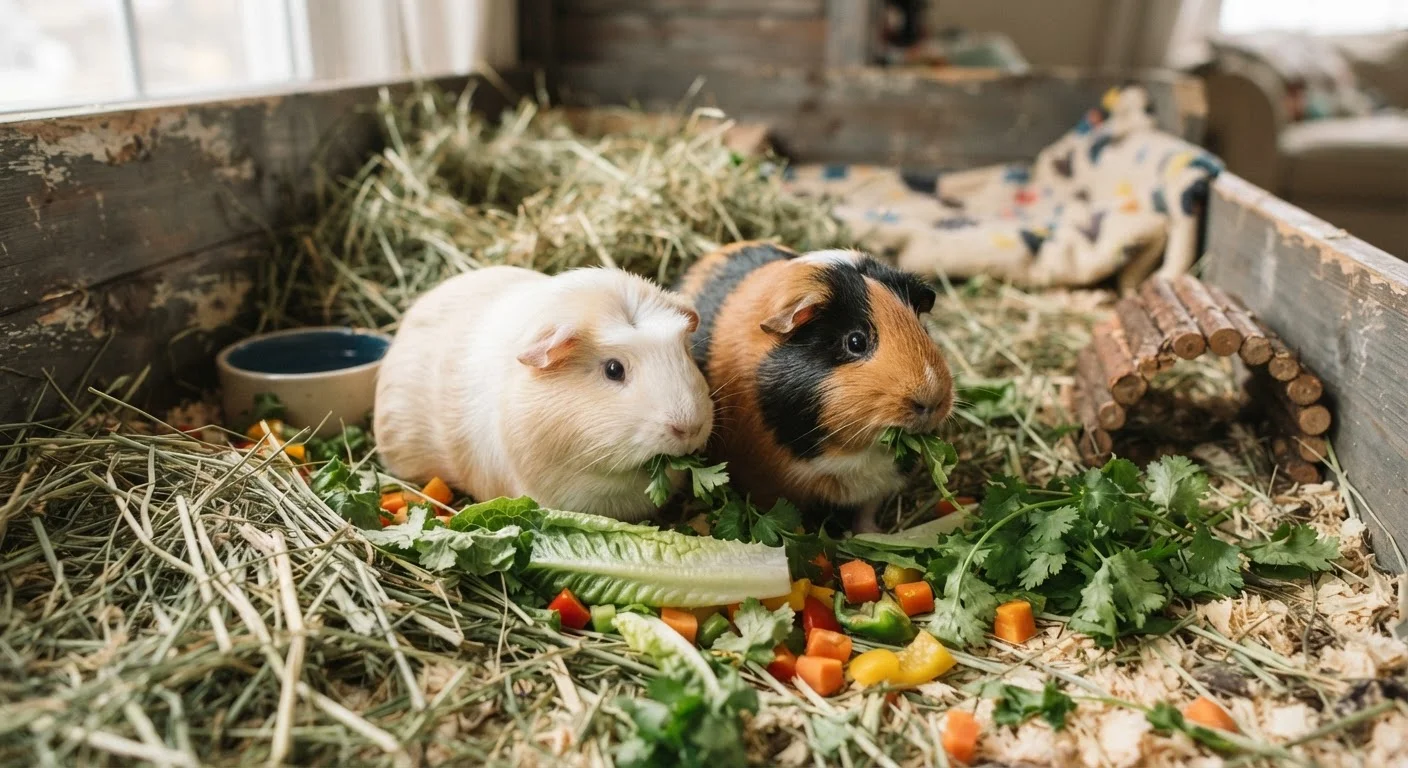
Hay: Timothy hay - or another grass hay - should make up roughly 80% of a guinea pig's daily intake. It supports healthy digestion and keeps teeth naturally worn down. Unlimited access is the standard recommendation among exotic-animal veterinarians.
Fresh vegetables: Dark leafy greens such as romaine lettuce, kale, and bell pepper supply variety and enrichment. Bell pepper is particularly valued because guinea pigs, like humans, cannot synthesize vitamin C on their own and depend entirely on dietary sources. Aim for roughly one cup of mixed fresh vegetables per animal per day.
Pellets: Plain, fortified guinea pig pellets - free of seeds, dried fruit, or colored pieces - round out nutrition. A modest daily serving (roughly ¼ cup per adult animal) is generally appropriate, though your veterinarian can advise on individual needs.
Water: Fresh water must be available at all times, whether in a drip bottle or a heavy ceramic bowl that resists tipping.
Foods to avoid: Dairy, meat, onions, garlic, avocado, rhubarb, and any sugary or processed human food should be kept away from guinea pigs. When introducing any new vegetable, do so gradually to avoid digestive upset.
Housing, Enrichment, and Social Needs
Providing adequate space and companionship is every bit as critical as diet. Guinea pigs are prey animals whose behavioral and emotional wellbeing depends heavily on their environment.
Pododermatitis (Bumblefoot)
A painful bacterial infection of the footpad caused by prolonged pressure or irritation, often linked to wire-floored cages or unsanitary bedding. Prevention centers on solid, clean surfaces.
Vitamin C deficiency (Scurvy)
Guinea pigs lack the enzyme needed to produce vitamin C internally, making dietary intake essential. Deficiency leads to lethargy, rough coat, and joint pain.
Timothy hay
A grass hay that forms the dietary cornerstone for guinea pigs, providing the long fiber strands necessary for healthy gut motility and continuous dental wear.
Cavy
The common alternative name for a domestic guinea pig (Cavia porcellus), derived from the animal's taxonomic genus. Often used in welfare and breed communities.
Fleece bedding
A reusable fabric liner used as enclosure flooring. When properly wicked and layered over absorbent material, it keeps the surface dry and avoids the aromatic compounds found in wood shavings.
Enclosure size: A minimum of 7.5 square feet of usable floor space is commonly cited for a pair of guinea pigs, with more space always preferable. Multi-level wire cages often don't count ramps as usable floor area. Solid, flat surfaces protect feet from the condition known as bumblefoot (pododermatitis).
Bedding: Paper-based or fleece bedding is generally considered safer than cedar or pine shavings, which contain aromatic compounds that can irritate respiratory tracts. Spot-clean daily and replace bedding fully at least once a week.
Temperature: Guinea pigs are sensitive to temperature extremes. Most veterinary sources recommend keeping them in environments between 65°F and 75°F, away from direct sunlight, drafts, and heating vents.
Enrichment: Hiding huts, tunnels, and foraging opportunities reduce stress and encourage natural behaviors. Guinea pigs also benefit from daily supervised floor time outside the enclosure in a safe, enclosed space.
Companionship: Guinea pigs are highly social and generally do not thrive alone. Most cavy welfare organizations recommend keeping at least two same-sex animals, or a neutered male with one or more females, to prevent isolation stress. Introductions should be done gradually on neutral territory. For a broader look at what small pet ownership actually involves before committing, see a balanced overview of small pet ownership.
Grooming: Short-haired breeds need only occasional brushing, while long-haired breeds (such as Peruvians) may require daily combing to prevent mats. All guinea pigs need nail trimming every four to six weeks. If you're unsure, a veterinarian or experienced groomer can demonstrate safe technique.
For ongoing care reminders, the monthly small pet care checklist covers enclosure maintenance, diet reviews, and health checks in one convenient reference. If you're weighing guinea pigs against other small pets, a comparison of hamster and gerbil care highlights how dramatically needs can differ between species.
This article is for general informational purposes only and is not a substitute for veterinary advice. Always consult a qualified exotic-animal veterinarian for guidance specific to your guinea pig's health and care needs.
The content on this site is provided for informational purposes only and should not be considered a substitute for professional advice. While we strive to provide accurate and up-to-date information, we make no guarantees regarding its completeness or accuracy. Always consult a qualified professional for advice specific to your circumstances before making any decisions.