

Why Reptiles Are Different From Other Pets
Reptiles are ectothermic (cold-blooded), meaning they cannot generate body heat internally. Every biological process - digestion, immune response, activity level - depends on the ambient temperature their environment provides. This single fact makes reptile care fundamentally different from caring for a mammal or bird, and it means an enclosure that feels warm enough to a human may still be dangerously inadequate for the animal inside it.
Unlike dogs or cats, most reptiles are also prey species wired to hide signs of illness. By the time behavioral changes become obvious, a health problem is often already advanced. Owners who understand this dynamic tend to build consistent observation habits early - something that pays dividends throughout the animal's life.
If you are already thinking through what different pet types demand, the guide weighing the realities of small pet ownership offers a useful broader framework before committing.
Choosing the Right Species for Your Experience Level
Not all reptiles suit beginners equally. Several species are widely recommended as entry points because of their manageable size, predictable temperament, and relatively well-documented care requirements:
- Leopard geckos - nocturnal, compact, and do not require high-output UVB lighting, though low-level UVB is now considered beneficial by many herpetological veterinarians.
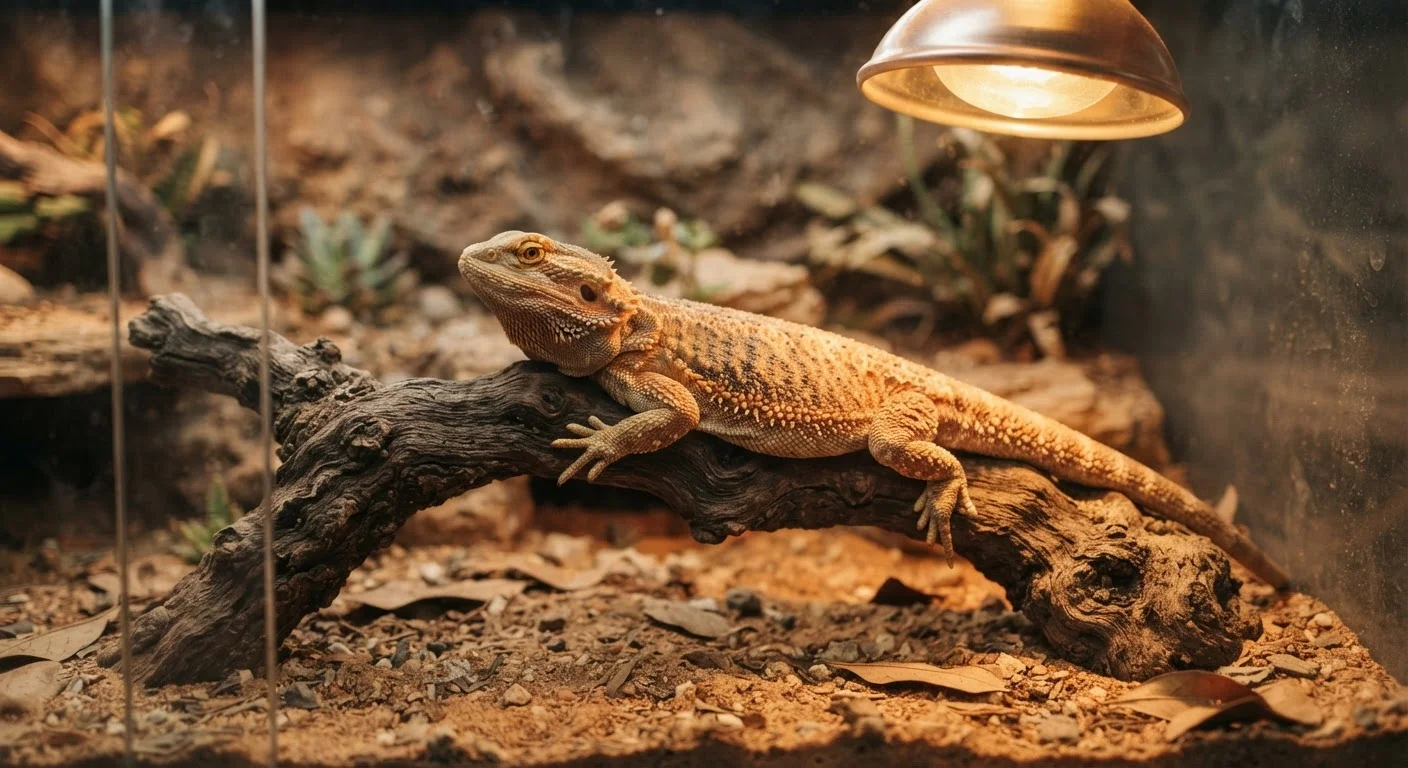
- Bearded dragons - social and active during the day, but require precise UVB and temperature gradients, making setup more involved.
- Corn snakes - docile, hardy, and an accessible introduction to snake keeping for most households.
- Blue-tongued skinks - personable lizards with omnivorous diets that are reasonably straightforward to replicate.
Avoid impulse-selecting a species based on appearance alone. Research adult size, lifespan (many reptiles live 15-30 years), and the specific equipment their enclosure requires before purchasing anything.
Set up and run the full enclosure for at least one week before the animal arrives. This lets you identify and fix temperature or humidity problems without a stressed reptile inside.
New enclosures frequently have equipment calibration issues that only reveal themselves over time; resolving them in advance protects the animal from a dangerous first environment.
Weigh your reptile on a kitchen gram scale every one to two weeks and log the numbers. Weight trend is often the earliest detectable health signal - before any visible symptom appears.
Because reptiles mask illness instinctively, objective data like body weight catches problems that behavioral observation alone routinely misses.
The contrast with mammal ownership is sharp - for perspective on what a more socially interactive pet demands, see what to expect in the early weeks with a first dog.
Enclosure Setup: Temperature, Lighting, and Humidity
A properly structured enclosure is the foundation of reptile health. Three variables must be dialed in simultaneously:
Temperature Gradient
Reptiles thermoregulate by moving between warmer and cooler zones. Every enclosure should provide a basking spot at the species-appropriate high temperature and a cooler retreat at the other end. A basking area for a bearded dragon, for example, should typically reach 100-110°F, while the cool side sits closer to 80°F. Always verify temperatures with a reliable digital thermometer - analog dial thermometers are frequently inaccurate.
UVB Lighting
Many lizards and some snakes require UVB radiation to synthesize vitamin D3, which enables calcium absorption. Without adequate UVB, metabolic bone disease - a serious, painful, and preventable condition - can develop. UVB bulbs degrade before they visibly dim; most should be replaced every 6-12 months depending on the manufacturer's specifications.
Humidity
Species from arid environments (like leopard geckos) need low ambient humidity, while tropical species (like crested geckos) need higher levels. Incorrect humidity causes respiratory infections and shedding complications. A digital hygrometer is an inexpensive but essential tool.
Never Use Heat Rocks as a Primary Heat Source
Heat rocks - ceramic or plastic rocks with internal heating elements - heat unevenly and have been associated with severe thermal burns in reptiles. Because reptiles do not sense heat through their belly skin the same way mammals do, they may rest on a dangerously hot surface without reacting. Overhead radiant heat sources or under-tank heating mats used with a thermostat are safer alternatives recommended by herpetological veterinarians.
Feeding and Nutrition Essentials
Reptile dietary needs vary dramatically by species. Bearded dragons and blue-tongued skinks are omnivores requiring both plant matter and protein. Leopard geckos are insectivores. Corn snakes are carnivores that eat pre-killed or frozen-thawed rodents exclusively.
A critical concept for insectivore owners is gut-loading and dusting. Feeder insects should be fed nutritious food for 24-48 hours before being offered to your reptile (gut-loading), and then lightly coated in calcium and vitamin supplements (dusting) immediately before feeding. The nutritional value of a feeder insect is only as good as what it has eaten.
~6M
Reptiles kept as pets in U.S. households
American Pet Products Association surveys have consistently placed reptile ownership among the fastest-growing segments of the U.S. pet industry.
90%+
Reptile illnesses linked to husbandry errors
Exotic animal veterinarians broadly estimate that the vast majority of reptile health presentations are preventable and trace directly to incorrect temperature, lighting, or nutrition.
Overfeeding is as problematic as underfeeding. Obesity in captive reptiles is a documented welfare concern, particularly in species that are easy to overfeed because they readily accept food. Follow species-specific feeding schedules rather than feeding on demand.
Health Monitoring and Veterinary Care
Find a veterinarian experienced with exotic animals or herpetology before your reptile arrives - not after a problem emerges. General practice veterinarians may have limited training in reptile physiology, and an emergency situation is the wrong time to search for a specialist.
Routine health checks to perform at home include: monitoring body weight weekly or biweekly, observing shedding cycles (retained shed is an early warning sign), checking feces for consistency and unusual odor, and watching for any changes in posture, appetite, or activity that deviate from the individual animal's baseline.
Common conditions in captive reptiles - respiratory infections, parasites, and metabolic bone disease - are largely preventable through correct husbandry. When symptoms do appear, veterinary evaluation should not be delayed; reptiles decline rapidly when ill.
This article provides general educational information about reptile care and is not a substitute for advice from a qualified exotic animal veterinarian. Always consult a licensed veterinary professional for health concerns about your specific animal.
Legal Considerations and Sourcing Responsibly
Before acquiring any reptile, verify that the species is legal to own in your state and locality. Some species - including certain tortoise species, iguanas over a specific size, and venomous reptiles - are restricted or prohibited in various U.S. jurisdictions. Local ordinances can be more restrictive than state law, so check both levels.
Whenever possible, source reptiles from reputable captive breeders rather than wild-caught animals. Wild-caught reptiles carry higher parasite burdens, experience extreme stress during capture and transport, and face significantly lower survival rates in captivity. Captive-bred animals are generally healthier, better acclimated to human interaction, and do not contribute to wild population pressure.
Ask any breeder or supplier for documentation of the animal's origin, hatching date, and feeding history. Responsible sellers will provide this information readily and welcome your questions.
For a sense of how reptile ownership compares to other non-traditional pets, setting up a freshwater aquarium illustrates a similarly equipment-intensive hobby that rewards careful preparation.
The content on this site is provided for informational purposes only and should not be considered a substitute for professional advice. While we strive to provide accurate and up-to-date information, we make no guarantees regarding its completeness or accuracy. Always consult a qualified professional for advice specific to your circumstances before making any decisions.