

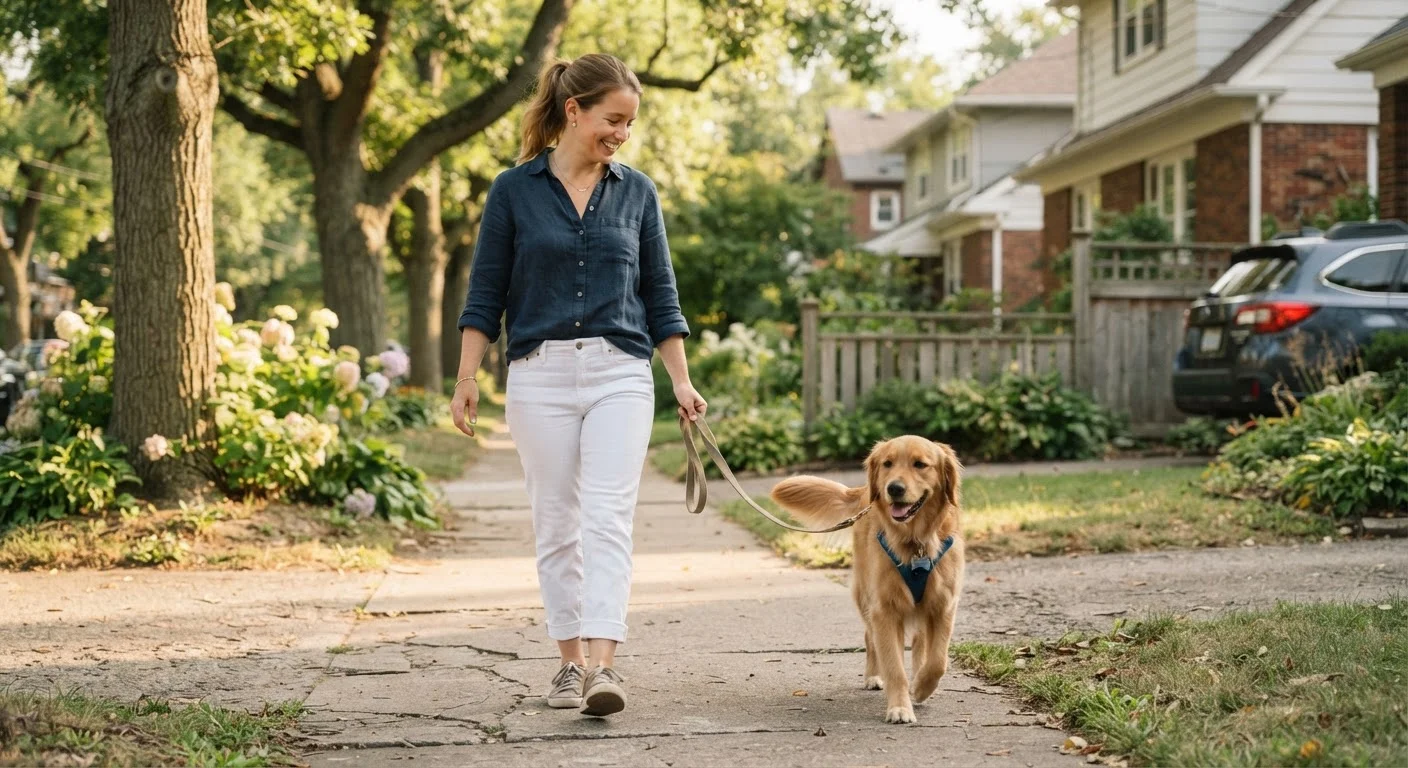
Why Dogs Pull - and What Training Actually Fixes
Pulling on the leash is one of the most common complaints among dog owners, yet it's almost always the result of inadvertent reinforcement rather than stubbornness or dominance. When a dog pulls toward a scent, another dog, or simply in the direction of forward motion - and the owner follows - the dog learns that tension in the leash produces results. Repetition cements this into habit.
Understanding this reframes the solution. The goal isn't to suppress pulling through discomfort; it's to make a loose lead the more rewarding option. This is the foundation of reward-based training, which animal behaviorists and veterinary organizations broadly support as the most effective and welfare-friendly approach for companion dogs.
Equipment plays a supporting role. A front-clip harness can reduce pulling mechanics during the learning phase, but it doesn't replace training - it simply provides more comfortable practice sessions while the dog builds new habits.
What you will need
What You'll Need Before You Start
Gathering the right tools before your first session reduces frustration and keeps training flowing smoothly. Treat quality matters more than many owners expect - if the reward is only mildly interesting, the environment will easily win the dog's attention.
Front-clip harness
Redirects pulling energy toward you rather than forward, making it easier to manage without discomfort for the dog.
4-6 foot standard leash
Provides enough slack for a loose lead while keeping the dog within safe distance during training.
High-value training treats
Motivates the dog to choose walking close to you over pulling ahead.
Treat pouch
Keeps rewards immediately accessible so you can mark and reward good behavior within seconds.
Clicker
Provides a precise, consistent sound marker to pinpoint the exact moment of correct behavior.
If you've recently brought a new dog home, it's worth reviewing the settling-in period before jumping into structured training. A stressed or over-stimulated dog will find learning harder to absorb. See our guide to the early weeks at home for context on timing your expectations appropriately.
Step-by-Step Training Process
Follow these steps in order, progressing only when your dog is reliably succeeding at each stage. Skipping ahead is the most common source of plateau or regression in leash training.
Establish a reward marker
Before heading outside, teach your dog what "good behavior" sounds like. Choose a consistent marker - a clicker or a short verbal cue like "yes" - and pair it with a treat 10 to 15 times in a row. Click or say "yes," then immediately deliver a treat. Your dog will soon associate the marker with an incoming reward, making precise timing far more effective during leash work.
Introduce the leash in a calm environment
Clip the leash onto your dog's collar or harness indoors or in a low-distraction yard. Stand still and reward any moment the leash remains slack - the dog doesn't need to be in a formal heel position yet. The goal here is simply to teach that a loose leash predicts good things. Repeat across 2 to 3 short sessions before introducing movement.
Teach the stop-and-wait response to pulling
The moment your dog creates tension in the leash, stop walking completely. Do not pull back or jerk the leash - simply become a statue. Wait until your dog releases the tension, even slightly, then mark and reward immediately before resuming. This teaches the fundamental lesson: pulling stops forward progress; a loose lead keeps it going. Consistency here is non-negotiable.
Reward the correct walking position proactively
Don't wait for pulling to happen before engaging your dog. Actively reward them for being in the right position - typically at your side with a loose leash - before tension builds. Deliver treats at hip level so the dog learns that staying close to your body is where good things happen. Gradually increase the number of steps between rewards as reliability improves.
Add distractions gradually
Once your dog walks reliably in a quiet space, introduce mild distractions: a neighbor's yard, light pedestrian traffic, or other dogs at a distance. Keep sessions short - 5 to 10 minutes - and return to heavier reward rates whenever the difficulty increases. Treat each new environment as starting a fresh lesson, not testing a finished skill.
Maintain consistency across all handlers
Every person who walks the dog must follow the same rules. If one household member allows pulling while another enforces the stop-and-wait method, the dog receives conflicting information and progress stalls. Brief all regular walkers on the approach, and consider a short household practice session so everyone applies the same technique with confidence.
Keep Sessions Short and Positive
Training sessions of 5 to 10 minutes are more effective than marathon practice because dogs learn better when they're not mentally fatigued. End each session on a success - even a small one - so the dog finishes with a positive association. Multiple short sessions per day will consistently outperform one long session.
Building on Loose-Lead Skills Over Time
Once your dog walks reliably on a loose leash across varied environments, this skill becomes the foundation for safe, enjoyable daily exercise. Different breeds and life stages have significantly different exercise requirements - what counts as a satisfying walk for a Basset Hound may be a warm-up for a Border Collie. Our guide to exercise needs across dog breeds can help you calibrate both duration and intensity for your specific dog.
Expect some regression when moving to new environments or after a break in routine. This is normal and not a sign that training has failed. Return briefly to a lower-distraction setting, rebuild confidence, and progress again. Most dogs with consistent handling develop reliable loose-lead walking within several weeks of regular practice - though individual timelines vary based on age, prior habits, and how consistently all handlers apply the same method.
Avoid Punishment-Based Methods
Choke chains, prong collars, and leash corrections may suppress pulling in the short term but do not teach the dog what to do instead, and carry documented welfare risks including increased anxiety and fear-based reactivity. Veterinary and behavioral organizations consistently advise against aversive equipment for leash training. If you feel stuck, consult a certified professional dog trainer who uses reward-based methods.
The content on this site is provided for informational purposes only and should not be considered a substitute for professional advice. While we strive to provide accurate and up-to-date information, we make no guarantees regarding its completeness or accuracy. Always consult a qualified professional for advice specific to your circumstances before making any decisions.