

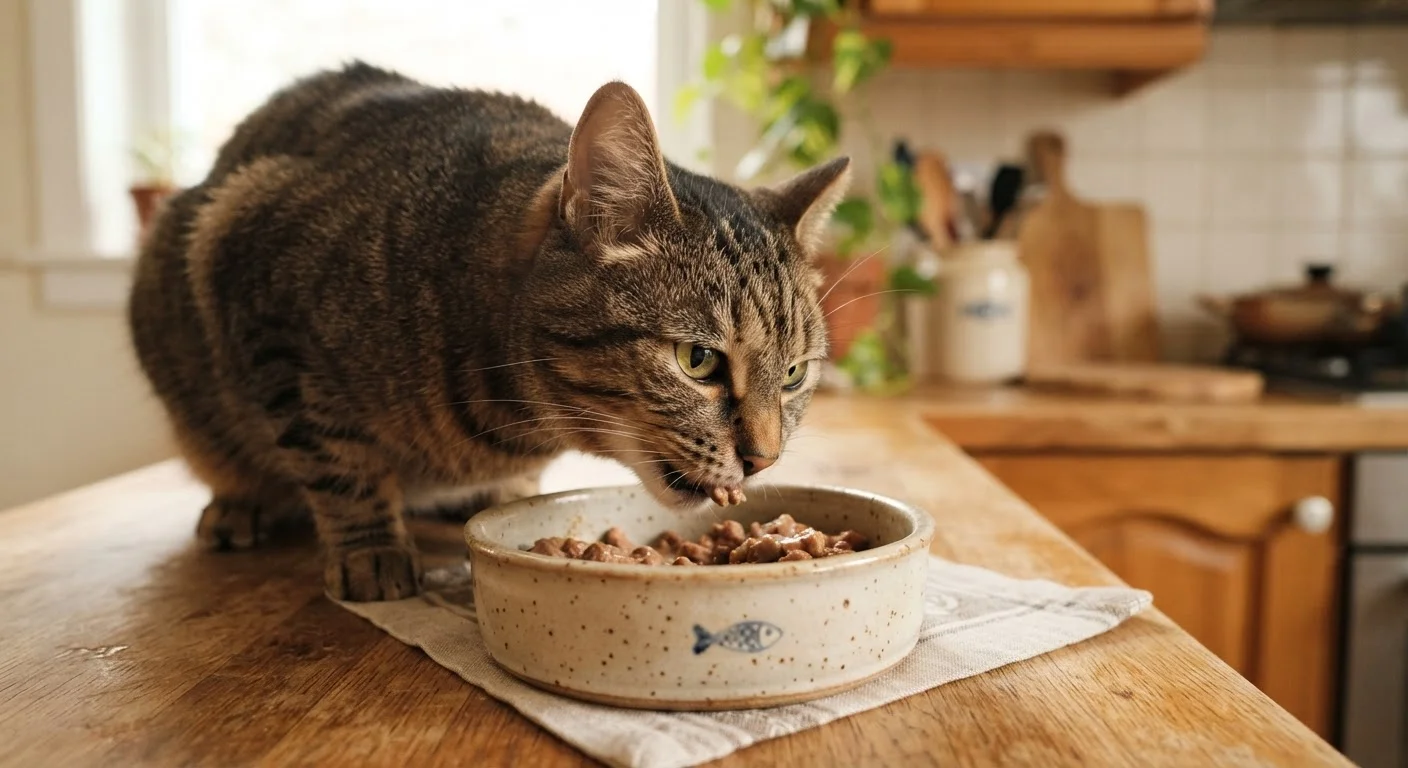
Why Cats Are Built Around Meat
Cats evolved as solitary hunters in arid environments, subsisting almost entirely on small prey - rodents, birds, and reptiles. That evolutionary history shaped a metabolism profoundly different from dogs or humans. Where omnivores adapted flexible digestive systems to extract nutrition from both plant and animal sources, cats narrowed in the opposite direction, becoming highly efficient processors of animal tissue.
This specialization means that protein isn't just preferred in a cat's diet - it's metabolically required at a higher rate than for most mammals. Cats use dietary protein not only for muscle maintenance and growth but also as a significant energy source. Their liver continuously catabolizes amino acids regardless of dietary intake, a metabolic feature that makes protein restriction difficult and prolonged low-protein diets harmful. If you're welcoming a cat for the first time, understanding this fundamental biology is a strong starting point - see our guide for new cat owners for a broader foundation.
~26%
Minimum protein content recommended for adult cats (dry matter basis)
AAFCO guidelines set 26% crude protein (dry matter) as the minimum for adult cat maintenance in commercially prepared foods.
70%
Moisture content of whole prey
Small prey animals that cats evolved to eat contain approximately 70% water, underscoring why moisture in the diet matters for feline urinary health.
1980s
When taurine deficiency in cats was widely recognized
Researchers identified dilated cardiomyopathy linked to low-taurine diets in cats during the 1980s, prompting industry-wide reformulation of commercial cat foods.
Taurine: The Nutrient Cats Cannot Make
Taurine is a sulfur-containing amino acid found abundantly in animal muscle - particularly in heart muscle, dark meat poultry, and shellfish. Most mammals synthesize adequate taurine from precursor amino acids cysteine and methionine. Cats have severely limited activity of the enzymes needed for this conversion, making dietary taurine an absolute requirement.
The consequences of taurine deficiency are well-documented and serious. Dilated cardiomyopathy - a condition where the heart muscle weakens and the chambers enlarge - was a common finding in cats before taurine requirements were identified and commercial cat foods were reformulated in the 1980s and 1990s. Central retinal degeneration, which can progress to blindness, and impaired reproductive function are also associated with inadequate taurine intake.
For cats eating commercially produced foods labeled as complete and balanced under AAFCO (the Association of American Feed Control Officials) standards, taurine levels are regulated. The risk rises with homemade diets that haven't been formulated by a board-certified veterinary nutritionist.
Checking Your Cat Food Label for Taurine
Look for an AAFCO nutritional adequacy statement on the packaging - phrases like 'complete and balanced for all life stages' indicate the food meets established taurine (and other nutrient) minimums. If you are preparing homemade meals for your cat, work with a board-certified veterinary nutritionist to ensure the recipe meets all essential nutrient requirements, including taurine.
Other Essential Nutrients Cats Must Obtain From Animal Sources
Taurine gets significant attention, but it's one of several nutrients cats cannot adequately synthesize themselves:
- Arachidonic acid: An omega-6 fatty acid that cats cannot produce from linoleic acid the way dogs and humans can. It must come from animal fats, particularly poultry and fish. Deficiency can affect skin health, reproduction, and immune function.
- Preformed vitamin A (retinol): Cats lack the intestinal enzyme to convert beta-carotene from plants into usable vitamin A. They require retinol directly from animal liver or fish oils. Both deficiency and toxicity (from over-supplementation) are concerns.
- Niacin (vitamin B3): Most mammals convert the amino acid tryptophan into niacin. Cats do this very inefficiently, making dietary niacin from animal protein an important source.
- Vitamin D3: Cats have limited ability to synthesize vitamin D from sunlight exposure and rely more heavily on dietary sources, primarily animal-derived D3.
These dependencies reinforce why dog food - even high-quality formulas - is not an appropriate substitute for cat food. The two species have fundamentally different nutritional profiles. For a direct comparison of how feline and canine needs diverge, our dog nutrition explainer offers useful context.
Hydration, Carbohydrates, and Common Misconceptions
Cats evolved in environments where prey provided most of their water intake. Fresh-caught prey contains roughly 70% moisture - close to the water content of wet cat food, and far above the roughly 10% moisture content of dry kibble. As a result, cats have a naturally low thirst drive and may not compensate adequately for reduced moisture in their diet by drinking more water.
Chronic low-level dehydration is associated with urinary tract issues and kidney stress in cats - conditions that are among the most common health concerns seen in veterinary practice. Understanding the hydration difference between food formats is important context; our article on wet food versus dry food explores the practical implications.
On the topic of carbohydrates: cats have fewer taste receptors for sweetness, limited salivary amylase (the enzyme that begins starch digestion), and lower activity of intestinal disaccharidase enzymes compared to omnivores. This doesn't mean carbohydrates are toxic - they can contribute usable energy - but it does mean that high-carbohydrate diets aren't optimally aligned with feline digestive physiology. Protein and fat should remain the dominant macronutrients in any cat's diet.
Some common beliefs about cat nutrition - such as the idea that milk is a wholesome treat - are actually nutritional myths worth examining. Our article on common cat health myths addresses several of these misconceptions with evidence-based perspective.
This article is for general informational and educational purposes only. It is not a substitute for professional veterinary advice. Always consult a licensed veterinarian or board-certified veterinary nutritionist before making significant changes to your cat's diet or if you have concerns about their health.
Frequently Asked Questions
Cats lack the metabolic machinery to convert plant compounds into the nutrients they need, including taurine, arachidonic acid, and preformed vitamin A. A diet without animal protein will lead to serious, life-threatening deficiencies over time. Veterinary nutritionists consistently advise against vegan diets for cats.
Cats generally require significantly more dietary protein than dogs or humans - roughly 25-30% of their daily caloric intake from protein, though the exact amount varies by age, health status, and activity level. Kittens and senior cats may have different requirements. Your veterinarian can help determine the right level for your individual cat.
Taurine deficiency in cats leads to serious health consequences, including dilated cardiomyopathy (a heart condition), central retinal degeneration causing vision loss, and reproductive issues. Because commercial cat foods are required to meet taurine standards, deficiency is most often seen in cats fed homemade or nutritionally incomplete diets.
Grains are not inherently toxic to cats and can serve as a source of energy in commercial diets. However, cats have a limited ability to digest large amounts of carbohydrates, and protein should remain the dominant macronutrient. True grain allergies exist but are less common than often assumed.
Most commercially prepared cat foods that meet AAFCO nutritional standards are formulated to be complete and balanced, making additional supplementation unnecessary for healthy adult cats. Adding supplements without veterinary guidance can actually cause toxicity in some cases, particularly with fat-soluble vitamins.
Cats uniquely require preformed taurine, arachidonic acid, retinol (preformed vitamin A), and niacin from animal sources - nutrients that dogs can synthesize internally from precursors. This is why dog food is nutritionally unsuitable for cats, even short-term.
The content on this site is provided for informational purposes only and should not be considered a substitute for professional advice. While we strive to provide accurate and up-to-date information, we make no guarantees regarding its completeness or accuracy. Always consult a qualified professional for advice specific to your circumstances before making any decisions.