

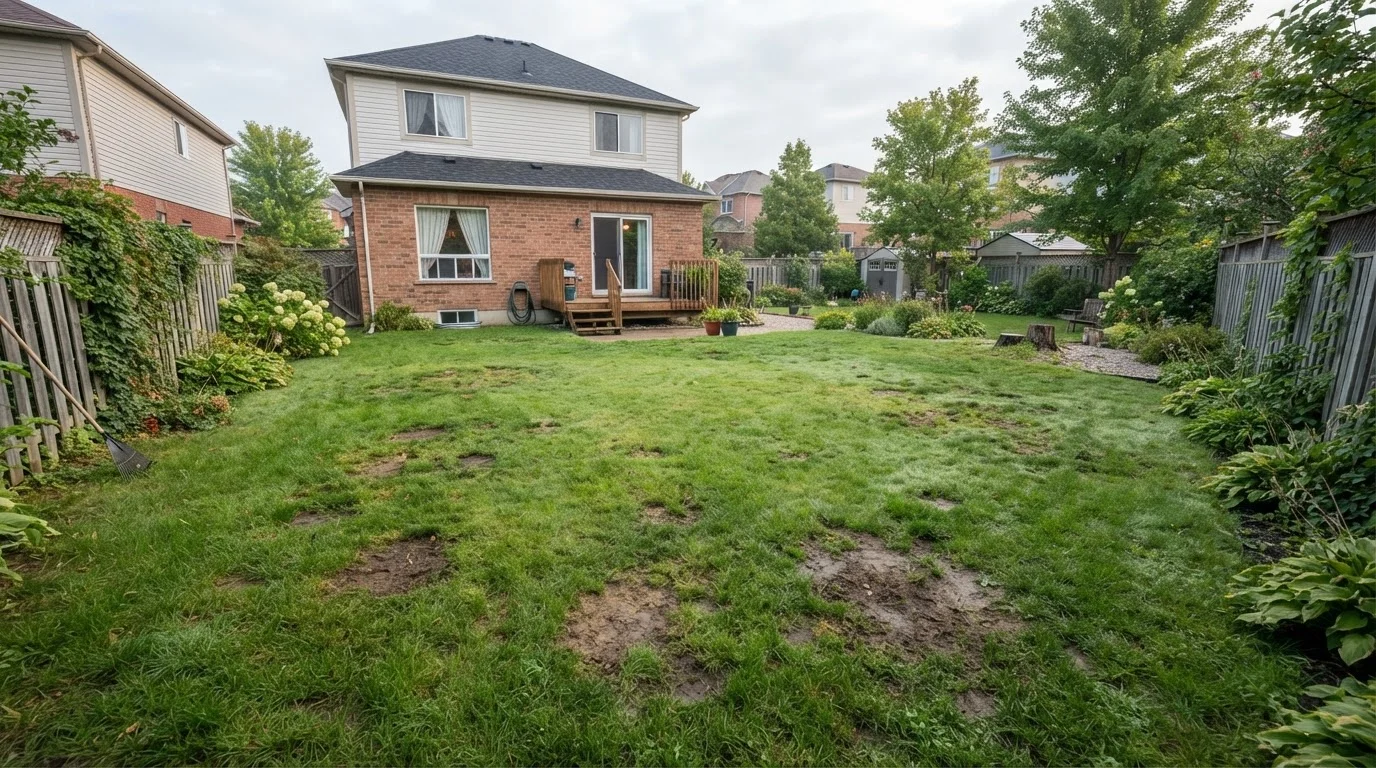
Bare Patches Are a Symptom, Not the Problem
When bare patches appear in your lawn, the instinct is to reseed immediately and move on. But without understanding what caused the grass to die or thin in the first place, those patches will almost certainly return. Think of bare patches the way you'd think of a recurring leak - patching the ceiling without fixing the roof just delays the inevitable.
The underlying causes range from soil problems to pest activity to simple watering habits. Some are straightforward to identify; others require closer inspection. What they all share is this: the turf is telling you something. Learning to read those signals is what separates a lawn that struggles year after year from one that genuinely thrives.
Understanding the soil beneath your turf is an essential starting point. Our editorial on soil health and what it means for your garden walks through the basics of soil structure, drainage, and fertility - all of which directly affect whether grass can establish and persist.
The Most Common Mistakes Homeowners Make
Most bare patches trace back to a handful of repeated errors. Each one is avoidable once you know what to look for - and how your habits or conditions may be contributing.
Overwatering or watering too shallowly, leaving grass roots underdeveloped and vulnerable.
Why it happens: Many homeowners water on a fixed daily schedule without adjusting for rainfall or season, assuming more water is always better.
Ignoring soil compaction, which suffocates grass roots and prevents water and nutrients from reaching them.
Why it happens: Compaction builds gradually through foot traffic, mowing, and natural settling, so it often goes unnoticed until bare patches appear.
Mowing too short, which stresses grass, reduces drought tolerance, and exposes soil to weed invasion.
Why it happens: The assumption that shorter grass means less frequent mowing leads many homeowners to scalp their lawns in a single cut.
Applying fertilizer incorrectly - either over-fertilizing in summer heat or applying unevenly, creating burn spots.
Why it happens: Fertilizer labels can be confusing, and the belief that more nutrition equals faster growth often leads to overapplication.
Reseeding bare patches without removing thatch buildup, preventing new seed from making contact with soil.
Why it happens: Thatch - the layer of dead organic matter between grass and soil - is invisible from above and easy to overlook when patching thin areas.
Don't Skip the Diagnosis Step
Reseeding over an active fungal infection or an ongoing pest infestation will not fix bare patches - it will waste seed and delay recovery. Before adding any seed, fertilizer, or amendment, take the time to identify the specific cause in each affected area. Treating the wrong problem can sometimes make conditions worse.
How to Diagnose Before You Repair
Before reaching for grass seed or fertilizer, spend time observing the affected areas. Note the shape and location of each bare patch - round spots often suggest fungal disease or pest grub damage, while irregular strips may point to foot traffic or mower patterns. Patches near downspouts could indicate drainage issues; patches in shade may simply signal the wrong grass variety for your conditions.
Press your heel into the bare soil. If it barely dents, compaction is likely a factor. Pull back surrounding turf gently and inspect for grubs, which look like small white C-shaped larvae just below the surface. If you find more than a few per square foot, pest pressure may be driving the damage.
~1 inch
Weekly water depth most lawns need
University extension services generally recommend about one inch of water per week, including rainfall, for most cool- and warm-season grasses.
3-4 per sq ft
Grub threshold that may warrant treatment
Many turf management guidelines suggest that white grub populations above roughly three to four per square foot can cause visible turf damage.
Once you've identified the most probable cause, address it before reseeding. Aerating compacted soil, adjusting your irrigation schedule, or treating active pest populations first will give new grass seed a genuinely better chance of establishing - and staying.
The content on this site is provided for informational purposes only and should not be considered a substitute for professional advice. While we strive to provide accurate and up-to-date information, we make no guarantees regarding its completeness or accuracy. Always consult a qualified professional for advice specific to your circumstances before making any decisions.