

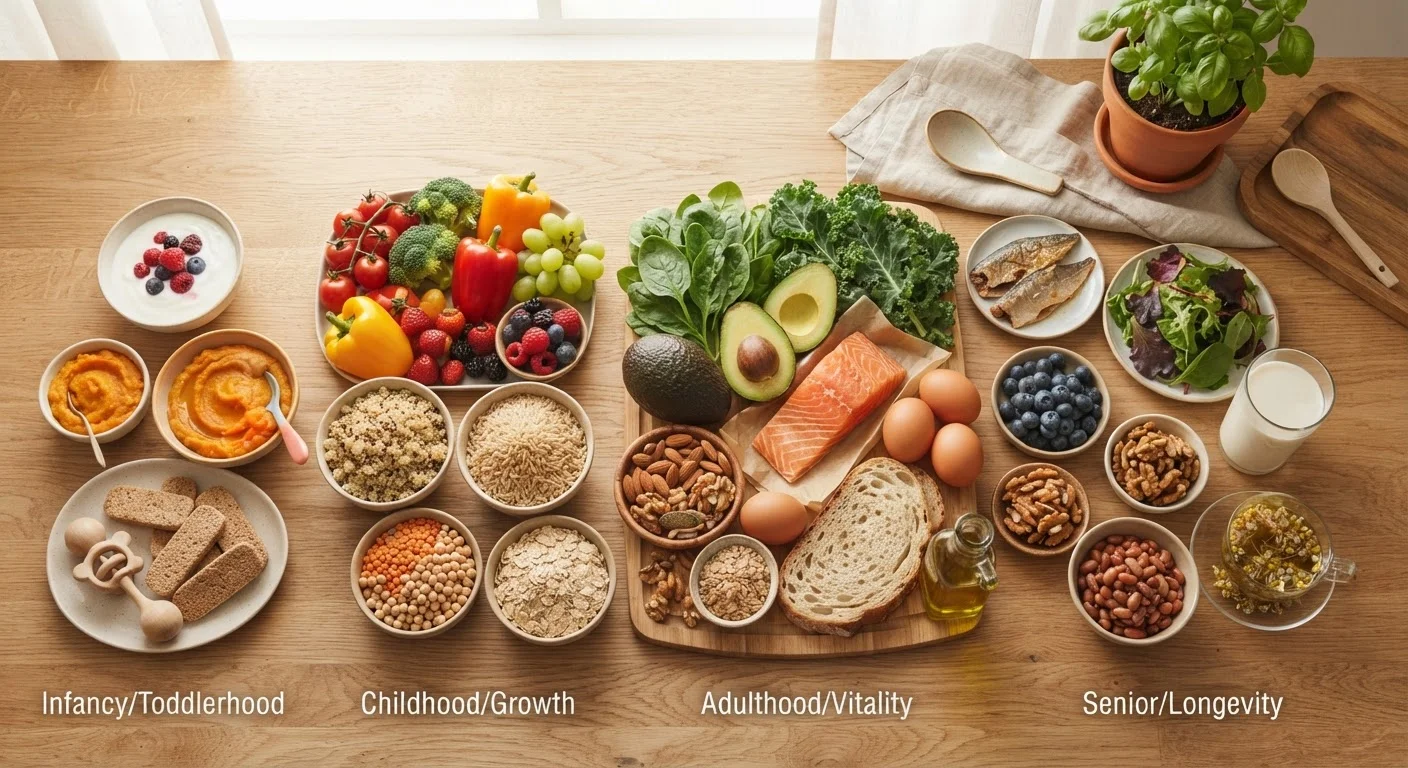
Why Nutritional Needs Change Across the Lifespan
The human body is not a static system. From the rapid cell division of infancy to the gradual physiological shifts of later adulthood, the nutrients we need - and how effectively we absorb them - change continuously. Factors like metabolic rate, hormone levels, lean muscle mass, and gut function all evolve with age, reshaping dietary priorities along the way.
Understanding these shifts helps individuals and families make more informed food choices at each stage, rather than applying a one-size-fits-all approach to eating. For a strong foundation in core nutrition principles, building a balanced plate is a helpful starting point before exploring life-stage specifics.
This article is for general educational purposes only and does not constitute medical or dietary advice. Consult a registered dietitian or qualified healthcare provider for guidance tailored to your individual needs.
Childhood and Adolescence: Fueling Growth and Development
During childhood, the body prioritizes rapid growth, brain development, and the establishment of bone density. Energy needs per unit of body weight are proportionally higher than in adulthood. Key nutrients during this period include:
- Calcium and vitamin D - critical for building peak bone mass, with the greatest density gains occurring before age 20.
- Iron - supports cognitive development and expanding blood volume; deficiency is common in young children and adolescent girls.
- Zinc - plays a central role in growth, immune function, and cell repair.
- Protein - essential for muscle and tissue development throughout childhood and into the teenage years.
Adolescence introduces additional complexity. The growth spurt of puberty creates a second peak in calcium and iron demand, while caloric needs surge - particularly for active teenagers. Disordered eating patterns also emerge most commonly during this window, making a positive, non-restrictive relationship with food particularly important. Parents and caregivers concerned about a child's growth or eating patterns should consult a pediatric healthcare provider.
When assessing a child's diet, look at patterns over a week rather than a single day. Young children often self-regulate intake in ways that appear erratic but balance out over time.
Pediatric nutrition research consistently shows that young children have natural appetite-regulation mechanisms; evaluating intake over several days provides a more accurate picture than any single meal or day.
For older adults who find appetite declining, prioritizing protein and micronutrient-dense foods at the first meal of the day - when appetite tends to be strongest - can help meet daily needs more reliably.
Evidence from geriatric nutrition practice suggests that distributing protein and key nutrients toward earlier meals supports better overall adequacy when total daily intake volume is reduced.
Adulthood: Maintaining Health and Preventing Chronic Disease
Once growth plateaus in early adulthood, the nutritional focus shifts from building to maintaining. Calorie needs often decrease modestly compared to adolescence, but the need for micronutrients remains high. Adults in their 20s and 30s are laying the metabolic groundwork that influences health outcomes decades later.
Key priorities in adulthood include sustaining lean muscle mass through adequate protein intake, supporting cardiovascular health through fiber-rich whole foods and healthy fats, and managing blood glucose stability through balanced carbohydrate choices. Physical activity alongside good nutrition compounds these benefits significantly.
By the mid-to-late 30s, metabolic rate begins a gradual decline - roughly 1-2% per decade according to general estimates in exercise physiology literature - meaning calorie-dense but nutrient-poor foods become easier to overconsume. Prioritizing nutrient density over calorie quantity is a practical strategy during this phase.
Pregnancy and Lactation: Elevated Demands for Two
Pregnancy represents one of the most nutritionally intensive periods of the human lifespan. Maternal nutrition directly influences fetal organ development, birth outcomes, and the long-term health of the child. Caloric needs increase modestly - general guidance suggests an additional several hundred calories daily in the second and third trimesters - but the increase in specific micronutrient requirements is more substantial.
Folate Before and During Pregnancy Is Critical
Adequate folate intake in the weeks before conception and during the first trimester is strongly associated with reduced risk of neural tube defects in the developing fetus. Because neural tube formation occurs very early - often before many people know they are pregnant - health authorities in the U.S. generally recommend that anyone who could become pregnant maintain sufficient folate intake. Speak with a healthcare provider about your specific needs before and during pregnancy.
Folate (or its synthetic form, folic acid) is critical in the periconceptional period and early pregnancy to support neural tube development. Iodine, choline, omega-3 fatty acids (particularly DHA), and iron are among the other nutrients with elevated requirements. Lactation also increases caloric and fluid demands; adequate hydration interacts closely with milk production and overall maternal recovery. For a deeper look at how water fits into nutrition, see our article on hydration and nutrition.
All nutritional decisions during pregnancy and lactation should be made in consultation with a qualified healthcare provider, as individual needs vary considerably based on pre-pregnancy health, multiple pregnancies, and other clinical factors.
Older Adulthood: Adapting to Changing Physiology
After roughly age 65, several physiological changes converge to reshape nutritional needs in ways that are often underestimated. Appetite frequently decreases, yet requirements for several key nutrients remain high or even increase. This mismatch makes nutrient density especially critical in older diets.
Notable shifts in later life include:
- Protein needs may increase - evidence suggests older adults benefit from higher protein intake relative to body weight to counter sarcopenia (age-related muscle loss), though individual clinical guidance is essential.
- Calcium and vitamin D - absorption efficiency declines with age, while bone loss accelerates, particularly after menopause in women.
- Vitamin B12 - reduced stomach acid production impairs absorption from food sources; deficiency affects neurological function and is more prevalent in older populations.
- Fiber and fluid intake - both tend to decline alongside appetite, increasing the risk of constipation and dehydration.
Social isolation, reduced mobility, and medication interactions can further complicate nutritional status in older adults. Regular assessment by a healthcare provider or dietitian is particularly valuable in this stage. For related context on staying active alongside eating well, fitness across the decades offers a complementary perspective.
Nutrients Commonly at Risk Across Life Stages
Certain nutritional gaps appear persistently across different age groups and demographic profiles. Understanding which nutrients are most often insufficient can help guide food choices - and conversations with healthcare providers. Commonly overlooked nutritional gaps explores this topic in greater depth.
~42%
U.S. adults with vitamin D insufficiency
According to analysis of NHANES data published in nutrition research literature, vitamin D insufficiency affects a substantial share of the U.S. adult population across age groups.
1 in 5
Adolescent girls with low iron intake
U.S. dietary intake data has consistently identified adolescent girls as one of the highest-risk groups for inadequate iron consumption relative to recommended levels.
~30%
Reduction in muscle mass between ages 40-80
General estimates in exercise physiology and aging research suggest adults can lose a significant proportion of lean muscle mass without adequate protein intake and physical activity.
Broadly, the following nutrients are frequently below recommended levels across multiple life stages in the U.S. population:
- Iron
- Particularly insufficient in toddlers, menstruating adolescents and adults, and pregnant individuals.
- Vitamin D
- Widespread insufficiency across all age groups, driven by limited sun exposure and few naturally rich dietary sources.
- Calcium
- Often low in adolescent girls and older adults, two groups with the highest bone-related needs.
- Omega-3 fatty acids
- Typically low in diets dominated by processed foods; relevant to cardiovascular and cognitive health throughout life.
- Potassium and magnesium
- Both commonly below targets in typical Western dietary patterns, with implications for blood pressure and metabolic function.
Identifying and addressing these gaps through whole-food dietary choices - with supplementation only where clinically indicated and guided by a provider - is a practical, evidence-informed approach applicable at any life stage.
The content on this site is provided for informational purposes only and should not be considered a substitute for professional advice. While we strive to provide accurate and up-to-date information, we make no guarantees regarding its completeness or accuracy. Always consult a qualified professional for advice specific to your circumstances before making any decisions.