

Option A
Mindfulness
The moment-to-moment awareness practice.
Best for: People who want to reduce reactivity and bring intentional attention into everyday activities without a formal sitting routine.
Option B
Meditation
The dedicated, structured mental training session.
Best for: People who want a deliberate, time-bounded practice to build focus, calm, or self-inquiry through consistent repetition.
What Each Term Actually Means
The words mindfulness and meditation are frequently treated as synonyms, but they describe different - though related - things. Understanding that distinction can help you decide how, when, and whether to use either in your own life.
Mindfulness is a quality of attention: the practice of noticing what is happening in the present moment - thoughts, sensations, emotions, and surroundings - without automatically reacting to or judging them. It's less a technique and more a mental stance. You can bring mindful awareness to almost any activity: a conversation, a meal, a commute.
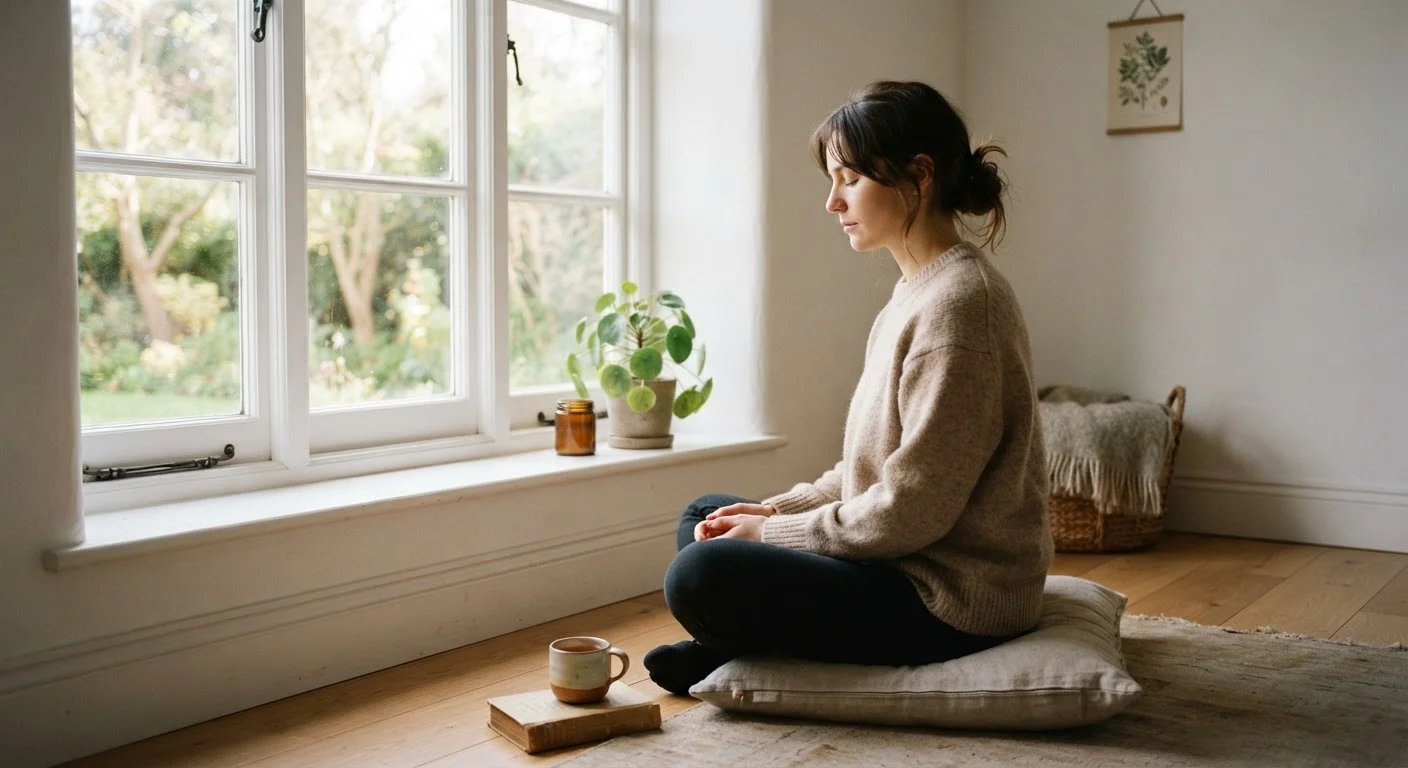
Meditation, by contrast, is a formal practice - a deliberate activity you engage in for a defined period. It typically involves sitting quietly, directing your attention according to a specific method (such as following the breath, repeating a phrase, or visualizing an image), and returning focus when the mind wanders. Many meditation styles explicitly train mindfulness, but meditation can also encompass practices that aren't primarily about present-moment awareness - such as loving-kindness or visualization exercises.
A useful way to think about the relationship: mindfulness is a skill; meditation is one structured way to develop it. For a plain-language breakdown of these and related terms, see the Mental Wellness Glossary.
| Criterion | Mindfulness | Meditation |
|---|---|---|
| Format | Informal, woven into daily life | Formal, time-bounded session |
| Time required | No dedicated block needed | Set aside a specific duration |
| Setting | Any environment | Typically quiet, designated space |
| Core focus | Present-moment awareness | Varies by technique (breath, mantra, visualization) |
| Learning curve | Low barrier, immediately accessible | Benefits from instruction or guidance |
| Measurability | Harder to track consistently | Easier to log duration and frequency |
| Overlap | Is the skill meditation often trains | Often uses mindfulness as its method |
How Each Practice Works in Daily Life
Because mindfulness requires no dedicated time or setting, it integrates fluidly into ordinary routines. Pausing to notice the texture of food while eating, paying close attention to your breathing during a stressful moment, or simply observing your surroundings during a walk - these are all informal mindfulness moments. The goal is to interrupt the autopilot mode that most people spend much of their day in.
Meditation, on the other hand, creates a distinct container: a set time, a quiet place, and a chosen technique. Common formats include breath-focused attention, body scans (a systematic internal sweep of physical sensations), and open-awareness practices where you observe thoughts without engaging them. Sessions can range from a few minutes to much longer, depending on the practitioner's experience and intention.
~14%
U.S. adults who have meditated
According to a National Health Interview Survey analysis, roughly 14% of U.S. adults reported meditating in the prior year - more than double the rate from a decade earlier.
8 weeks
Common duration in mindfulness research programs
Many published studies on mindfulness-based stress reduction (MBSR) use an eight-week structured program as the standard intervention period.
Research into both practices is ongoing and promising, though it's worth noting that study quality varies considerably across the literature. What the evidence does reasonably support is that regular engagement with mindfulness-based practices - whether formal or informal - is associated with reduced stress reactivity and improved attentional control for many people. To understand why stress regulation matters physiologically, explore what stress actually does to the body and mind.
Choosing the Right Fit - or Combining Both
There's no single correct path. Temperament, schedule, and personal goals all shape which approach is likely to stick. Some people find that a brief daily meditation session anchors their day and makes informal mindfulness feel more natural. Others find sitting practices difficult to sustain and get more consistent benefit from woven-in mindful moments throughout the day.
If you're weighing whether either practice is enough on its own - or whether additional support might be appropriate - it helps to think about what you're hoping to address. Mindfulness and meditation are wellness habits, not clinical treatments. For persistent emotional difficulties, professional guidance remains the most appropriate first step. The comparison of talking therapy and self-help strategies can help clarify when self-directed tools are sufficient and when professional input adds value.
A Note on Special Populations
While mindfulness and meditation are generally considered low-risk wellness practices, some individuals - including those with trauma histories, certain anxiety disorders, or psychosis - may find intensive practice difficult or counterproductive. If you belong to any of these groups or are unsure, speak with a qualified mental health professional before beginning a regular meditation practice.
The most practical takeaway is that mindfulness and meditation aren't competing choices - they're complementary layers. Meditation can sharpen the attention skills that make informal mindfulness more effective, while daily mindful moments reinforce what formal practice builds. Starting small, with either approach, is more sustainable than waiting until you have the perfect routine in place.
This article is for general informational and educational purposes only and does not constitute medical or mental health advice. If you are experiencing significant mental health concerns, please consult a qualified healthcare professional.
The content on this site is provided for informational purposes only and should not be considered a substitute for professional advice. While we strive to provide accurate and up-to-date information, we make no guarantees regarding its completeness or accuracy. Always consult a qualified professional for advice specific to your circumstances before making any decisions.