

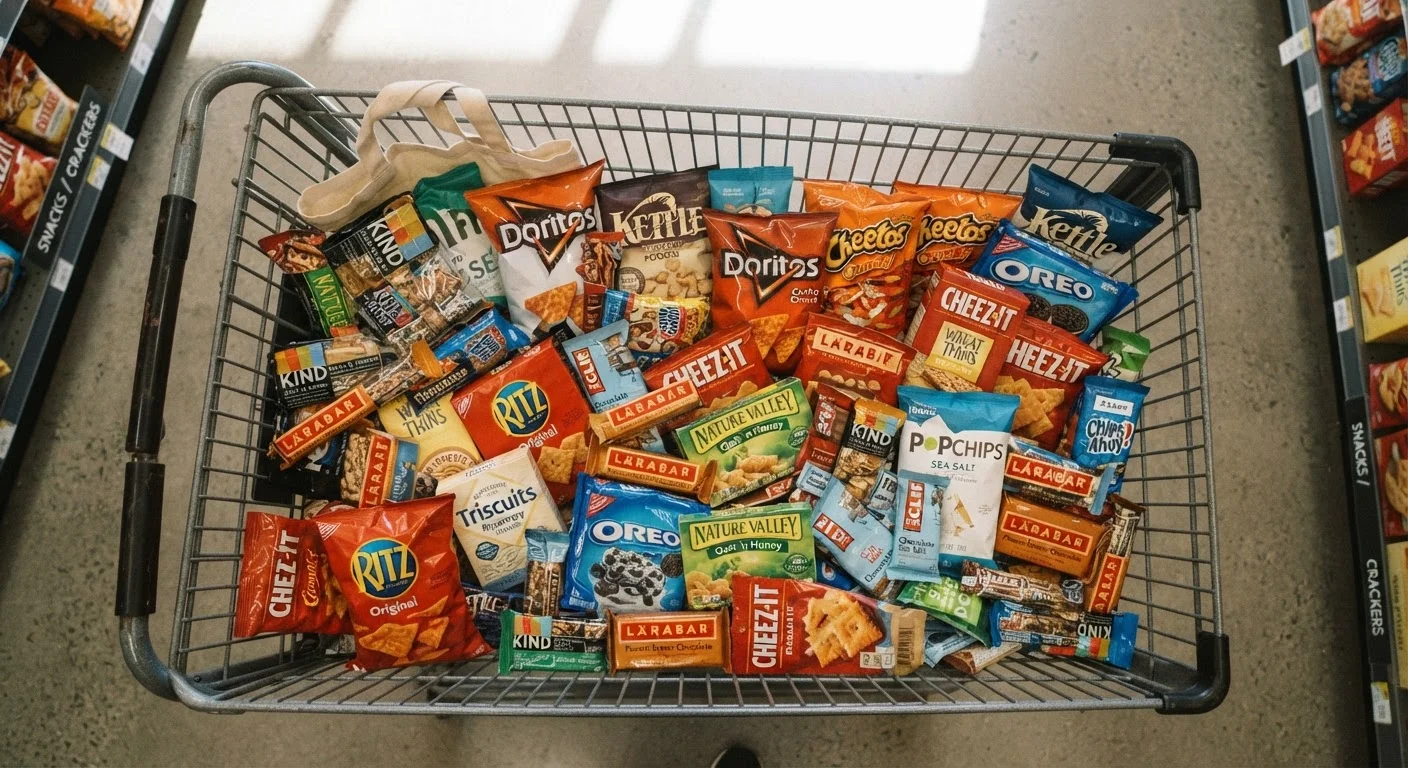
How the Snack Aisle Is Designed to Work Against Your Budget
The snack category is one of the most carefully engineered sections of any grocery store. Shelf placement, packaging psychology, and portion-count math all interact in ways that make it genuinely difficult to assess true value in the moment. Most shoppers don't overspend on snacks because they're careless - they overspend because the purchasing environment is deliberately structured to discourage careful comparison.
The patterns that drive up snack spending tend to repeat across every shopping trip. Understanding them doesn't require a spreadsheet or extreme discipline. It requires knowing where to look and which numbers actually matter. The mistakes below are the most common ones, and each has a straightforward fix.
Comparing sticker prices instead of unit prices when choosing between snack sizes or brands.
Why it happens: A $2.99 bag looks cheaper than a $5.49 bag at a glance. Most shoppers never check the shelf tag's fine print showing cost per ounce.
Treating the serving size on a nutrition label as the amount most people actually eat in one sitting.
Why it happens: Serving sizes are standardized reference amounts set by the FDA, not realistic consumption estimates. A bag listed as '2.5 servings' is frequently finished in one sitting by one person.
Defaulting to single-serve or 'snack pack' formats out of convenience without calculating their cost premium.
Why it happens: Portioned packaging feels practical for lunches, kids, or portion control. The convenience benefit is real, but the price markup is rarely obvious at the time of purchase.
Grabbing snacks from eye-level or checkout-adjacent displays without checking nearby shelf alternatives.
Why it happens: Retailers deliberately stock higher-margin products at eye level and in high-traffic zones. These placements exploit the cognitive shortcut of equating visibility with quality or value.
Buying trend-driven or novelty snacks at full price before knowing whether you'll actually enjoy them.
Why it happens: New flavors, limited-edition packaging, and social-media buzz create urgency. Shoppers pay a premium for the novelty before any honest evaluation of taste or value.
Putting the Numbers in Context
~$153B
Annual U.S. snack food market size
Industry research firms tracking U.S. packaged food sales consistently place the snack category among the largest segments of the grocery market.
30-50%
Typical unit-price premium for single-serve vs. standard sizes
Shelf-label unit price comparisons across common chip and cracker categories frequently show single-serve formats costing substantially more per ounce.
60-70%
Share of snack purchases that are unplanned
Consumer behavior research has repeatedly found that snack category purchases show higher impulse rates than most other grocery segments.
Snack spending compounds quietly. A $3-$4 unplanned purchase two or three times a week reaches $400-$600 annually - roughly the kind of hidden-cost accumulation that shows up in other categories too. Just as calculating the true cost of a vehicle means looking beyond the sticker price, managing snack spending means looking beyond the shelf price to unit costs, realistic portion counts, and honest consumption habits.
The goal isn't to eliminate snacking - it's to make sure the money spent actually reflects the value received. Stocking a well-considered pantry helps reduce last-minute snack grabs at convenience markup. See our breakdown of pantry staples that earn their shelf space for a practical starting point.
Unit Price Is the Only Number That Matters
Retail price and package size together tell you almost nothing useful about snack value. Unit price - cost per ounce, per serving, or per count - is the only figure that enables a genuine comparison across sizes and brands. It appears on most shelf labels in small print and takes seconds to check. Making this a non-negotiable habit is the single highest-leverage change most snack shoppers can make.
The content on this site is provided for informational purposes only and should not be considered a substitute for professional advice. While we strive to provide accurate and up-to-date information, we make no guarantees regarding its completeness or accuracy. Always consult a qualified professional for advice specific to your circumstances before making any decisions.