

Our Verdict
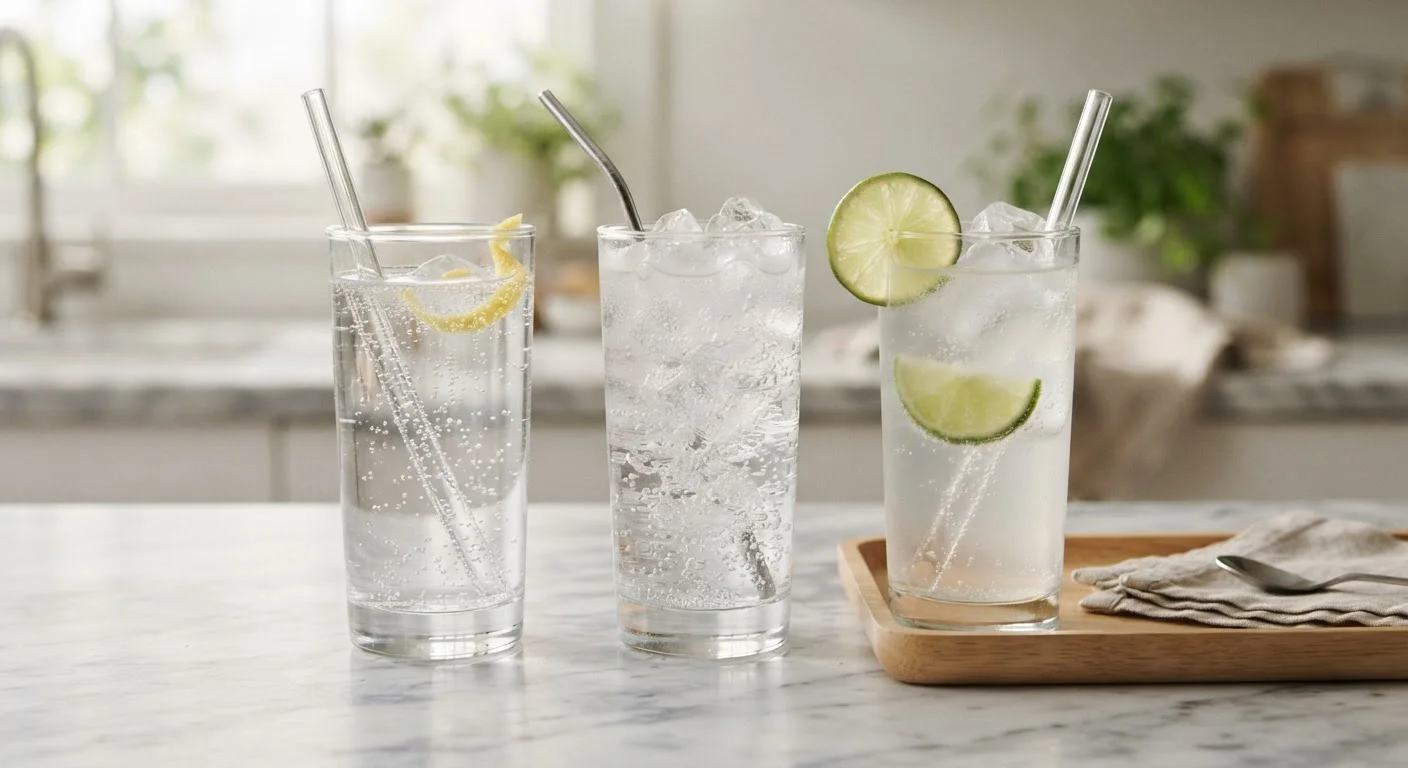
Sparkling water, club soda, and tonic water each occupy a distinct lane. Sparkling water is the most neutral, club soda adds light mineral character, and tonic water is a sweetened, flavored mixer with a bitter edge. Choosing the wrong one can throw off a drink's flavor balance or add unexpected calories.
| Best for | Recommended |
|---|---|
| Everyday hydration or a neutral soda alternative | Sparkling Water |
| Cocktail mixing where a slight mineral lift is welcome | Club Soda |
| Classic gin and tonic or recipes calling for bitter-sweet fizz | Tonic Water |
| Reducing sugar intake while still enjoying a fizzy drink | Sparkling Water or Club Soda |
What Each One Actually Is
The confusion between these three beverages is understandable - all three are clear, carbonated, and sold in similar cans and bottles. But their compositions differ in ways that matter both for drinking and cooking.
Sparkling water (sometimes labeled carbonated water or seltzer) is water infused with carbon dioxide under pressure. That's essentially it. No minerals are added beyond what may naturally occur, and there are no sweeteners or flavorings unless the label says otherwise. It's the closest thing to plain water in a fizzy form.
Club soda is also carbonated water, but manufacturers add mineral compounds - typically sodium bicarbonate, potassium sulfate, or sodium chloride - to mimic the profile of naturally occurring mineral water. These additions give club soda a subtly crisp, slightly salty taste that distinguishes it from the more neutral sparkling water.
Tonic water is a fundamentally different product. It's carbonated water flavored with quinine - a compound derived from cinchona bark - along with sugar (or high-fructose corn syrup in some formulations) and sometimes citrus notes. A standard 12-ounce serving of tonic water typically contains around 32-36 grams of sugar, placing it closer to a soft drink in nutritional terms than to a simple sparkling water.
| Sparkling Water | Club Soda | Tonic Water | |
|---|---|---|---|
| Carbonation source | Added CO₂ | Added CO₂ | Added CO₂ |
| Added minerals | None (or trace natural) | Yes - bicarbonates, sulfates | None beyond quinine |
| Added sugar | No | No | Yes - significant |
| Flavor profile | Neutral, clean | Crisp, slightly salty | Bitter-sweet, complex |
| Calories (per 12 oz) | ~0 | ~0 | ~120-130 |
| Best use | Hydration, neutral mixing | Cocktails, highballs | Gin & tonic, flavored mixers |
| Interchangeable? | With club soda in most cases | With sparkling water in most cases | Rarely interchangeable |
How Taste and Function Differ in Practice
Understanding the flavor differences is where this comparison becomes practically useful.
Sparkling water's neutrality makes it a versatile mixer and a clean hydration choice. Because it doesn't carry its own strong flavor, it works well when you want carbonation without any interference - think diluting a fruit juice slightly or drinking something refreshing without added complexity.
Club soda's mineral additions give it a slightly rounder, crisper finish. Bartenders traditionally reach for club soda in highball cocktails, Tom Collins drinks, or wherever a bit of mineral character enhances rather than distracts. The sodium content is modest but worth noting for people monitoring sodium intake.
Tonic water's bitterness and sweetness make it unsuitable as a neutral base. It's designed as a flavored mixer, most famously in the gin and tonic, where its bitter-sweet character interacts with gin's botanicals. Substituting plain sparkling water in a gin and tonic produces a noticeably flatter, less complex result. Conversely, using tonic water where a recipe calls for club soda will add sweetness and bitterness that may not belong.
When Sparkling Water and Club Soda Are Interchangeable
For most everyday purposes - topping off a mocktail, making a spritzer, or adding fizz to a non-alcoholic drink - sparkling water and club soda can be swapped without a noticeable difference. The mineral additions in club soda are subtle enough that most palates won't detect them in a mixed drink. Where the distinction matters more is in direct sipping or in recipes where the mineral character plays a detectable role.
For cooking, the distinction also shows up. Club soda or sparkling water are occasionally used in batters (tempura, pancakes) to create lightness through carbonation. Tonic water can technically work in the same application but will introduce sweetness and quinine bitterness into the finished dish - rarely desirable.
Nutrition, Labels, and What to Watch For
Sparkling water and club soda are both effectively calorie-free when unflavored. Tonic water is not - its sugar content gives it roughly 120-130 calories per 12-ounce serving. Diet or "light" tonic water options use artificial or low-calorie sweeteners to reduce this, though they preserve the quinine bitterness.
Reading the label remains the most reliable approach. "Sparkling water" as a term is fairly consistent, but "seltzer" and "club soda" are sometimes used loosely. If a label lists sodium bicarbonate or potassium sulfate in the ingredients, you have club soda. If quinine and sugar appear, it's tonic water regardless of how it's branded.
Naturally sparkling mineral waters (like those sourced from springs) are a related but distinct category - they contain naturally occurring dissolved minerals and have their own characteristic flavor profiles. They're not the same as manufactured sparkling water or club soda, though they can sometimes serve similar functions.
Just as understanding the distinctions between similar-looking ingredients pays off in the kitchen - much like sorting out the differences between stock, broth, and bone broth - knowing which fizzy water you're reaching for helps you get better results in both drinks and recipes.
The content on this site is provided for informational purposes only and should not be considered a substitute for professional advice. While we strive to provide accurate and up-to-date information, we make no guarantees regarding its completeness or accuracy. Always consult a qualified professional for advice specific to your circumstances before making any decisions.