

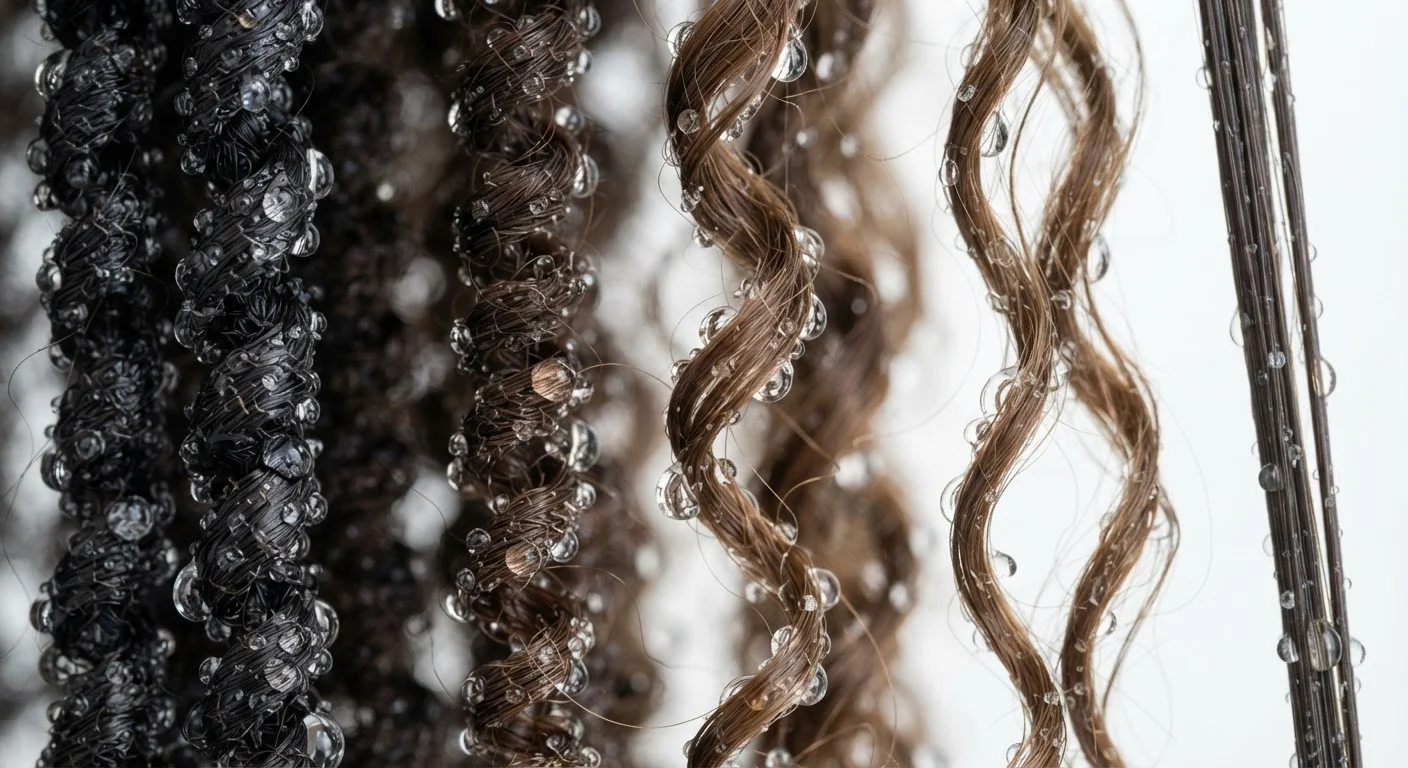
What Hair Porosity Actually Means
Every strand of hair is covered by a cuticle - a series of overlapping, scale-like cells that function as a protective barrier. Think of these scales like roof shingles: when they lie flat and close together, they form a tight barrier; when they are raised or irregular, gaps form between them.
Porosity is simply a measure of how open those gaps are. A tightly sealed cuticle resists water and product entering the strand; a widely open cuticle absorbs moisture rapidly but struggles to hold onto it. This structural reality has a direct, practical consequence: the same conditioner or oil applied to two people with different porosity levels may produce completely different results.
Understanding porosity explains why some people find their hair absorbs moisture almost instantly while others describe their hair as perpetually dry despite regular conditioning. It's not a matter of product quality alone - it's a structural compatibility issue.
The Three Porosity Types
Low porosity hair has tightly overlapping cuticle scales that resist moisture entry. Water tends to bead on the surface rather than being absorbed quickly. Products also accumulate on the hair shaft rather than penetrating it, which can lead to buildup and a weighed-down feeling. Heat - such as applying a deep conditioner under a warm cap - can temporarily raise the cuticle and allow better product absorption.
Medium (or normal) porosity hair has a cuticle that allows a balanced flow: moisture enters at a reasonable rate and is retained well. This porosity type generally responds positively to a wide range of products and requires less precise conditioning strategies than the other two types.
High porosity hair has widely spaced or damaged cuticle scales that absorb moisture easily but release it just as fast. Strands may feel dry shortly after washing and conditioning. Sealing in moisture with heavier products after hydrating - a technique sometimes called the LOC method (liquid, oil, cream) - is a common approach for managing high porosity. For those with naturally coiled or kinky textures, understanding Type 4 hair offers additional context about how porosity intersects with curl pattern.
~40%
Reduction in tensile strength from bleaching
Research published in hair science literature indicates a single bleaching session can reduce hair's tensile strength by approximately 40%, significantly affecting cuticle integrity and porosity.
3 layers
Structural layers of a hair strand
Each hair strand consists of the cuticle (outer), cortex (middle), and medulla (inner) - porosity is determined entirely by the cuticle's condition.
What Causes Different Porosity Levels
Genetics is the starting point. Your natural hair texture, curl pattern, and baseline cuticle structure are inherited traits. People with tighter curl patterns often - though not universally - have naturally higher porosity due to the irregular angles at which their strands grow, creating more surface gaps.
Beyond genetics, several external factors can raise porosity over time:
- Chemical treatments: Bleaching, permanent colour, relaxers, and perms all alter the cuticle's structure, often raising porosity significantly.
- Heat styling: Repeated use of flat irons and blow dryers at high temperatures can lift and erode cuticle scales.
- Environmental exposure: Prolonged sun exposure and swimming in chlorinated or salt water can degrade the cuticle layer.
- Hard water: Mineral deposits from hard water can disrupt the cuticle's surface over time.
Notably, fine hair has a thinner cuticle layer and may become high-porosity more quickly from heat or chemical use. Washing fine hair correctly is particularly relevant since over-conditioning fine, low-porosity hair is a common and easy-to-make mistake.
Test, Then Adjust - Not the Other Way Around
Before changing your entire routine, try the float test or simply observe how your hair responds to water (does it absorb quickly or resist?). Start with one targeted adjustment - such as adding a heat cap during conditioning for low porosity, or a sealing oil for high porosity - and assess results after several wash days before making further changes.
Building a Routine Around Your Porosity
Once you have a working sense of your porosity, you can adjust your routine accordingly rather than defaulting to trial-and-error with products.
For low porosity: Clarify regularly to prevent buildup. Use lightweight, water-based conditioners. Apply deep treatments with gentle heat to open the cuticle temporarily. Avoid heavy butters and oils as primary moisturisers.
For medium porosity: Maintain what's working. Periodic deep conditioning is beneficial. Be mindful that chemical processing could shift your porosity category.
For high porosity: Hydrate first, then seal. Layering a water-based product followed by a heavier oil or butter can reduce moisture loss. Protein treatments - used judiciously - can help temporarily fill gaps in the cuticle, though overuse can lead to brittleness. This principle of layering also applies to scalp health: scalp care and hair care serve different functions and should be addressed separately.
Porosity is not a permanent verdict on your hair's health - it's a practical framework for making smarter product and technique choices. Just as understanding your skin type informs your skincare choices, knowing your hair's porosity can meaningfully improve the results you get from your routine.
A person with natural, tightly coiled hair finds that water rolls off their strands immediately after washing, and their hair feels dry within an hour of applying conditioner.
Someone with fine, straight hair notices their hair looks greasy and flat after using a rich leave-in conditioner, even though they applied a small amount.
After several rounds of bleaching, a person notices their previously manageable hair now feels dry and tangles easily, even though their routine hasn't changed.
Frequently Asked Questions
A widely referenced method is the float test: drop a clean, shed strand into a glass of room-temperature water and observe it after a few minutes. Strands that sink quickly are often associated with high porosity, those that float may indicate low porosity, and strands that hover in the middle suggest normal porosity. Keep in mind this is a rough guide, not a clinical measurement - product buildup or oil on the strand can affect results.
Yes. While your baseline porosity is partly genetic, repeated chemical treatments (such as bleaching, relaxing, or perming), excessive heat styling, and prolonged UV exposure can raise porosity by lifting or damaging cuticle scales. Protective practices like reducing heat and deep conditioning can help manage - though not always fully reverse - these changes.
Not necessarily. Some people have naturally high porosity hair due to their genetic hair structure, particularly among those with tightly coiled or kinky textures. High porosity can also result from damage, but the two are not the same thing. Understanding the distinction helps you choose appropriate care strategies.
Generally, no. Dense oils and butters tend to work well as sealants for high-porosity hair, helping lock in moisture that would otherwise escape quickly. For low-porosity hair, heavy products often sit on the surface rather than penetrating the cuticle, leading to buildup and limp strands. Lighter, water-based formulations and heat during conditioning are typically more effective for low porosity.
Medium or normal porosity hair is often described as the easiest to maintain because the cuticle allows a balanced exchange of moisture - absorbing it readily and retaining it reasonably well. That said, all porosity types can be healthy and well-cared-for with routines tailored to their specific needs.
The content on this site is provided for informational purposes only and should not be considered a substitute for professional advice. While we strive to provide accurate and up-to-date information, we make no guarantees regarding its completeness or accuracy. Always consult a qualified professional for advice specific to your circumstances before making any decisions.