

Why Fitness Jargon Matters - and How to Cut Through It
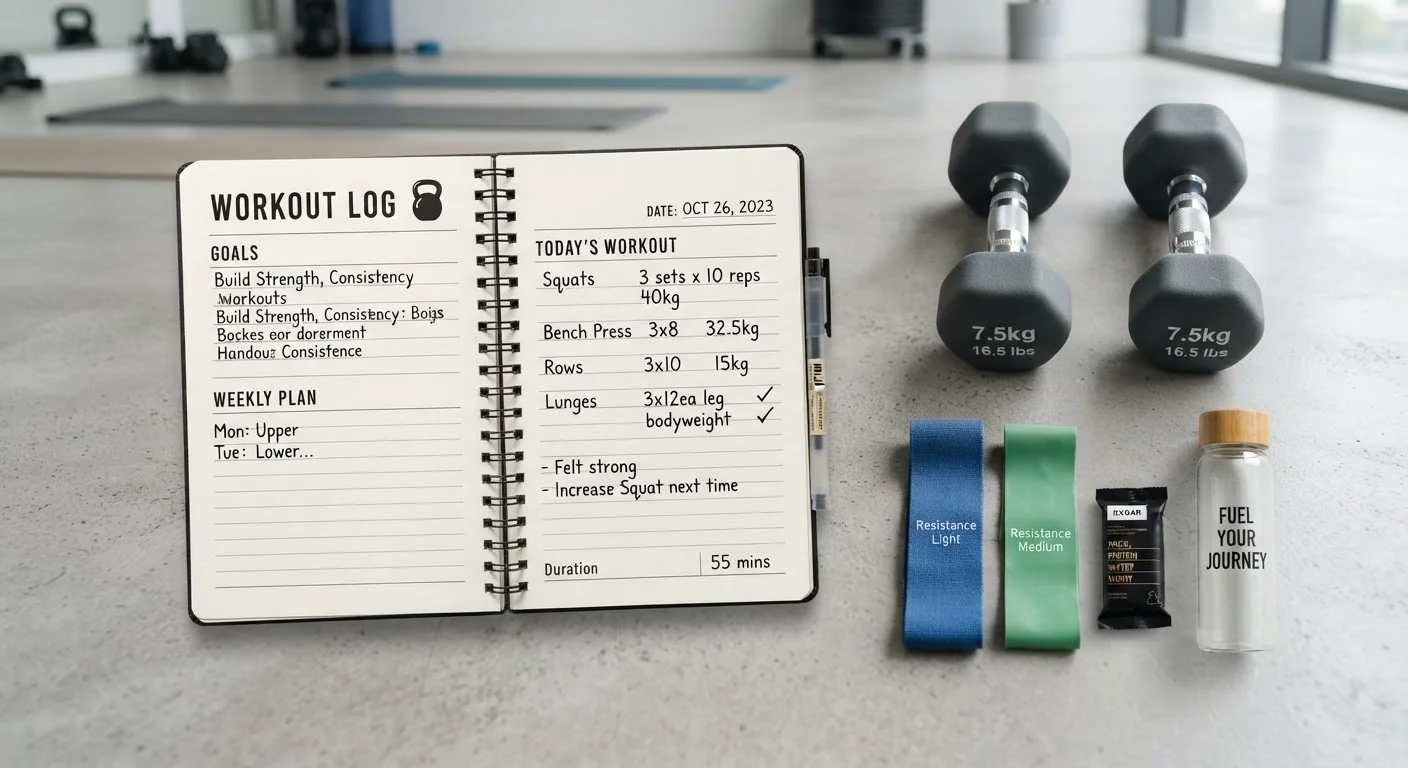
Walk into any gym or open a structured workout plan and you're almost immediately confronted with shorthand: 3×10 at 70% 1RM, AMRAP, deload week. For anyone new to structured exercise - or returning after a long break - this vocabulary can feel like a barrier. It shouldn't be.
Understanding common exercise terms isn't about impressing anyone. It's practical. It helps you interpret workout plans accurately, communicate with coaches or trainers, and track your own progress meaningfully. This reference guide defines the terms you're most likely to encounter, in plain English. For related metric definitions like VO2 max and resting heart rate, see our fitness tracking metrics guide.
Fitness Terms and Medical Advice
This glossary is for general educational purposes and is not a substitute for guidance from a qualified fitness professional or healthcare provider. If you have an injury, chronic condition, or are new to exercise, consult a qualified professional before beginning or modifying a training programme.
Core Training Structure Terms
Most workout programmes share a common structural vocabulary. Once you understand these building blocks, nearly any plan becomes readable.
Beyond reps and sets, you'll often see tempo notation - numbers like 3-1-2 indicating how many seconds to spend lowering, pausing, and lifting during each rep. This level of detail matters most in strength and hypertrophy training, where time under tension influences adaptation.
The broader structure of your training over weeks or months is governed by periodisation - intentionally cycling your training stimulus to avoid plateaus and manage fatigue. Most well-designed programmes also build in a deload week: a planned period of reduced volume or intensity that allows the body to recover and consolidate gains.
For a broader look at how these principles connect to what your fitness tracker measures, explore the Fitness & Movement hub.
Intensity, Effort, and Load - Decoded
Knowing how hard to work is as important as knowing what to do. Several terms exist to help you calibrate effort.
| Basic training unit | Rep → Set → Session → Week → Phase |
| HIIT work-to-rest ratio (common example) | 1:2 (e.g., 20 sec effort, 40 sec rest) |
| RPE scale range | 1 (very light) to 10 (maximal effort) |
| DOMS onset window | Typically 24-72 hours post-exercise (General exercise physiology reference) |
| Periodisation phases (typical cycle) | Hypertrophy → Strength → Power → Deload |
RPE (Rate of Perceived Exertion) is a subjective but genuinely useful tool. At RPE 5, you're comfortable and could hold a full conversation. At RPE 8, you're working hard; at RPE 10, you're at your absolute limit. Many coaches prefer RPE to fixed percentages because it accounts for day-to-day variation in how your body feels.
1RM (One-Rep Max) provides an objective intensity anchor. If a programme calls for 80% of your 1RM on a squat, that's a specific, calculable load. Beginners are generally advised to estimate their 1RM using a submaximal test rather than attempting a true max lift without experienced supervision.
The distinction between aerobic and anaerobic work is especially relevant when reading HIIT or cardio prescriptions. Long, steady-state runs are primarily aerobic; all-out sprints or heavy strength sets rely more on anaerobic energy systems.
The content on this site is provided for informational purposes only and should not be considered a substitute for professional advice. While we strive to provide accurate and up-to-date information, we make no guarantees regarding its completeness or accuracy. Always consult a qualified professional for advice specific to your circumstances before making any decisions.