

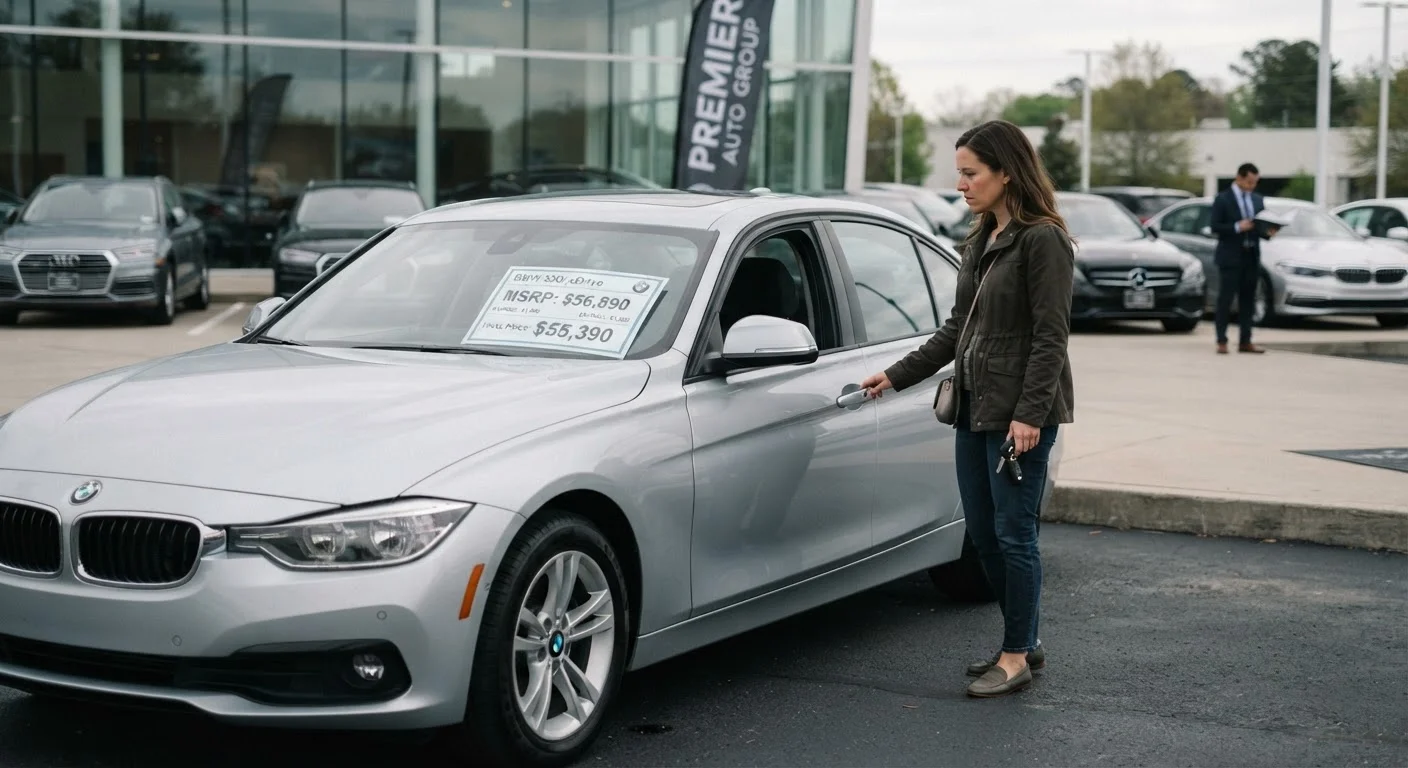
The Cost Nobody Puts on the Window Sticker
When buyers evaluate a vehicle's cost, they typically focus on the purchase price, monthly payment, and maybe fuel economy. What rarely enters the conversation is depreciation - the gradual (and sometimes rapid) loss of a vehicle's market value over time. Yet for most owners, depreciation outweighs every other ongoing expense combined.
Consider this: a vehicle purchased for $40,000 that's worth $28,000 three years later has lost $12,000 in value - roughly $333 per month - without a single breakdown or repair bill. That loss is real money, even though it doesn't show up as a payment or receipt. Understanding how depreciation works is one of the most practical steps any buyer can take before committing to a purchase. For a fuller picture of what vehicle ownership actually costs, see our guide to total cost of ownership.
~20%
Average value lost in year one
Industry data from automotive valuation services consistently shows new vehicles losing approximately 15-25% of value within the first 12 months of ownership.
~50%
Value lost over five years
Many mainstream vehicles retain only about half their original purchase price after five years of average use, according to long-term resale tracking data.
#1
Largest cost of car ownership
Consumer finance analysts broadly identify depreciation as the single largest component of total vehicle cost of ownership, ahead of fuel, insurance, and maintenance.
How Depreciation Actually Works
Depreciation isn't linear - it follows a curve that's steepest at the beginning of a vehicle's life. A significant portion of value is lost simply by transitioning a vehicle from "new" to "used," regardless of how many miles are driven. After that, value continues to decline year over year, but usually at a slower rate.
Several factors shape how quickly any specific vehicle loses value:
- Age: The first one to three years typically see the steepest declines.
- Mileage: Higher mileage signals more wear and accelerates value loss.
- Condition: Dents, interior damage, and deferred maintenance all reduce resale value.
- Market demand: Vehicles with strong demand - certain trucks and SUVs, for example - tend to hold value better.
- Reliability reputation: Brands and models known for long-term dependability often depreciate more slowly because buyers are willing to pay more for them used.
- Fuel type and technology shifts: Rapid changes in powertrain technology (such as the growth of EVs) can affect how quickly certain vehicle types lose value as the market evolves.
Luxury vehicles and certain electric models have historically depreciated faster than average, though this varies significantly by model and market conditions.
What This Means for Your Buying Decision
Depreciation isn't something to fear - it's something to plan around. One of the most practical strategies buyers use is purchasing a vehicle that's one to three years old. At that stage, the prior owner has absorbed the sharpest early losses, and the buyer gets a vehicle that's still relatively new for significantly less than its original sticker price.
Check Historical Resale Values Before You Buy
Before committing to any vehicle, look up its three- and five-year resale value history using publicly available automotive valuation resources. A model that retains a higher percentage of its original value will cost less to own over time, even if it carries a higher sticker price. This single research step can significantly sharpen your buying decision.
For buyers considering a new vehicle, it's worth researching historical resale values for the models on your shortlist. A vehicle with a lower purchase price but poor resale value may end up costing more over a five-year period than a pricier model that holds its value well.
Depreciation also intersects directly with leasing. Lease payments are largely determined by a vehicle's projected depreciation during the lease term - which is why vehicles that hold their value well often come with more favorable lease terms. Our article on buying vs. leasing a car explores this dynamic in more detail.
Finally, if you're planning to trade in or sell privately within a few years, the depreciation rate of your vehicle will directly shape how much equity - if any - you walk away with. Factoring resale value into the original purchase decision is a habit that consistently pays off.
Evaluating a Vehicle Before You Commit
Depreciation data is widely available through resources like automotive valuation guides, which track actual transaction prices for used vehicles across the country. Before finalizing a vehicle choice, it's worth looking up historical resale values at the three- and five-year marks for any model you're seriously considering.
During the physical evaluation process, remember that the condition you maintain a vehicle in will also affect how much of its value you preserve. Consistent service records, careful mileage management, and protecting the interior and exterior all contribute to a stronger resale outcome. Our piece on what to actually evaluate on a test drive covers additional factors that affect long-term ownership satisfaction.
Depreciation is not a reason to avoid buying a vehicle - transportation is a genuine need, and every vehicle depreciates to some degree. The goal is simply to enter any purchase with clear eyes about the full financial picture, so the decision you make is one you're genuinely comfortable with over the long haul.
Frequently Asked Questions
Most new vehicles lose somewhere between 15% and 25% of their purchase price within the first 12 months of ownership. This makes the initial year the steepest point of value loss for the vast majority of cars. The exact rate depends on make, model, demand, and condition.
Yes - depreciation is central to how lease payments are structured. A lease is essentially the cost of the vehicle's depreciation during the lease term, plus finance charges. Vehicles that hold their value well tend to have lower monthly lease payments because the depreciation cost is smaller.
Trucks, SUVs, and vehicles from manufacturers with strong reliability reputations historically hold their value better than average. High demand, low inventory, and strong resale markets all contribute to slower depreciation - though no vehicle is immune.
Mileage is one of the most significant factors in determining a used vehicle's value. Higher mileage generally accelerates depreciation because it signals more wear on mechanical components. Keeping mileage moderate and maintaining service records can help preserve resale value.
No - depreciation is one major component of total cost of ownership, which also includes fuel, insurance, maintenance, registration, and financing costs. Understanding both gives a far more complete financial picture before buying.
Buying used allows you to avoid the steepest early depreciation, but all vehicles continue to lose value over time. The goal isn't to eliminate depreciation - it's to enter the ownership cycle at a point where the sharpest losses have already occurred.
The content on this site is provided for informational purposes only and should not be considered a substitute for professional advice. While we strive to provide accurate and up-to-date information, we make no guarantees regarding its completeness or accuracy. Always consult a qualified professional for advice specific to your circumstances before making any decisions.