

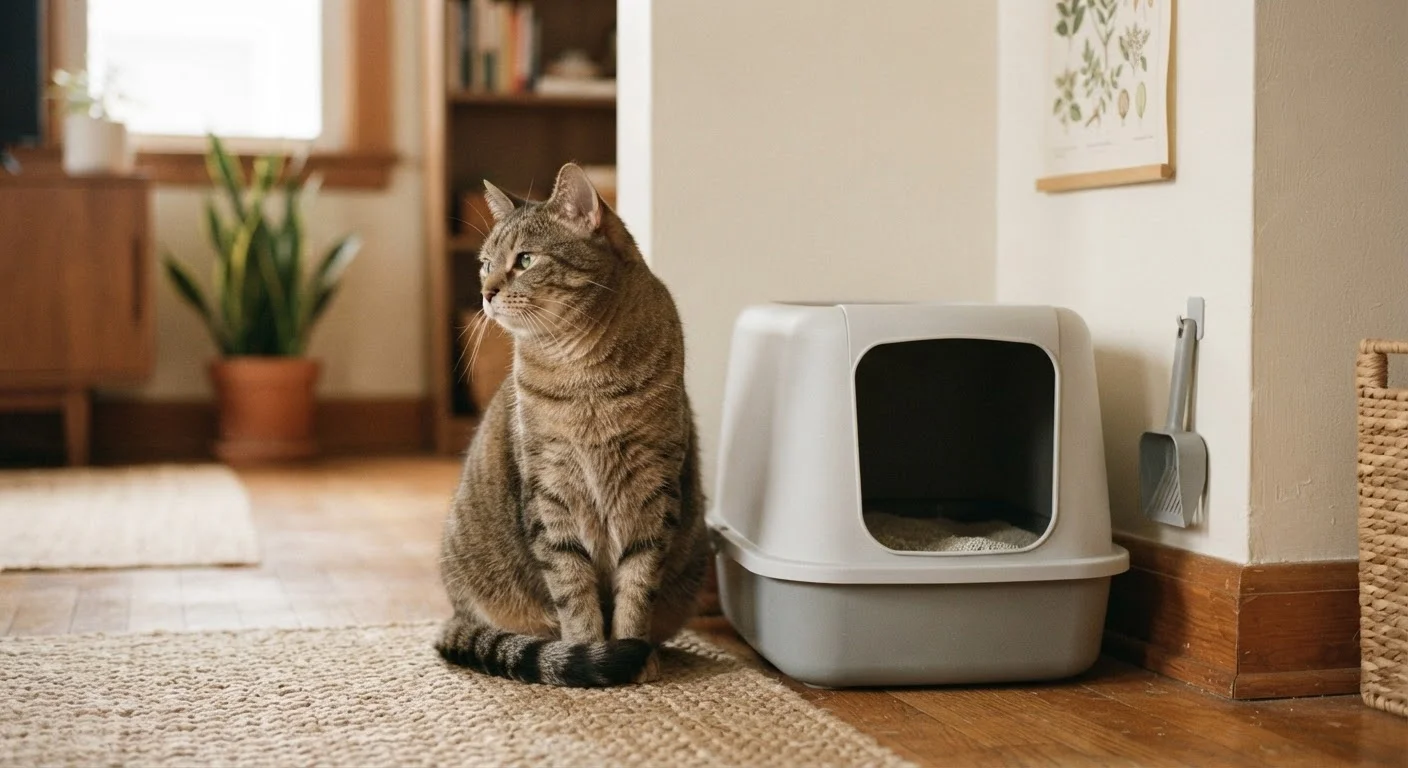
Reading the Signal Behind the Problem
When a cat stops using their litter box reliably, owners often feel frustrated - but that frustration can obscure a genuinely important message. Cats don't avoid the box out of spite or defiance. Elimination changes almost always reflect something real: physical discomfort, environmental stress, or unmet behavioral needs.
Understanding what's driving the behavior is the first step toward fixing it. The mistakes owners most commonly make aren't malicious - they're understandable misreads of feline communication. Addressing those errors with the right context can make a significant difference, both for the cat's wellbeing and the household's peace. For a broader look at how cats communicate beyond the litter box, see feline body language decoded.
Assuming avoidance is a behavioral problem before ruling out medical causes.
Why it happens: Owners naturally look for simple environmental explanations - a dirty box, a new litter - before considering that their cat might be in pain or ill.
Maintaining too few litter boxes for the number of cats in the household.
Why it happens: Many owners assume one box per cat is sufficient, or simply don't realize that cats may avoid a box another cat has recently used.
Cleaning the box infrequently or using strongly scented litters and cleaners.
Why it happens: Owners may not realize how sensitive a cat's nose is relative to a human's, or they assume scented products mask odors effectively for the cat as well.
Placing the litter box in a high-traffic, noisy, or hard-to-reach location.
Why it happens: Owners often prioritize their own convenience - tucking boxes into laundry rooms near appliances or in basements - without considering how the cat experiences that space.
Confusing spraying with standard elimination and treating them the same way.
Why it happens: Both behaviors result in urine outside the box, so owners may not realize they represent different problems with different solutions.
Punishing the cat for eliminating outside the box.
Why it happens: Owners, understandably frustrated, may respond by scolding or physically moving the cat to the box after the fact, believing this will correct the behavior.
When to Stop Troubleshooting and Call a Vet
Not every litter box problem can be solved with a cleaner box or a different litter. Certain patterns are strong indicators that something medical is happening and that home adjustments won't be enough.
Urinary Blockages Are a Medical Emergency
A cat - particularly a male - who is straining to urinate, vocalizing in pain, or producing no urine at all may have a urinary blockage. This is a life-threatening condition that requires immediate veterinary care. Do not wait to see if the situation resolves on its own; contact a veterinary clinic or emergency animal hospital right away.
Straining to urinate, crying in or near the box, producing very small amounts of urine, or passing blood are all signs that require prompt veterinary attention. Feline lower urinary tract disease (FLUTD) and urinary blockages - especially in male cats - can become life-threatening within hours if untreated. Similarly, a cat who suddenly begins eliminating outside the box after years of reliable use should be examined before any behavioral solutions are attempted.
Stress-related house soiling is also real and recognized. Changes in household composition, new pets, or construction noise can all trigger elimination outside the box. Cats are skilled at masking discomfort, so behavioral changes - including litter box avoidance - are often the earliest visible clues that something is wrong.
Don't Delay a Vet Visit for Sudden Changes
If a cat who previously used the box reliably begins eliminating elsewhere without any obvious environmental change, a medical evaluation should happen before any behavioral intervention. Kidney disease, diabetes, hyperthyroidism, and arthritis can all alter elimination habits. Treating a medical condition as a behavioral problem delays necessary care and can allow illness to progress.
This article is for general informational purposes only and is not a substitute for veterinary advice. Always consult a qualified veterinarian if your cat shows sudden changes in elimination habits or any signs of physical distress.
The content on this site is provided for informational purposes only and should not be considered a substitute for professional advice. While we strive to provide accurate and up-to-date information, we make no guarantees regarding its completeness or accuracy. Always consult a qualified professional for advice specific to your circumstances before making any decisions.