

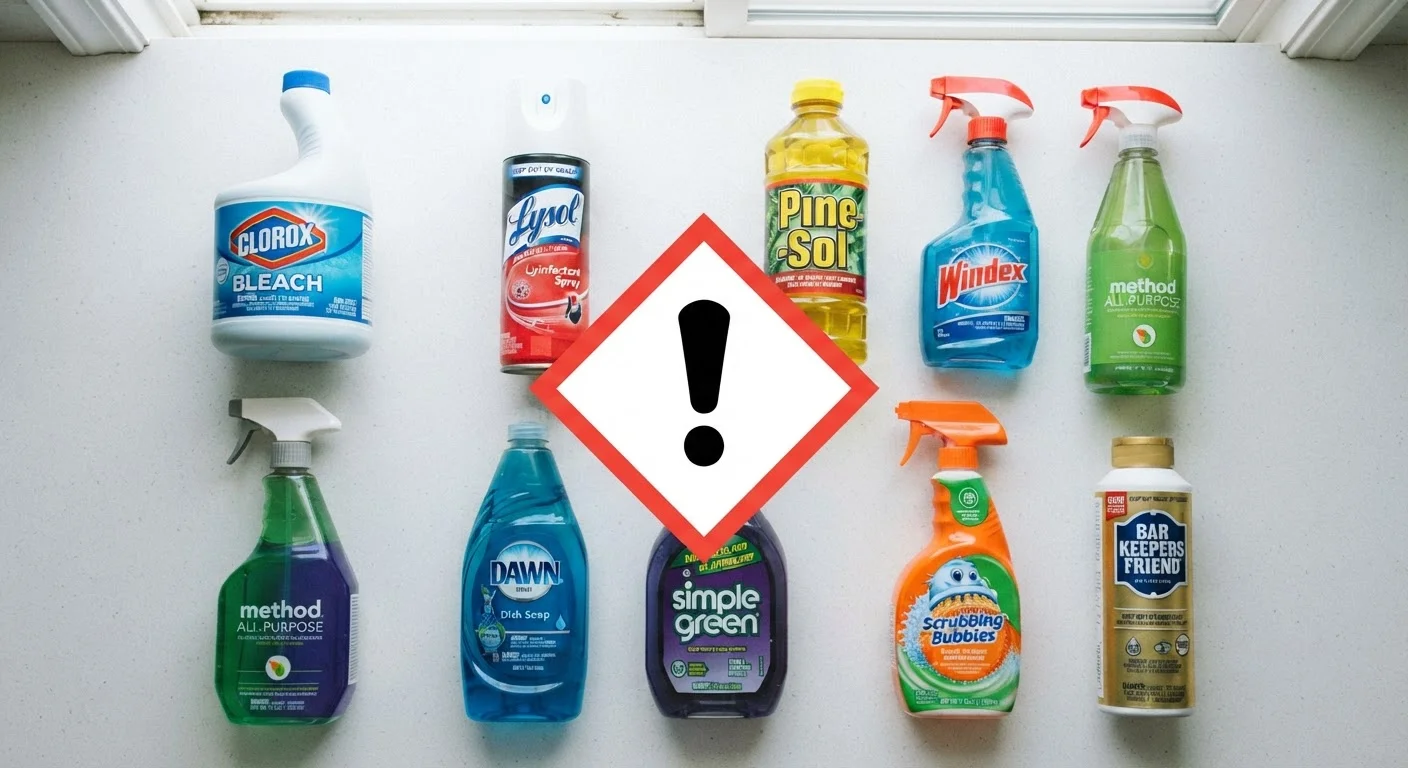
Why Mixing Cleaners Is Riskier Than It Looks
Most households keep several cleaning products on hand - bleach-based sprays, glass cleaners, disinfectants, and natural alternatives like vinegar or baking soda. When one product doesn't seem strong enough, it's tempting to combine them. That impulse can be genuinely dangerous.
Cleaning products are formulated to work alone. When two chemically incompatible products combine, the reaction can produce toxic gases, corrosive compounds, or both - often within seconds and in quantities enough to cause respiratory harm in an enclosed space like a bathroom or kitchen. The hazard isn't limited to obvious combinations; some of the most risky pairings involve products people think of as mild or "natural."
Understanding the chemistry doesn't require a lab background. What matters is recognizing the categories - acids, bases, oxidizers, and ammonia-containing products - and knowing which categories clash.
The Combinations to Avoid
Bleach and Ammonia
This is among the most frequently cited dangerous household chemical reactions. Bleach (sodium hypochlorite) and ammonia react to form chloramine gases. Symptoms of exposure include coughing, shortness of breath, chest pain, and eye irritation. Many glass cleaners and multi-surface sprays contain ammonia, so always check product labels before using them in the same area as bleach.
Bleach and Vinegar (or Any Acid)
Vinegar is acetic acid. When it contacts bleach, the reaction releases chlorine gas, which is highly toxic even in small amounts. This same reaction can occur with other acidic cleaners, including some bathroom descalers and toilet bowl cleaners. Acidity is not always obvious from a product's marketing - read the ingredient list.
Bleach and Rubbing Alcohol
Combining bleach with isopropyl alcohol or ethanol can produce chloroform and other chlorinated compounds, which are harmful to the liver, kidneys, and nervous system. Some DIY disinfectant recipes floating online have incorrectly suggested this pairing.
Hydrogen Peroxide and Vinegar
Used separately and rinsed between applications, both are reasonable cleaning aids. Mixed together in the same container, they form peracetic acid, a corrosive substance irritating to skin, eyes, and lungs. The resulting liquid may look harmless, which makes this combination particularly easy to overlook.
Different Drain Cleaners
Drain cleaners may be acid-based or alkaline-based. Mixing two different formulations - even sequentially without flushing between - can cause violent reactions, spattering caustic material. Always flush drains thoroughly with water between any chemical treatments, and consider consulting a licensed plumber before using any chemical drain treatment on a persistent blockage.
Just as it matters with household cleaners, ingredient interactions in skincare follow similar logic - some combinations cancel each other out or cause irritation, even when each product seems gentle alone.
Practical Safety Habits
The simplest protective habit is to read product labels every time, not just when you first purchase a cleaner. Formulations change, and labels include specific warnings about incompatible substances. If a label says "do not mix with bleach" or "do not mix with other chemicals," treat that as absolute.
- Store products separately so accidental spills don't contact incompatible chemicals.
- Ventilate actively - open windows, use exhaust fans - whenever using any cleaning product indoors.
- Never transfer cleaners into unlabeled containers or repurpose containers from other products.
- Dispose of partially used cleaners according to local household hazardous waste guidelines rather than combining remnants.
If you or someone in your household is exposed to fumes from a chemical mixing incident, move immediately to fresh air and call Poison Control at 1-800-222-1222. For severe symptoms - difficulty breathing, loss of consciousness, or persistent chest pain - call 911.
This article is for general informational purposes only and does not constitute medical or safety advice. Always follow the specific guidance on product labels and consult emergency services or a medical professional in the event of a chemical exposure.
The content on this site is provided for informational purposes only and should not be considered a substitute for professional advice. While we strive to provide accurate and up-to-date information, we make no guarantees regarding its completeness or accuracy. Always consult a qualified professional for advice specific to your circumstances before making any decisions.