

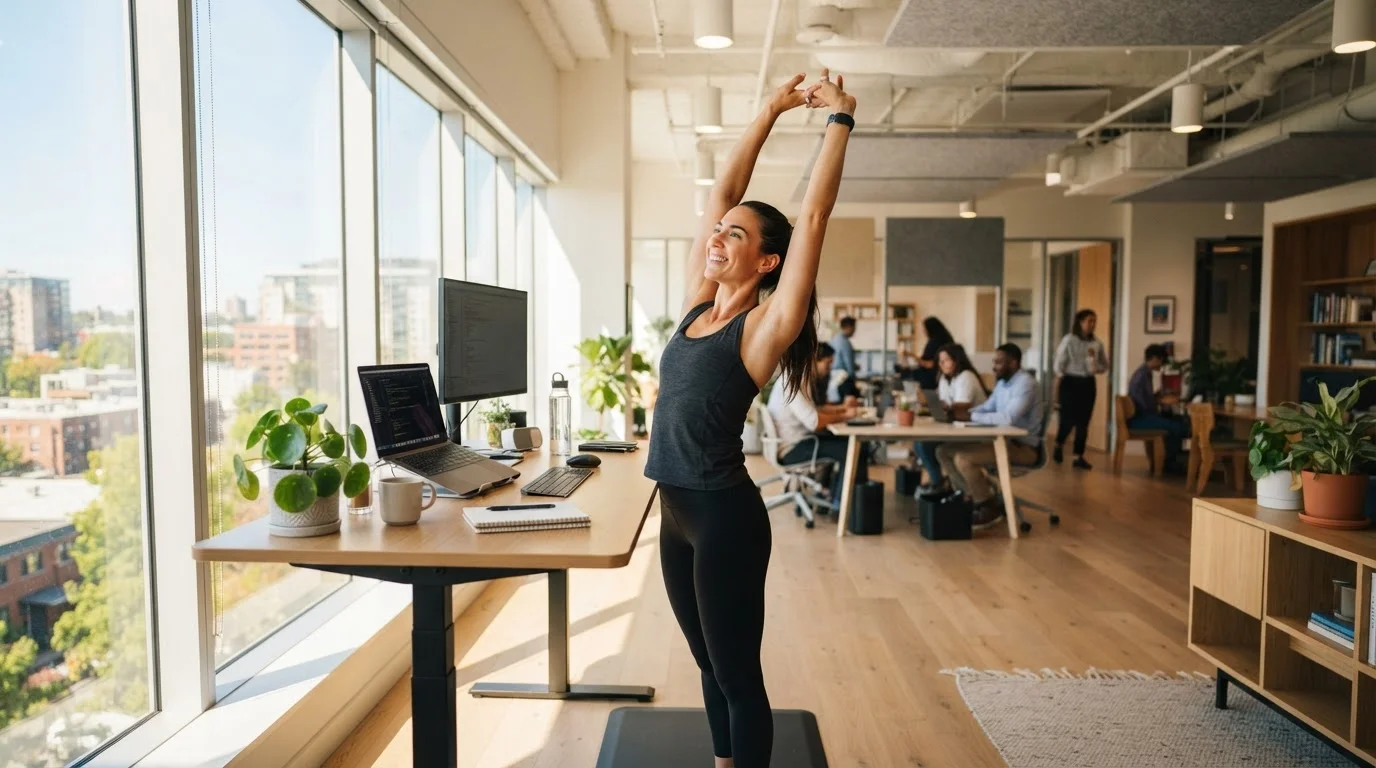
Why Sitting All Day Is Its Own Health Risk
Most desk workers already know they should exercise more - but the problem with a sedentary job goes beyond how many gym sessions you fit in each week. Research published in journals including the Annals of Internal Medicine has linked prolonged, uninterrupted sitting to increased risk of cardiovascular disease, type 2 diabetes, and all-cause mortality - even among people who meet recommended weekly activity guidelines. In other words, sitting for eight or more hours a day carries health implications that structured workouts alone may not fully offset.
This doesn't mean your morning run is worthless. It means that how often you interrupt sedentary time throughout the day matters independently of how active you are outside work hours. The good news: you don't need a gym, special equipment, or major schedule changes to start shifting that balance.
8+ hrs
Average daily sitting time for desk workers
Multiple occupational health surveys estimate that many full-time desk employees spend more than eight hours seated on a typical workday.
~25%
Increased cardiovascular risk from prolonged sitting
A meta-analysis published in the Annals of Internal Medicine found that high sedentary time was associated with significantly elevated cardiovascular and metabolic risk, independent of leisure-time activity.
Core Strategies for Building More Movement Into Your Workday
The following practices are grounded in movement science and designed to fit within the real constraints of office and remote-work environments. They're scalable regardless of your current fitness level.
Set a movement reminder every 45-60 minutes during your workday.
Uninterrupted sitting for long periods is associated with metabolic slowdown and reduced circulation. Regular prompts help interrupt sedentary patterns before they extend for hours. Even standing briefly or walking to refill water counts as a meaningful break.
Replace at least one daily meeting with a walking version.
Phone or one-on-one meetings that don't require screen-sharing are ideal candidates for walking. This approach adds light aerobic activity without requiring extra time in your schedule, making it highly sustainable.
Incorporate standing or light desk mobility exercises during low-focus tasks.
Not all work requires deep concentration. Reading emails, listening to recorded presentations, or reviewing documents can be done while standing, shifting weight, or performing gentle calf raises. This converts passive time into light movement.
Use deliberate 'inefficiency' to increase your step count.
Intentionally choosing the longer route - using a restroom on a different floor, parking farther away, or taking stairs - incrementally raises daily movement totals without requiring dedicated exercise time.
Anchor a short mobility routine to an existing daily habit.
Habit stacking - attaching a new behavior to an established one - reduces the friction of building new routines. A brief stretch sequence linked to an activity you already do reliably is more likely to become automatic.
If you're looking to build these habits into a broader structure, the Balanced Weekly Exercise Plan framework offers a useful complement to these daily habits.
Starting Small: Quick Wins You Can Try Today
Sustainable movement habits usually start with small, friction-free actions rather than ambitious overhauls. The quick wins below require no equipment and minimal time - they're entry points, not endpoints.
Walking is often underestimated as exercise, but research consistently shows it delivers meaningful cardiovascular and metabolic benefits - making it one of the most accessible tools available to desk workers. For a longer-term view of structuring movement without a gym, see Building a Weekly Movement Routine Without a Gym Membership.
This article is for general informational purposes only and does not constitute medical advice. Consult a qualified healthcare professional before beginning any new exercise program, particularly if you have existing health conditions or physical limitations.
The content on this site is provided for informational purposes only and should not be considered a substitute for professional advice. While we strive to provide accurate and up-to-date information, we make no guarantees regarding its completeness or accuracy. Always consult a qualified professional for advice specific to your circumstances before making any decisions.