

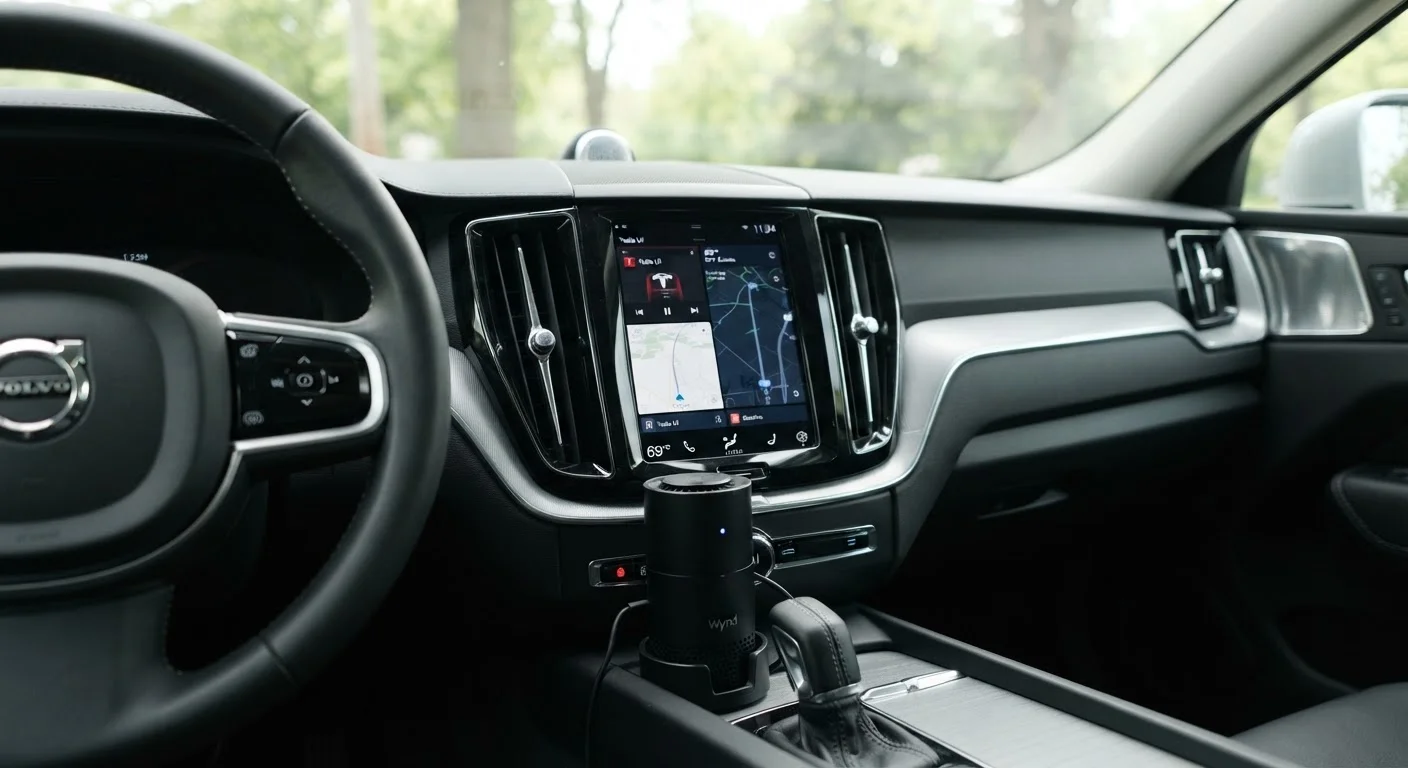
What's Actually Filtering the Air in Your Car
Before evaluating any add-on purifier, it's worth understanding the filtration system your vehicle already has. The cabin air filter sits within the HVAC system - typically behind the glove box or under the dashboard - and screens virtually all outside air before it reaches the interior. Quality filters can capture pollen, road dust, mold spores, and fine particulates, making them one of the most overlooked yet meaningful maintenance items on a vehicle.
The cabin air filter works in conjunction with the vehicle's blower motor and ductwork, giving it a structural advantage that no clip-on or plug-in device can replicate. Keeping this filter clean and replacing it on schedule is the single most evidence-supported step a driver can take to maintain good cabin air quality.
Myth
A portable car air purifier is just as effective as the cabin air filter that came with my vehicle.
Fact
Your factory cabin air filter is purpose-built for your HVAC system and filters all incoming air. A portable purifier processes only a fraction of cabin air and cannot replicate that coverage.
Cabin air filters are integrated directly into a vehicle's ventilation system, meaning virtually all air entering the cabin passes through them. A quality cabin air filter can trap particulates, pollen, and dust at a meaningful scale. Portable purifiers, by contrast, draw in and filter air from a small radius - typically a few inches from the unit. In a moving vehicle with the HVAC running, the turnover of cabin air far exceeds what a small desktop-style unit can realistically process. The two serve different functions and should not be treated as interchangeable.
Myth
Car air purifiers eliminate harmful gases like carbon monoxide from exhaust fumes.
Fact
Most portable car air purifiers use HEPA-style or activated carbon filters designed for particulates and some odors - not toxic gases like carbon monoxide, which requires a catalytic converter or ventilation, not filtration.
Carbon monoxide (CO) is a colorless, odorless gas that standard consumer-grade filters cannot capture. While activated carbon filters can adsorb some volatile organic compounds (VOCs) and reduce certain odors, they are not rated to handle CO at the concentrations that represent a health hazard. If you're concerned about exhaust intrusion in your cabin, the more relevant steps are ensuring your vehicle's exhaust system is intact, using fresh-air mode on your HVAC when following heavy traffic closely, and keeping the cabin air filter in good condition.
Myth
You only need to replace your cabin air filter once every few years.
Fact
Most vehicle manufacturers recommend replacing the cabin air filter every 12,000-25,000 miles, though driving in dusty or high-pollution environments may require more frequent changes.
A clogged cabin air filter restricts airflow through your HVAC system, reducing heating and cooling efficiency and potentially straining the blower motor over time. Checking your owner's manual for the manufacturer-recommended service interval is the most reliable guide. Drivers in urban areas with high particulate pollution, or those who frequently drive on unpaved roads, may notice filters becoming saturated faster. Inspecting the filter visually at each oil change is a reasonable habit - a heavily discolored or debris-laden filter is a clear sign it's due for replacement. For more on service interval misconceptions, see common car maintenance myths worth knowing.
Myth
Ionizer-based car air purifiers are proven to significantly improve cabin air quality.
Fact
The evidence for ionizer effectiveness in small, enclosed vehicle spaces is inconsistent, and some ionizers produce ozone as a byproduct, which carries its own health concerns.
Ionizers work by emitting charged particles that cause airborne contaminants to clump together and fall out of the air. In a tightly enclosed cabin, this can mean those particles settle on surfaces rather than being removed. Independent, peer-reviewed research specifically measuring ionizer performance in vehicle cabins is limited. Consumers evaluating these devices should look for verifiable test data rather than relying on marketing claims. As with other auto accessories, it pays to distinguish genuine utility from overstated promises - a topic explored further in our look at what counts as a real car upgrade vs. a gimmick.
Myth
Running your car's recirculation mode continuously makes air purifiers more effective.
Fact
While recirculation reduces outside air intake, it can also cause CO₂ buildup and increased humidity inside the cabin, which may offset any air quality gains.
Recirculation mode can help reduce the amount of outdoor pollution entering the cabin during high-traffic situations, and it allows a portable purifier to work on the same air repeatedly. However, sustained use without any fresh air intake allows carbon dioxide levels to rise as occupants breathe, and moisture can accumulate - both of which can reduce alertness and comfort on longer drives. A balanced approach - using recirculation during high-pollution moments, then switching back to fresh air - is generally more sensible than continuous recirculation.
Where Portable Air Purifiers Fall Short - and Where They May Help
The in-car air purifier market has grown considerably, and the product claims range from reasonable to deeply misleading. Understanding what these devices can and cannot do helps drivers make informed decisions rather than relying on marketing language that often goes unchallenged.
12K-25K
Miles between cabin air filter changes
Most vehicle manufacturers recommend this interval in owner's manuals, though high-pollution environments may require more frequent service.
~0.3 µm
Minimum particle size a true HEPA filter captures
True HEPA filters are rated to capture 99.97% of particles at 0.3 microns - a standard that many marketed "HEPA-type" car filters do not meet.
That said, portable purifiers are not entirely without value. For drivers with allergies who carry pet dander or other allergens inside the cabin - or for those dealing with persistent odors - a quality activated-carbon filter unit may provide some marginal benefit, particularly when the vehicle is stationary or in very low airflow conditions. The key is maintaining realistic expectations. Claiming a device "eliminates 99.9% of airborne contaminants" in a dynamic vehicle environment is a very different thing from demonstrating that in controlled, real-world conditions. When evaluating any in-car device, it helps to apply the same skeptical lens you'd use when parsing claims that sound important in a car ad.
Ozone Generators in Cars: A Real Risk
Some in-car air purifiers market themselves using ozone generation as a cleaning mechanism. Elevated ozone levels in an enclosed vehicle cabin can irritate the lungs, throat, and eyes - effects that are well-documented by environmental health agencies. The U.S. EPA advises that no safe level of ozone exposure for humans has been established. If an in-car device generates ozone, treat that as a significant caution, not a feature.
Ultimately, prioritizing a clean, properly maintained cabin air filter - and supplementing with a purifier only if you have a specific, well-defined need - is the approach most consistent with the available evidence.
The content on this site is provided for informational purposes only and should not be considered a substitute for professional advice. While we strive to provide accurate and up-to-date information, we make no guarantees regarding its completeness or accuracy. Always consult a qualified professional for advice specific to your circumstances before making any decisions.